The best tour of Florence: art, architecture and a sweet pause
Active
4h
All sales are final. No refund is available for cancellations.
Manual confirmation
Mobile or paper ticket accepted
About this experience
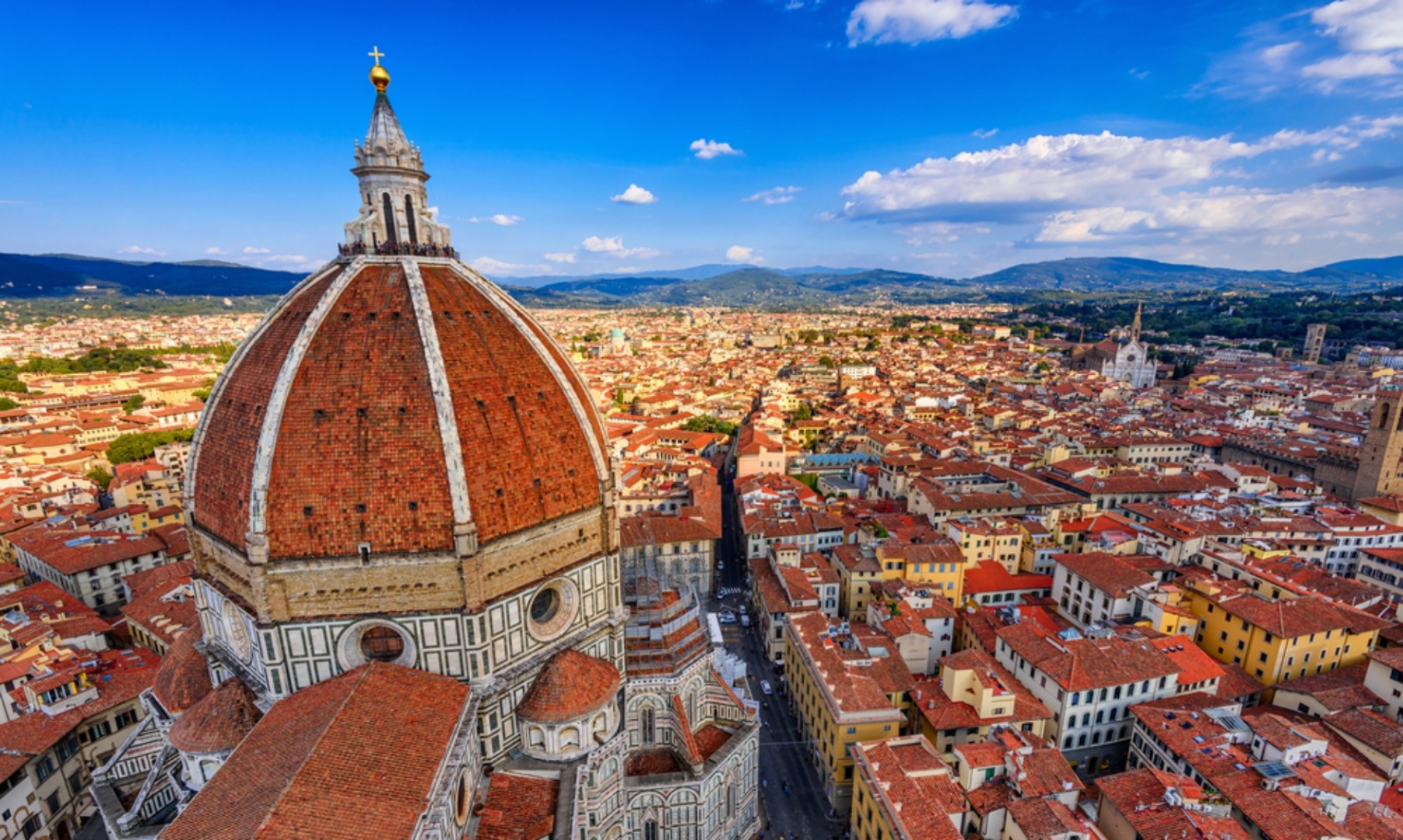
All the best of Florence, within a short and pleasant walk, with even the time for a sweet break. This exclusive tour will touch all the landmarks which make Florence recognizable all around the world: the cathedral of Santa Maria del Fiore with its majestic dome, the Tower of Giotto, Palazzo Vecchio and the "Loggia dei Lanzi". At the end, without being stuck in a queue, you will enjoy a private guided visit of one of the most famous art museums in the world: the Uffizi Gallery.
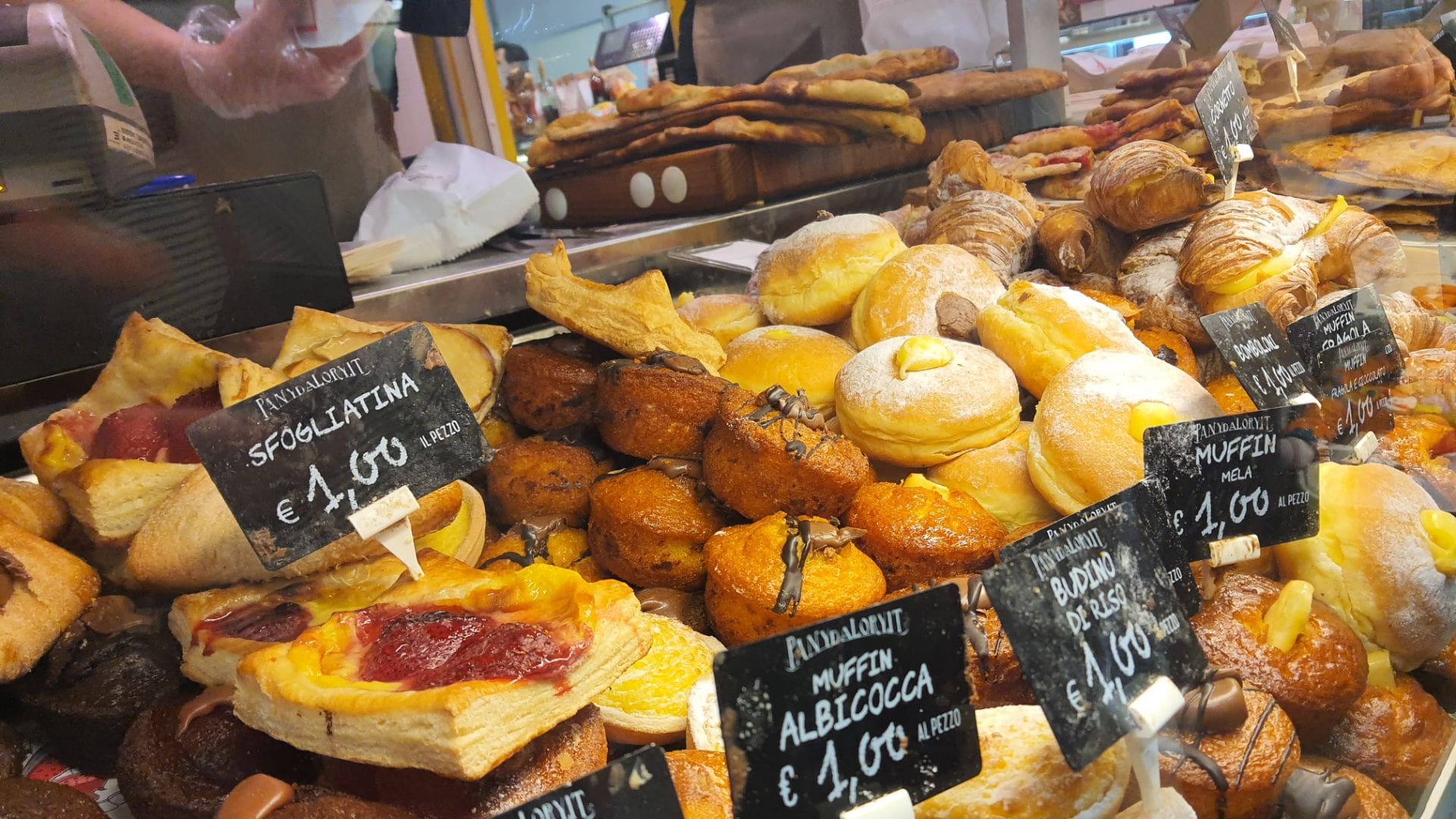
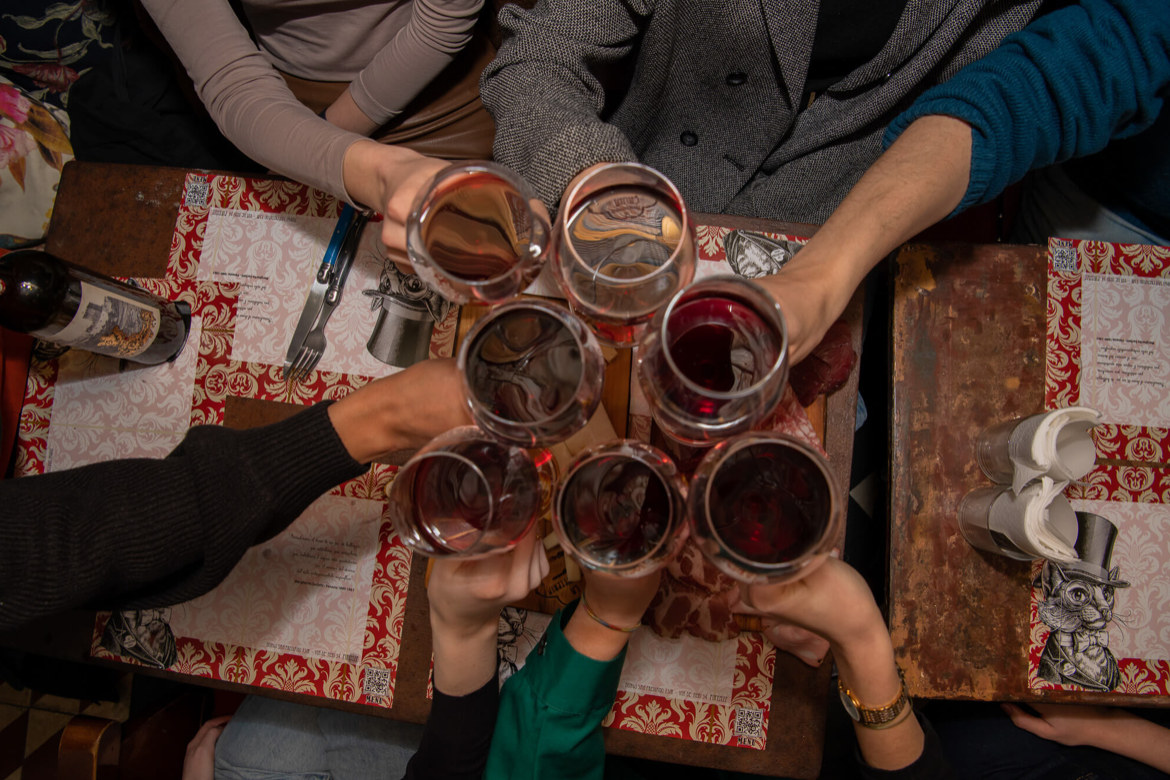
An espresso or a cappuccino, match with traditional "Cantuccini", will give you a tasty boost halfway.
Available options
The best tour of Florence: art, architecture and a sweet pause
What's included
Entrance ticket to the Uffizi Gallery
Qualified private guide
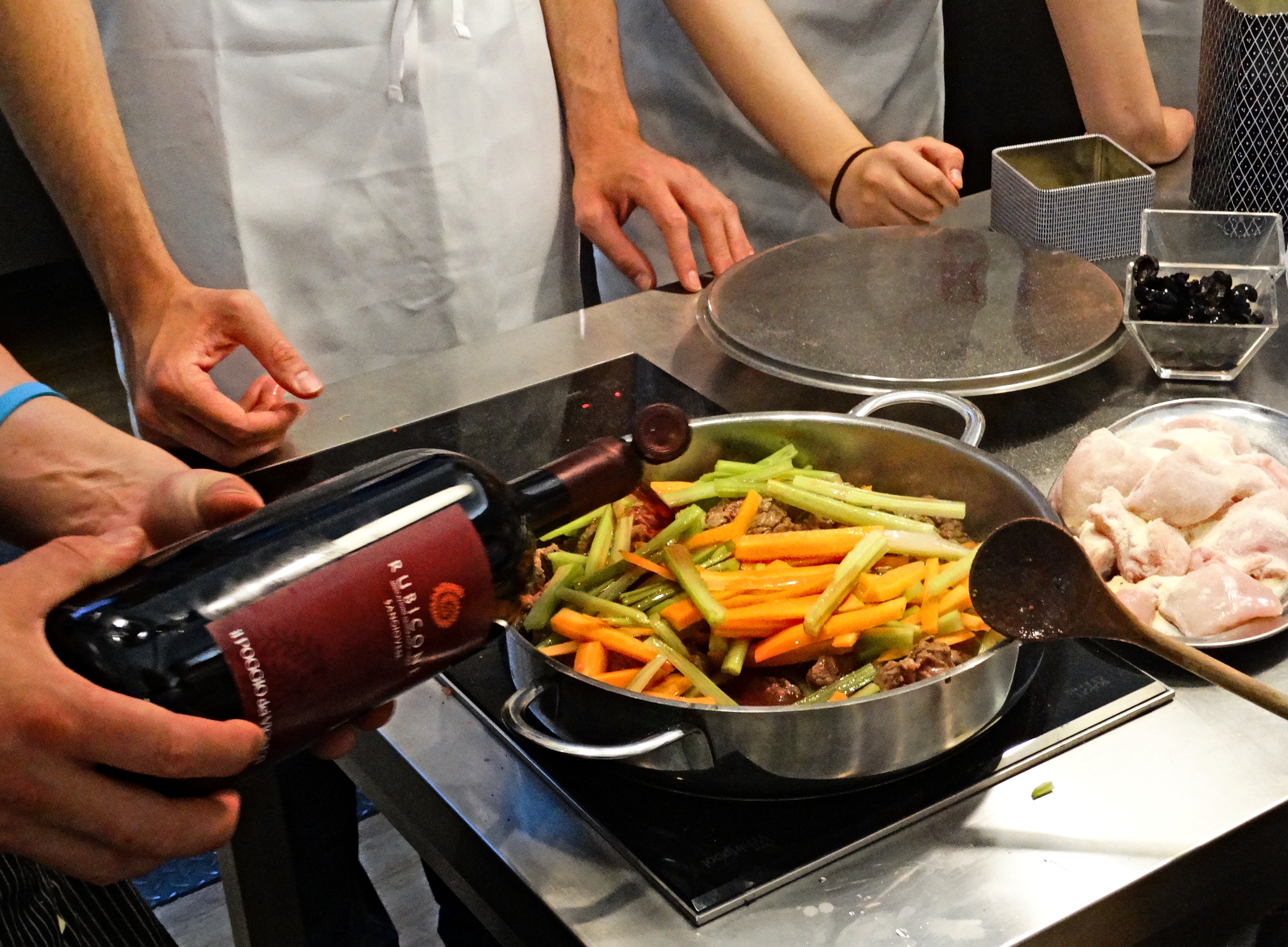
An esclusive tasting of espresso or cappuccino, with traditional "Cantuccini"
Detailed itinerary
1
Stop 1
Pass by
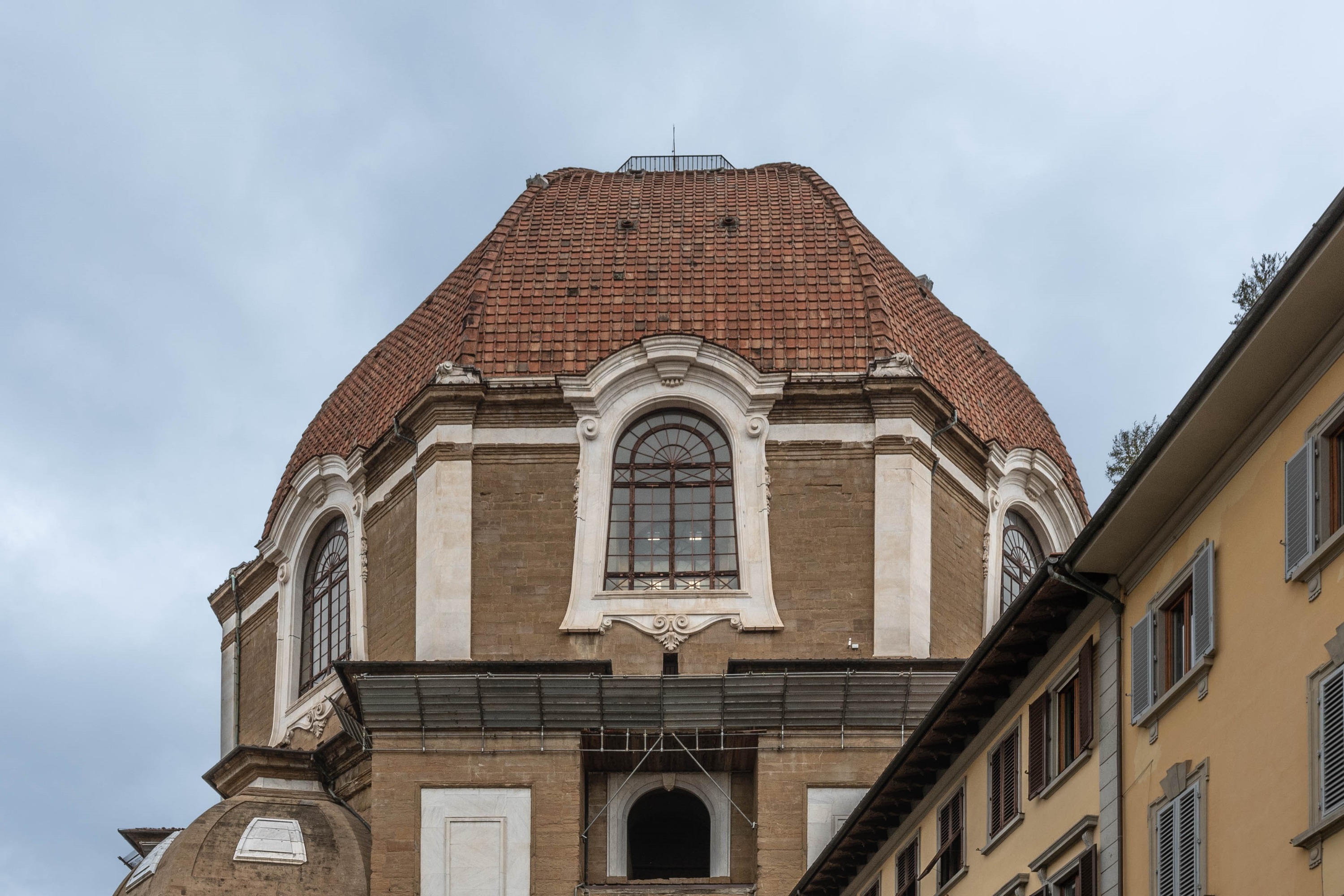
Built between 1296 and 1436, the main cathedral in town was, at its completion, the largest ever built. Nowadays it is considered the third in the world, after St. Peter in Rome and St.Paul in London. Indeed, the dome by Filippo Brunelleschi is still the largest brick dome ever built and - at the inner side - the widest frescoed surface worldwide (3600 sqm). The architectural style, influenced by the pristine design by Arnolfo di Cambio and later modified by Francesco Talent and Filippo Brunelleschi, marks the turning from a mature Gothic manner to the first Reinassance.
2
Stop 2
Pass by
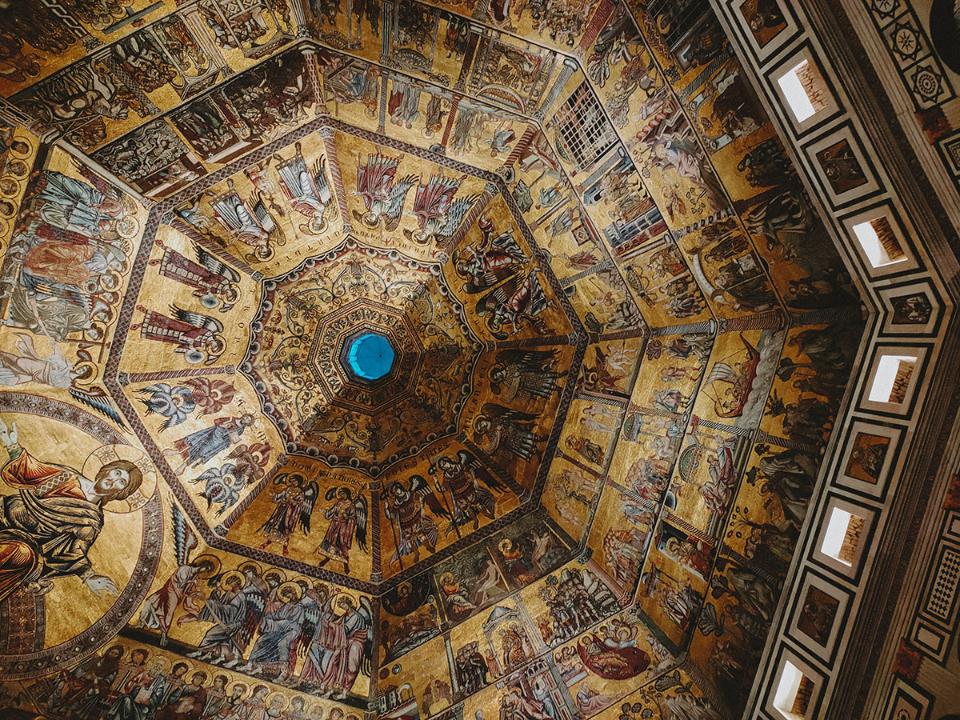
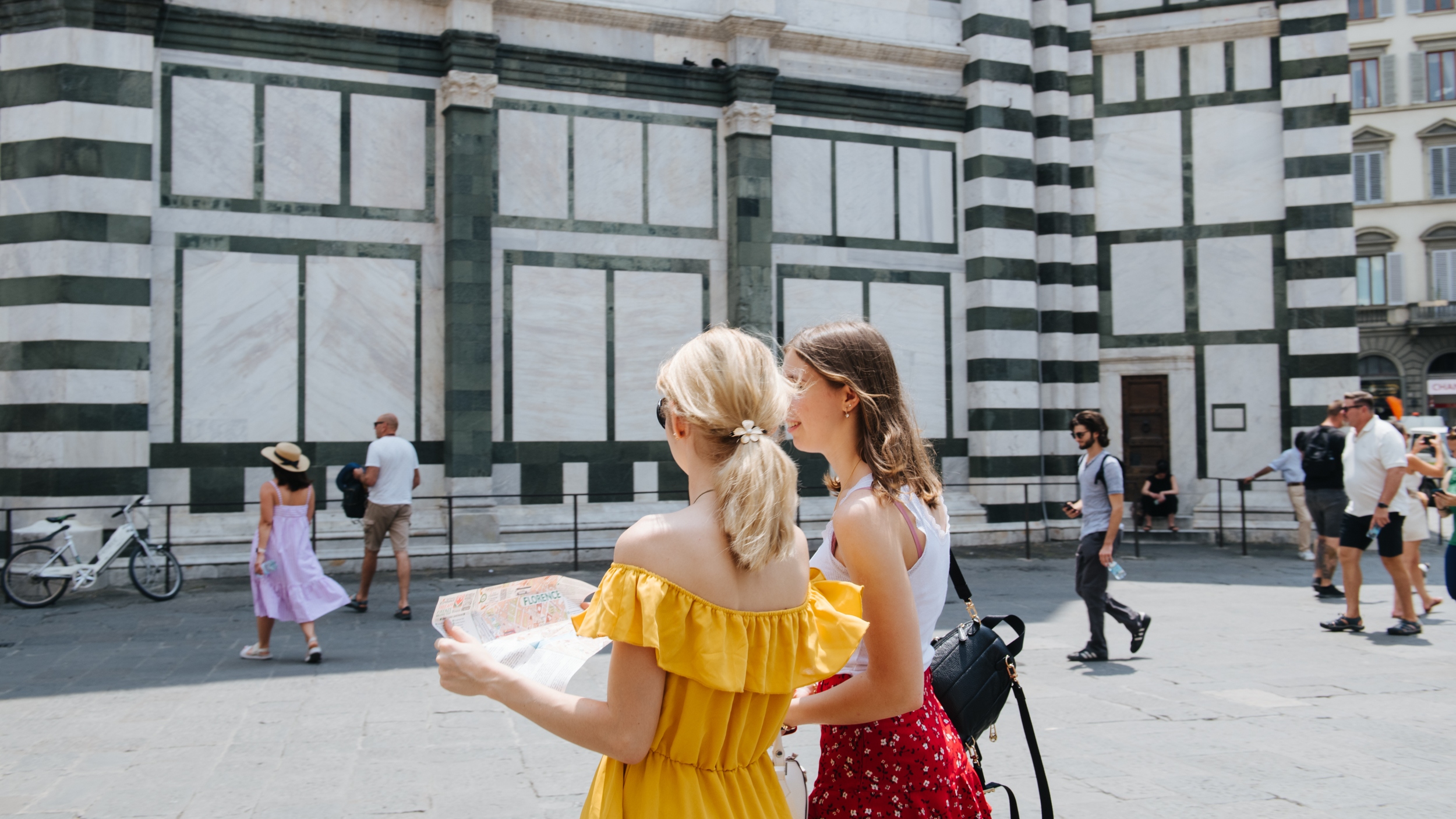
Standing between Piazza San Giovanni and Piazza Duomo, this Romanesque building was completed around 1059. The exteriors are characterized by the alternation of white marble from Carrara and green "serpentine" from Prato, with three majestic bronze portals designed by Andrea Pisano and Lorenzo Ghiberti.
3
Stop 3
Seat of the city government since the beginning of the 14th century, this building was originally named Palazzo dei Priori. Through the centuries it has been enlarged several times, also changing its denomination: from Palazzo della Signoria, to emphasize the role of the main authority of the Republic, to Palazzo Vecchio, when in 1565 the court of Duke Cosimo de'Medici moved to the "new" Palazzo Pitti.
Between 1865 and 1871 it was seat of the Italian parliament, being nowadays house of the city council. A private guide will lead you in the inner court, designed in the 15th century by Michelozzo
4
Stop 4
Pass by
Built between 1376 and 1382, the building was initially conceived to host popular assemblies during the Republican age in Florence. Its round arches anticipate the Renaissance style later expressed in the arcade of Ospedale degl'Innocenti, by Filippo Brunelleschi.
During the domination of the Medici, the space was gradually transformed into a place for art exhibitions: several marble and bronze statues of the Mannerism and Classicism are still on display here.
5
Stop 5
Pass by
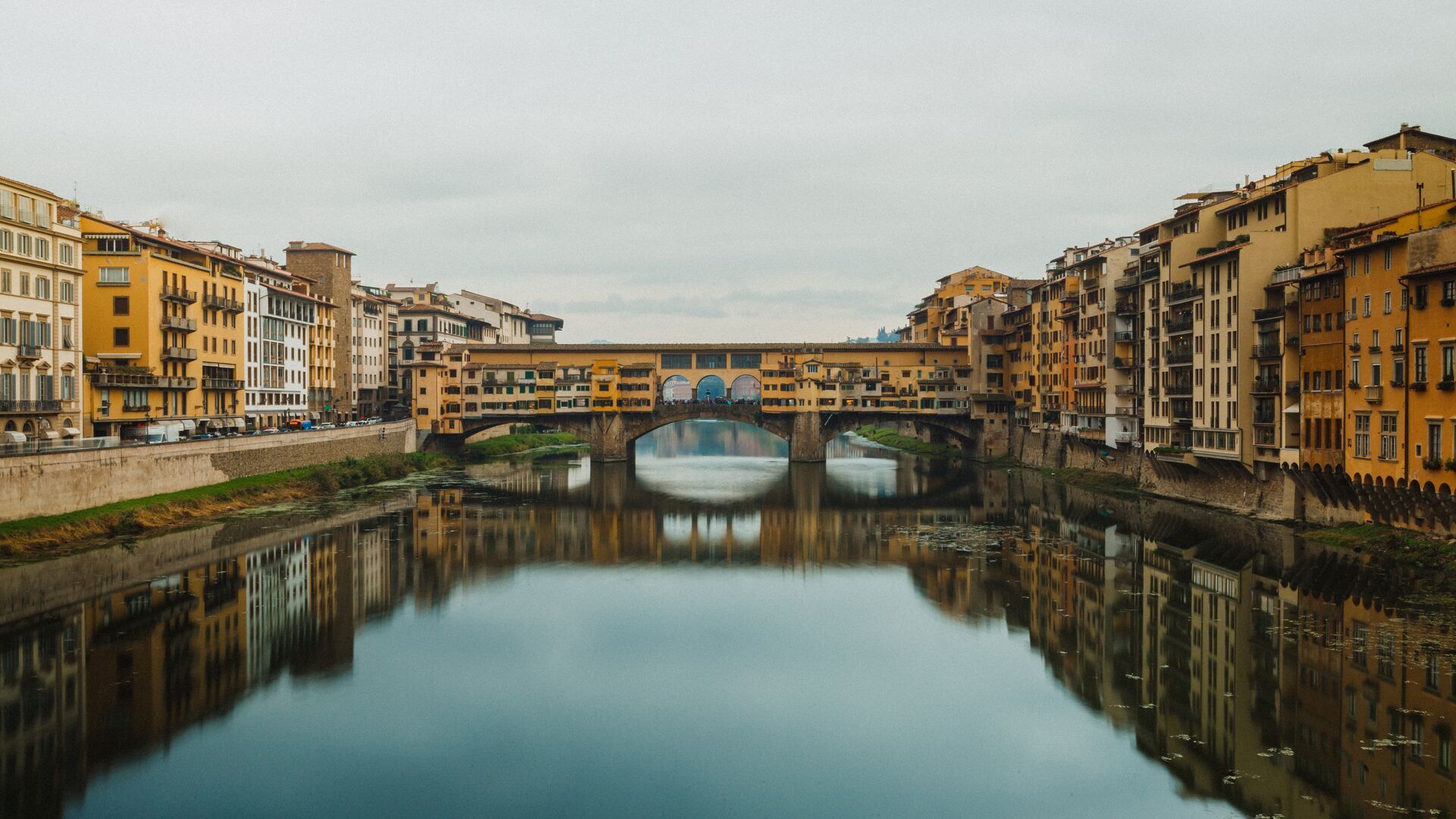
One of the symbols of Florence, well known all around the world, it was initially built in 1345, after the collapse of a previous bridge on the same site. Since 1442, the city authority ordered the local butchers to gather on the stores of Ponte Vecchio, for hygienic reasons. This, together with the construction of the "Vasarian Corridor" in 1565 - to connect safely Palazzo Vecchio and Palazzo Pitti, gave to Ponte Vecchio its characteristic and unique look of a "inhabited bridge".
6
Stop 6
One of the most prestigious and best known art galleries in the world lies in the heart of Florence.
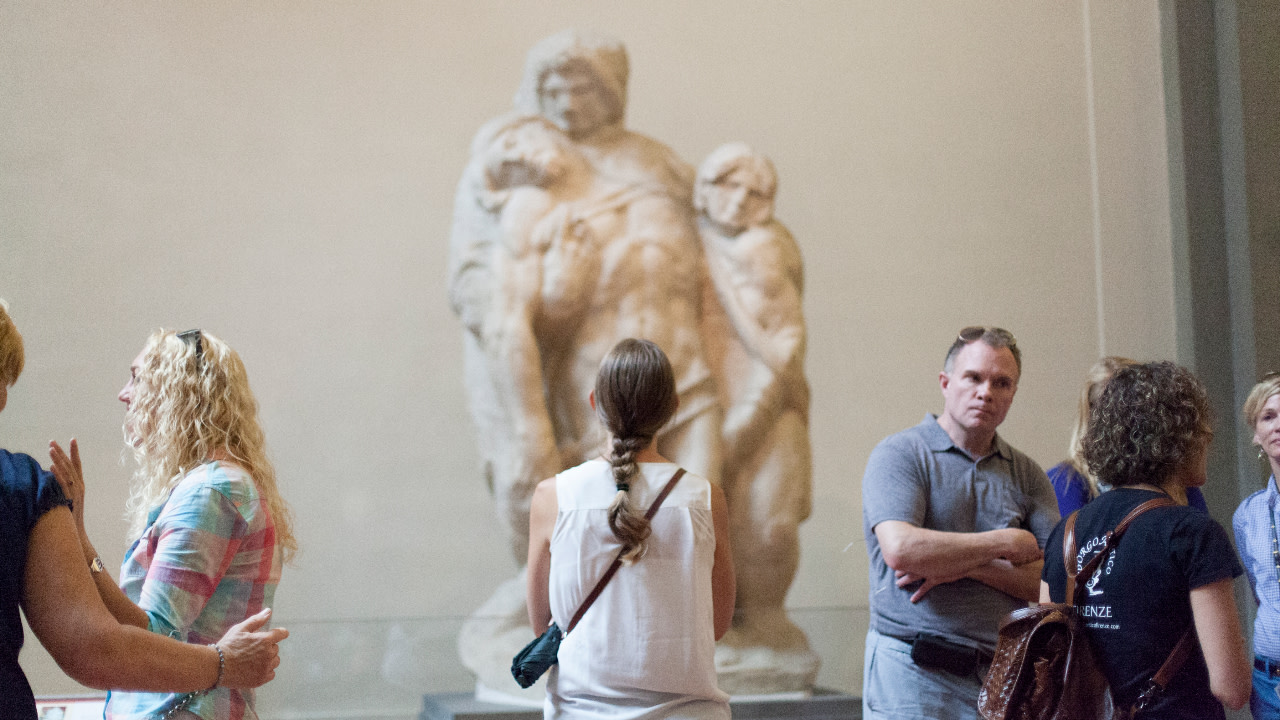
The Uffizi are hosted in a large and articulated building whose construction started in 1560, under the direction of Giorgio Vasari; the main core of the building is a U-shaped structure, facing Palazzo Vecchio on one of the short sides and river Arno on the other. The building, initially meant for public offices of the city authority under the Medici's government, is connected to Palazzo Pitti, on the other side of the river, by an elevated path called "Corridoio Vasariano".
What's not included
Gratuities
Lunch
Available languages
Guide guide
DE
EN
IT
FR
ES
Important information
Public transportation options are available nearby
Suitable for all physical fitness levels
Meeting point
On the corner between Piazza San Giovanni and Via Roma
About Florence
Florence, the capital of Italy's Tuscany region, is a treasure trove of art, architecture, and history. Known as the birthplace of the Renaissance, it's home to iconic masterpieces, stunning cathedrals, and a rich cultural heritage that continues to captivate visitors from around the world.
Top Attractions
Duomo
The Florence Cathedral, known as the Duomo, is a masterpiece of Renaissance architecture. Its iconic dome, designed by Brunelleschi, offers panoramic views of the city.
Architecture/Religious
2-3 hours
Free to enter the cathedral, €18 for the climb to the dome
Uffizi Gallery
One of the world's most famous art museums, the Uffizi Gallery houses works by Botticelli, Michelangelo, and Leonardo da Vinci.
Museum/Art
2-3 hours
€20
Ponte Vecchio
A medieval stone bridge famous for its jewelry shops. It's one of the most iconic landmarks in Florence.
Architecture
30 minutes to 1 hour
Free
Piazzale Michelangelo
A panoramic terrace offering breathtaking views of Florence. It's a perfect spot for sunset and photography.
Scenic Viewpoint
1-2 hours
Free
Accademia Gallery
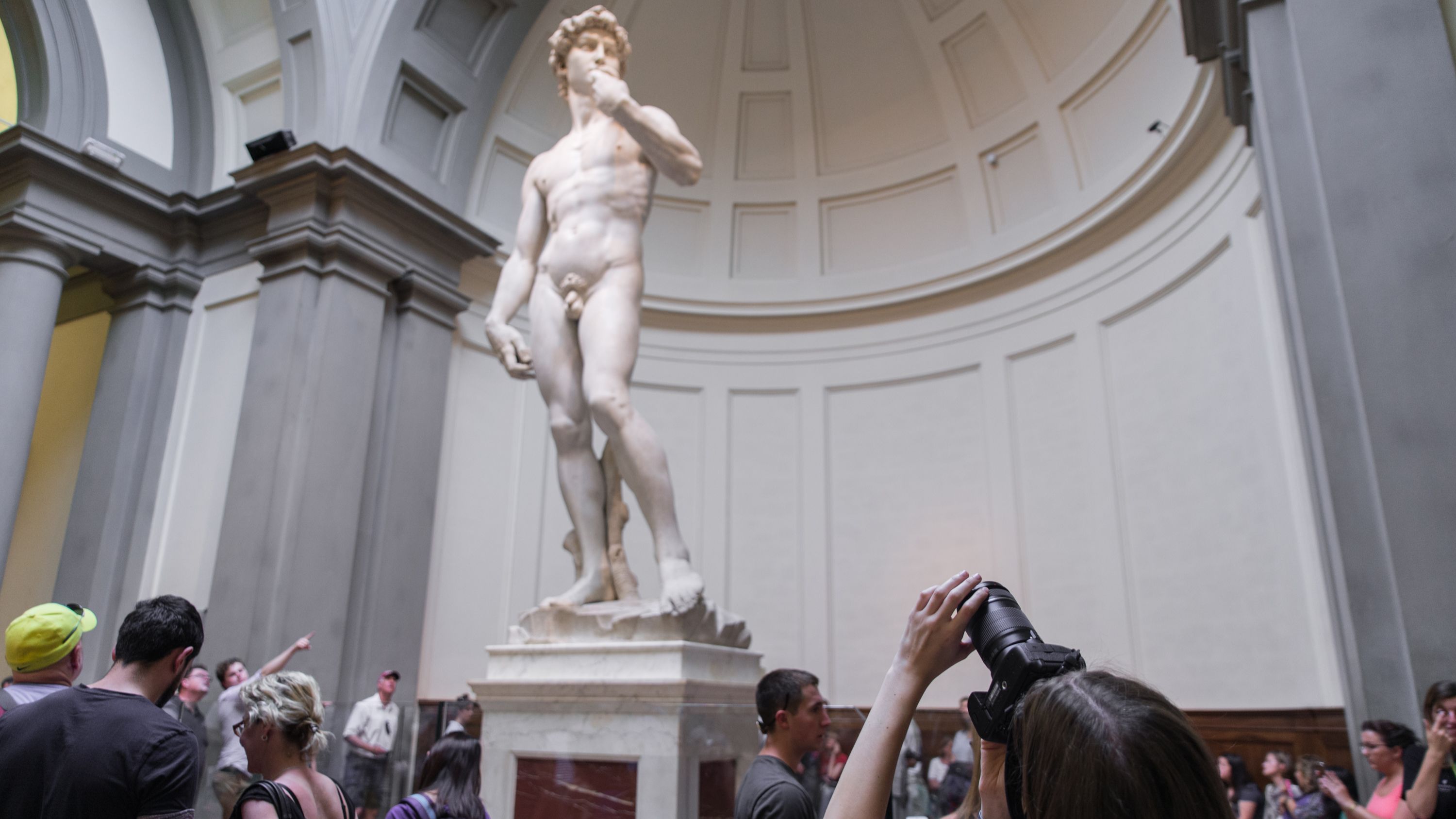
Home to Michelangelo's famous statue of David, the Accademia Gallery is a must-visit for art lovers.
Museum/Art
1-2 hours
€16
Must-Try Local Dishes
Bistecca alla Fiorentina
A thick-cut, grilled T-bone steak, seasoned simply with salt and pepper. It's a must-try for meat lovers.
Dinner
Contains beef, not suitable for vegetarians or vegans
Ribollita
A hearty vegetable and bread soup, traditionally made with leftover bread and vegetables. It's a classic Florentine dish.
Lunch/Dinner
Vegetarian, can be made vegan
Lampredotto
A Florentine street food made from the fourth and final stomach of a cow. It's typically served in a sandwich.
Lunch
Contains beef, not suitable for vegetarians or vegans
Cantucci
Almond biscotti traditionally served with Vin Santo, a sweet Tuscan wine. They are crunchy and perfect for dipping.
Dessert
Contains almonds, can be made gluten-free
Popular Activities
Hiking in the Tuscan countryside
Cycling tours
Hot air balloon rides
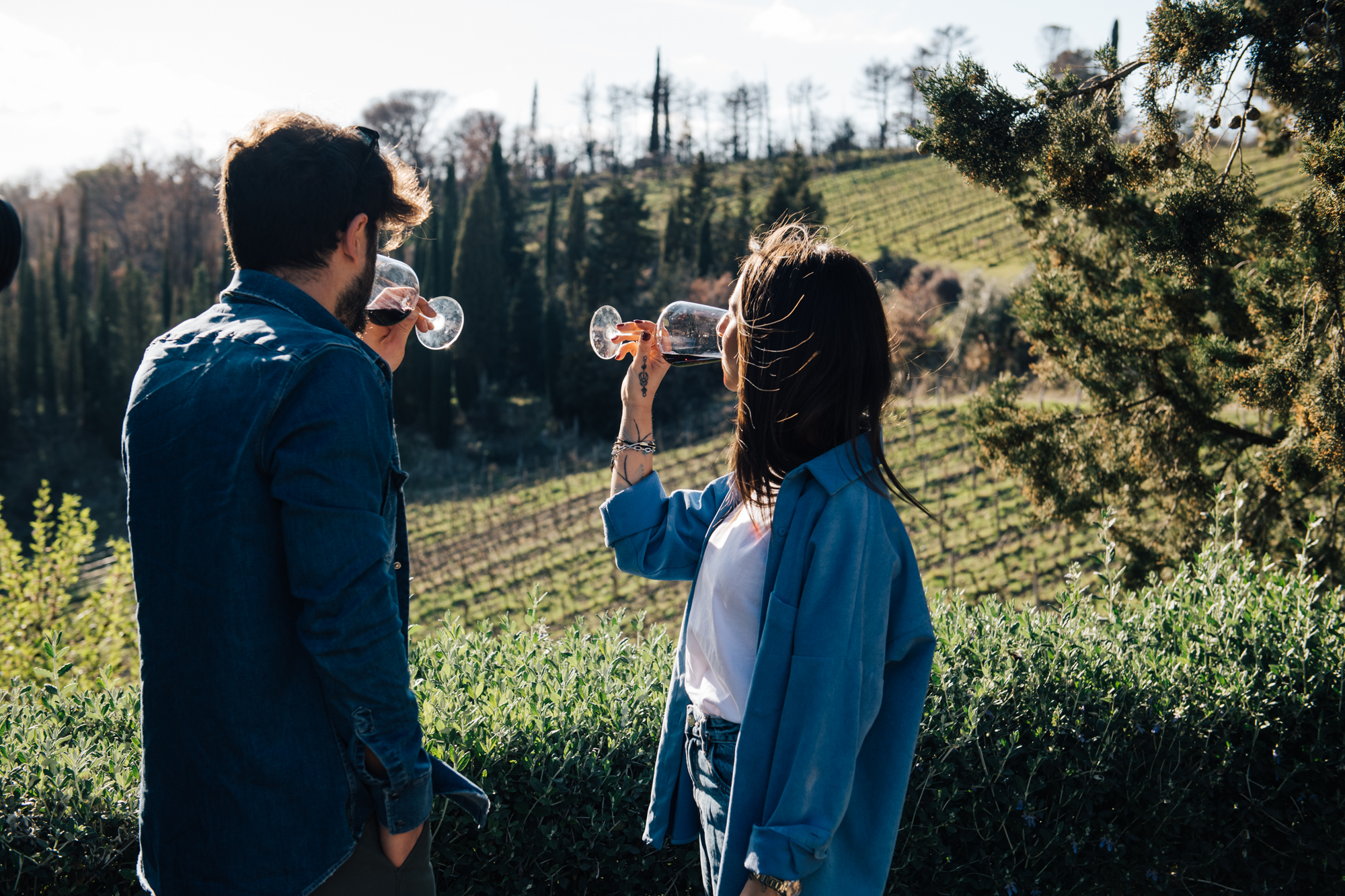
Wine tasting tours
Spa day at a luxury hotel
Strolling through the gardens of Villa medici
Visiting museums and art galleries
Attending opera or concerts
Best Time to Visit
April to June, September to October
These months offer pleasant weather and fewer crowds compared to the summer peak. Ideal for sightseeing and outdoor activities.
15-28°C
59-82°F
Practical Information
Language
- Official: Italian
- Widely spoken: English, French, Spanish
- English: Moderately spoken
Currency
Euro (EUR)
Time Zone
GMT+1 (CET), GMT+2 (CEST during daylight saving time)
Electricity
230VV, 50HzHz
Safety Information
Overall Safety Rating: Generally safe
Florence is generally safe for tourists, but pickpocketing and petty theft can occur, especially in crowded areas. Be aware of your surroundings and take precautions to protect your belongings.
Important Precautions:
- • Keep valuables secure and out of sight
- • Be cautious of your surroundings, especially in crowded areas
- • Use licensed taxis or ride-sharing apps
Getting there
By air
- Florence Airport • 5 km from city center
- Pisa International Airport • 85 km from city center
By train
Santa Maria Novella Station
By bus
Villa Costanza Bus Station, Florence Airport Bus Terminal
Getting around
Public transport
The bus network covers the entire city and is the primary mode of public transport. Buses are frequent and reliable.
Taxis
Available • Apps: MyTaxi, FreeNow
Rentals
Car, Bike, Scooter
Neighborhoods
Santa Maria Novella
Oltrarno
San Lorenzo
Santa Croce
Day trips
Siena
70 km from Florence • Half day to full day
A medieval city known for its stunning Piazza del Campo and the Palio, a traditional horse race held twice a year.
Pisa
85 km from Florence • Half day
Home to the iconic Leaning Tower of Pisa, this city offers a mix of historic sites and scenic views.
Chianti Wine Region
30-50 km from Florence • Full day
A picturesque wine region known for its rolling hills, vineyards, and charming villages.
Festivals
Festa di San Giovanni • June 24
Calcio Storico Fiorentino • June (dates vary)
Firenze dei Fiori • April to June
Pro tips
- Visit major attractions early in the morning or late in the afternoon to avoid crowds
- Book tickets for popular attractions in advance to save time and avoid long queues
- Explore the city's hidden gems, such as the Oltrarno neighborhood and the secret passages of the Palazzo Vecchio
- Try local specialties like Bistecca alla Fiorentina, Ribollita, and Lampredotto
- Learn a few basic Italian phrases to enhance your experience and connect with locals
From $25
per person
Price varies by option
Secure booking
Free cancellation available