VIP Private Tour of Fez (6 hours/Guide/ Driver/ Minivan)
Active
6h
For a full refund, cancel at least 24 hours before the scheduled departure time.
Instant confirmation
Mobile or paper ticket accepted
About this experience
We are a fully licensed company that is specialized in operating tour excursions and guided city tours we also provide activities and many other types of amusements in simple terms we aim to make our travelers holiday perfect and save their efforts on even the small stuff our packages are customized for individual travelers small and big groups and more than that those packages are not fixed so you are free to tailor and adjust it the way you want and according to your demands.Because our clients’ satisfaction and gratification is our priority we ensure that all our services and activities are provided in a very smooth and convenient manner and supported by all the facilities needed to make our clients’ needs wishes and plans perfectly fulfilled .What make as different from the other tour agencies here in Morocco and give a push of advantage is the fact that our ultimate goal is to make our clients get behind scenes and let them experience Morocco in an authentic and sustainable manner
Available options
VIP Private Tour of Fez (6 hours/Guide/ Driver/ Minivan)
Pickup included
What's included
Bottled water
Private tour
Driver/guide
Hotel/port pickup and drop-off
Transport by private vehicle
Short Stop at a Local Family for a Moroccan Mint Tea
Detailed itinerary
1
Stop 1
Pass by
Fes el Bali is the medina area and the city's oldest neighborhood. It's thought to be the largest intact surviving medina in the world.The main gate into the area is Bab Boujloud. As you approach this grand old gate you get wonderful views of the neighborhood's famed landmark the minaret of the Medersa Bou Inania which sits just after the Bab Boujloud gate.Within its walls, the rambling derbs medina alleys spiral out into two distinctly different districts, divided by a meandering river.The left bank is home to the most historic monuments and the majority of the shopping souqs while the right bank may be scruffier but is full of local life and photogenic alleyways.The right bank also has some interesting buildings to search out, including the Al-Andalus Mosque built in 1321 and noted for its prominent green and white minaret which actually dates back to the 10th century.Nearby you'll find a variety of interesting other monuments including an old fondouk and the crumbling Medersa Sahrij
2
Stop 2
Pass by
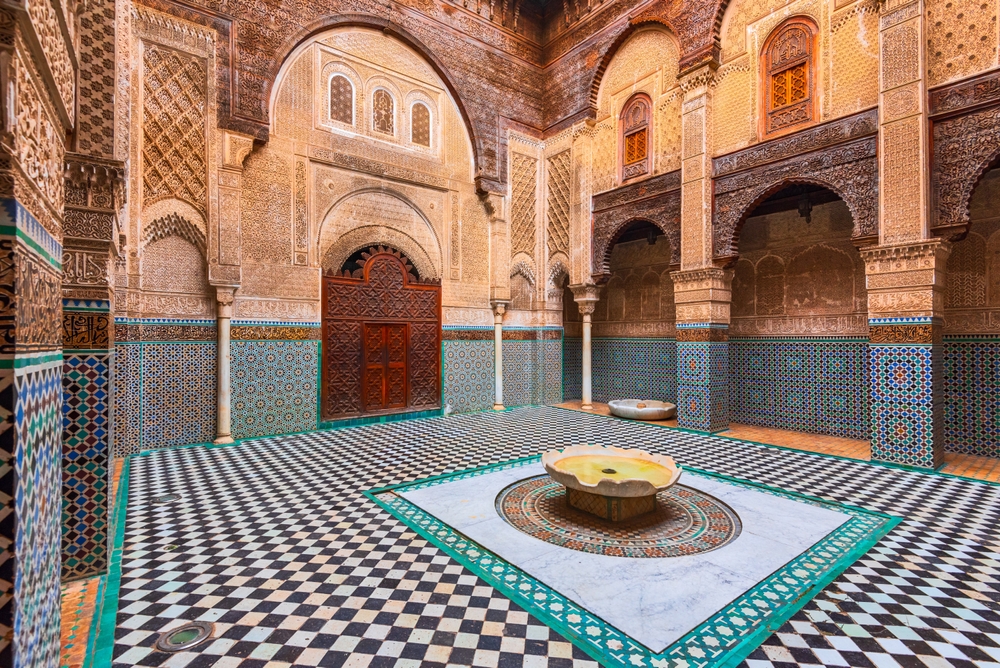
The Medersa Bou Inania was built between 1350 and 1357 by the Merenid sultan Bou Inan.As one of the few religious buildings in the city that non-Muslims may enter, the Medersa (a "madrassa" is an Islamic school of learning) is one of the most popular monuments to visit in Fes and a must-do stop on any tour of the medina.Up until the 1960s, this was still a functioning theological school, and the restoration efforts that were carried out afterwards have carefully returned the medersa to its ornate original state.The carved woodwork and stucco decoration is magnificent and is a tribute to Morocco's master artisans.
3
Stop 3
Pass by
Medina Souqs : For keen shoppers, the skinny souq (market) lanes of Fes el Bali are one of the major attractions of a Fes stay.Fes is renowned within Morocco for its artisan heritage, and you'll find all types of Moroccan handicrafts here, from leatherwork to metalware and ceramics.The local ceramic tradition (called Fassi ceramics), made from local clay, tends towards blue tones and is usually hand-painted with intricate patterns and recurring motifs.The streets just west of the Qaraouiyine Mosque have the greatest concentration of shopping opportunities.As with Marrakesh, more tourist orientated shops, selling a range of souvenir-style giftware and more mass-produced items, as well as the big carpet emporiums, tend to line main roads in the medina such as Talaa Kebira. Specialty artisan workshops are usually found in smaller lanes.
4
Stop 4
Pass by
This fine example of Merenid-era architecture was built in 1325 by Abu Said.The Medersa el-Attarine's central internal courtyard is a wonderful display of the intricate decoration from this period, with elaborate zellige tile work and cedar wood carvings.The upper floor is made up of a warren of cells that were once home to students studying theology at the neighboring Qaraouiyine Mosque, one of the world's first universities.After admiring the building's interior decoration, make sure to climb up onto the medersa's rooftop from where you can get great views over the surrounding rooftops, including a close-up view of the green tiled roof of the Qaraouiyine Mosque next door.
5
The Chouara tanneries of Fes are one of the city's most famous sights. Sitting in the northeast corner of Fes el Bali, just east of the Qaraouiyine Mosque, the tanneries have been the bustling center of the city's leather industry since the medieval era.The only way to get the iconic bird's-eye views over the dying pits, where hides are soaked in a multitude of colors to later become bags, clothing, shoes, and a variety of other products, is to head to the leather stores surrounding the tannery area, which offer views from their rooftops.You have to tip the leather shops for entry, and do expect them to try a bit of sales patter while you're there.Come in the morning if you can, as this is when the tannery pits are still filled with a rainbow palette of dyes.
6
Stop 6
Pass by
The atmospheric old Mellah (Jewish Quarter) is in Fes el Jedid, just south of the Royal Palace.Throughout this compact district, the lanes are lined with fine (though highly dilapidated) examples of early 20th-century houses, which were once home to the vibrant Jewish community of Fes.Within the district, the small, restored Aben-Danan Synagogue is open for visitors.On the edge of the Mellah is the rambling Jewish cemetery, one of the city's most tranquil spots, and a Jewish Museum housing a collection of objects highlighting Moroccan Jewish life and culture.
7
For the best views over Fes el Bali, walk up the steep hill just outside the city ramparts, to the Borj Nord area.Here, you'll find a 16th-century fortress, home to a military museum. The museum is worth a look for its collection of weapons, which includes some extremely rare pieces that represent armory from across the world. Amid the cache is the five-meter-long cannon (with a weight of 12 tons) that was used during the Battle of the Three Kings.After viewing the arms museum, keep heading up the hill to the summit where a scattering of golden-stoned Merenid tombs sits.Although the tombs are in a heavily ruined state today, you're here for the views, which take in the entire walled medina area and out to the green hills beyond
8
Built in AD 857 by Tunisian immigrants from the holy city of Kairouan, the Qaraouiyine Mosque was a thriving center of theological study and one of the medieval period's most distinguished universities.It vies for title of the oldest university in the world with the Al Azhar Mosque in Cairo, Egypt.Today, in its function as a working mosque, it is one of Morocco's largest centers of worship with a prayer hall that can hold 20,000.
9
Stop 9
Pass by
The Merenids built this "New City" in the 13th century, when they realized that Fes el Bali would be too small to contain their palaces.The grand Royal Palace takes center stage here. Its 80 hectares of grounds are not open to the public, though, you can stop and admire its ornately decorated entranceway.There's a tranquil air to this small section of the city, which sits between bustling Fes el Bali and the European-style Ville Nouvelle, and it makes a welcoming, peaceful lull between these two faster-paced worlds.The mellah (Jewish quarter) is in the southern section of this district.
10
Stop 10
Pass by
The Batha Museum is inside a Hispano-Moorish summer palace built in the late 19th century.
The museum collection traipses through a selection of traditional Moroccan craftsmanship, with wood carved doors, wrought-iron work, embroidery, carpets, and jewelry all on display.
The centerpiece exhibit of the museum is the ceramics room, where the famous Fassi ceramic collection, colored with cobalt, is displayed.
More interesting than the displays themselves is the building's own original decoration and the lovely internal courtyard garden, which is full of shady trees and tall palms and is a true oasis within the city.
The Batha Museum is in the southwest corner of the medina.
11
Stop 11
Pass by
Drawing attention at one end of the Najjariyyin Square in the Old Medina is the magnificent five-metre gateway to this 17th-century khan (inn), crowned with an intricate cedar canopy.Over the portal are gossamer geometric and floral patterns, and incredibly detailed tilework.To the side is a 19th-century saqayya, a fountain for caravans, with astonishing zellige tiles and honeycomb plasterwork.The Funduq, commissioned by the Alaouite Sultan Ismail Ibn Sharif, is preserved as a museum for woodwork.You can go in to look up at the three storeys of galleries, and peruse a showcase of artful wood-carving from the city’s past.On display are furniture, doors, musical instruments, canopies and other architectural elements, as well as traditional woodworking tools.
12
Near the Andalusian Mosque is a Madrasa ordered in 1321 by the Marinid Sultan Abu al-Hassan.Over time this complex became known by its sahrij, the ornamented ablution pool in its courtyard, which is where the name comes from.That rectangular courtyard is enriched with carved cedar, sculpted marble, multicoloured zellige tiles and stucco, all intended to evoke Granada’s fabled Alhambra palace complex.
13
Stop 13
Pass by
This shrine at Place de Marche Verte is considered one of the holiest sites in Morocco, holding the mausoleum of Idris II (791-828). Founder of the 200-year Idrisid Dynasty, Idris II is credited with establishing the first Islamic state of Morocco.The shrine, sitting below the tallest minaret in Old Fez, was built between 1717 and 1824, and is mainly for Fez residents, although visiting practising Muslims can also enter the mausoleum.The two-metre wooden bars indicated that the space was off limits for Christians and Jews, but also helped keep donkeys at bay.Now non-Muslims can enter the complex and admire the courtyard’s 18th-century white marble fountain, although the mausoleum at the south end is out of bounds.Pilgrims continue to visit the shrine for good luck, and Idris II has long been associated with fertility among women.From the mausoleum’s entrance, non-Muslims will be able to spot the tomb to the right through the doorway, draped in silk brocade.
14
This square is walled on one side by the grand, horseshoe-arched entrance to the al-Qarawiyyin Library, and centres on a gnarled plane tree.But it’s the sounds, as much as the sights, that make Place Seffarine special, as the rest of square is given over to copperware, a craft that goes back many centuries in Fez.You’ll hear the clang of craftsmen shaping and polishing their wares long before set foot on Place Saffarine.This handmade copperware hangs, glinting in the shopfronts, where you can haggle for buckets, pots, pans, tagines, trays, incense burners, couscous steamers, sieves, kettles, sugar boxes and a lot more besides.
What's not included
Food and drinks
Gratuities
Available languages
Audio guide
AR
DE
PT
EN
IT
FR
ES
Guide guide
AR
DE
PT
EN
IT
FR
ES
Written guide
AR
DE
PT
EN
IT
FR
ES
Reviews breakdown
Viator
5.0
1 reviews
5★
1
4★
0
3★
0
2★
0
1★
0
Important information
Service animals allowed
Public transportation options are available nearby
Specialized infant seats are available
Suitable for all physical fitness levels
About Fez
Fez is the cultural and spiritual heart of Morocco, known for its ancient medina, a UNESCO World Heritage site, and the oldest university in the world, the University of al-Qarawiyyin. It offers a rich tapestry of history, architecture, and traditional crafts.
Top Attractions
Fez Medina
The Fez Medina is a UNESCO World Heritage site and one of the largest and best-preserved medieval old cities in the world. It's a labyrinth of narrow streets, bustling markets, and historic sites.
Historical/Cultural
Full day
Free to explore, fees for specific sites
Al-Qarawiyyin University
Founded in 859 AD, Al-Qarawiyyin is the oldest continuously operating university in the world. It's a significant cultural and historical site.
Historical/Educational
1-2 hours
Free
Bou Inania Madrasa
A beautiful example of Marinid architecture, this madrasa (Islamic school) is one of the few religious sites in Fez open to non-Muslims.
Historical/Architectural
30-60 minutes
Moderate
Chouara Tanneries
One of the last remaining traditional tanneries in the world, the Chouara Tanneries offer a glimpse into an ancient craft that has changed little over centuries.
Cultural/Industrial
30-60 minutes
Free (donations appreciated)
Bab Bou Jeloud
The main gate to the Fez Medina, Bab Bou Jeloud is a beautiful example of Moroccan architecture and a great photo opportunity.
Architectural
15-30 minutes
Free
Must-Try Local Dishes
Tagine
A slow-cooked stew made with meat, vegetables, and spices, served in a conical clay pot.
Dinner
Can be made with various meats or vegetables, some vegetarian options available.
Couscous
Steamed semolina grains served with vegetables and meat, often with a rich sauce.
Lunch/Dinner
Can be made with various meats or vegetables, some vegetarian options available.
Pastilla
A savory-sweet pie made with layers of thin pastry, filled with spiced pigeon meat, almonds, and sugar.
Lunch/Dinner
Contains meat and nuts.
Harira
A hearty soup made with lentils, chickpeas, tomatoes, and spices, often served during Ramadan.
Lunch/Dinner
Vegetarian and vegan options available.
Popular Activities
Hiking in the Rif Mountains
Horseback riding in the countryside
Spa and hammam treatments
Strolling through the gardens of the Royal Palace
Exploring the Fez Medina
Visiting historic sites and museums
Attending traditional music and dance performances
Experiencing a traditional hammam
Best Time to Visit
Spring (March to May) and Fall (September to November)
The weather is pleasant, with mild temperatures and lower humidity. This is the best time for sightseeing and exploring the city.
15°C to 25°C
59°F to 77°F
Practical Information
Language
- Official: Arabic, Berber
- Widely spoken: French, English (in tourist areas)
- English: Moderately spoken in tourist areas, limited elsewhere
Currency
Moroccan Dirham (MAD)
Time Zone
GMT+1
Electricity
220VV, 50HzHz
Safety Information
Overall Safety Rating: Generally safe, but exercise caution
Fez is generally safe for travelers, but petty crime and scams can occur, especially in crowded areas. Be aware of your surroundings and take precautions to protect your belongings.
Important Precautions:
- • Keep valuables secure and out of sight
- • Be cautious of strangers offering help or services
- • Use reputable tour operators and guides
Getting there
By air
- Fes-Saïss Airport • 15 km from city center
By train
Fez Railway Station
By bus
Fez CTM Bus Station, Fez Supratours Bus Station
Getting around
Public transport
Buses are the most common form of public transport in Fez. They are affordable but can be crowded.
Taxis
Available • Apps: None widely used
Rentals
Car, Bike, Scooter
Neighborhoods
Fez Medina
Fes el Jdid
Ville Nouvelle
Day trips
Meknes
60 km • Full day
Meknes is a historic city with a rich past, known for its imperial palaces, mosques, and the famous Bab Mansour gate. It offers a mix of history, architecture, and local culture.
Volubilis
80 km • Full day
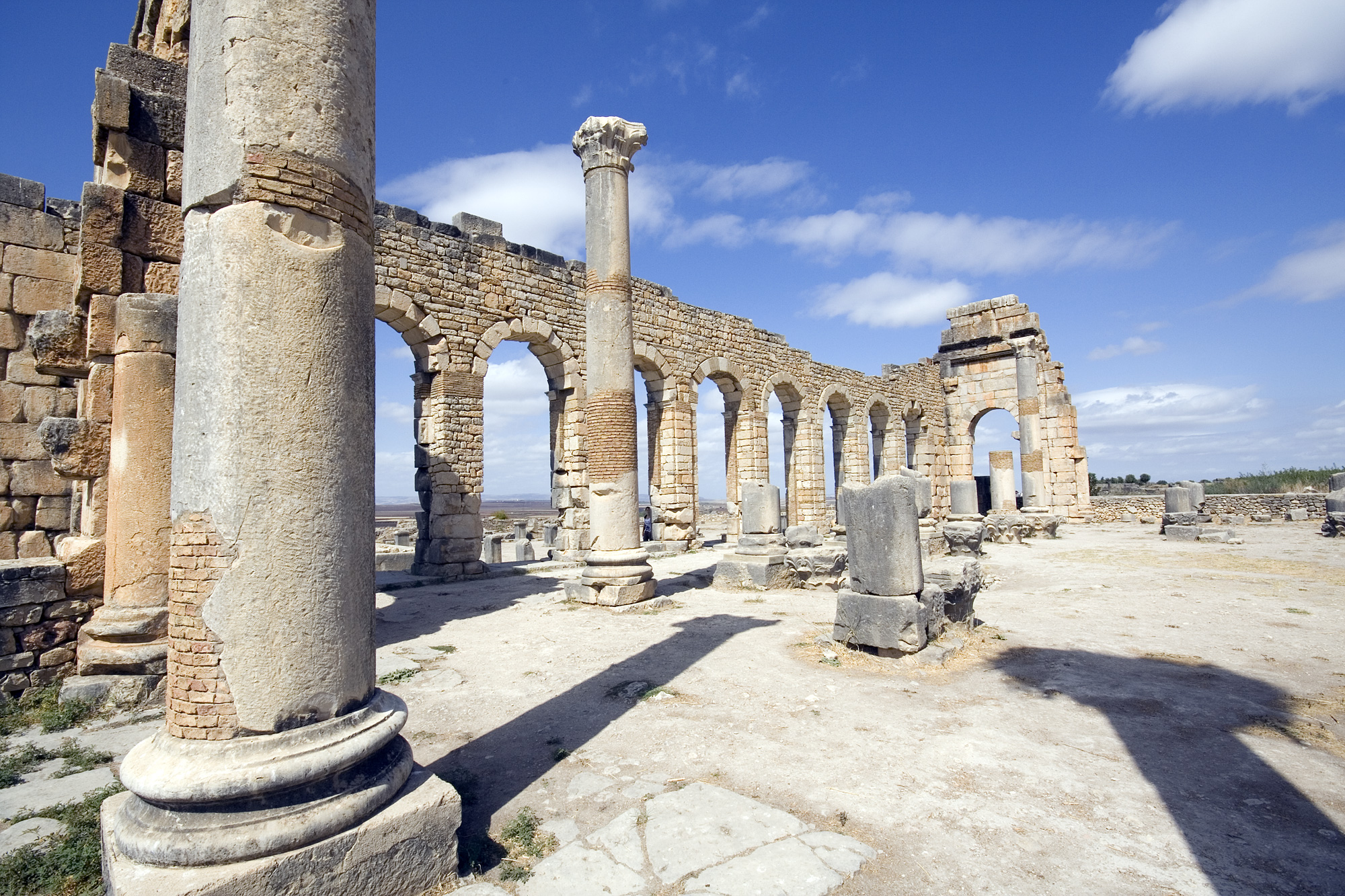
Volubilis is a UNESCO World Heritage site and the remains of a Roman city. It's one of the most important archaeological sites in Morocco, offering a glimpse into the country's Roman past.
Chefchaouen
120 km • Overnight
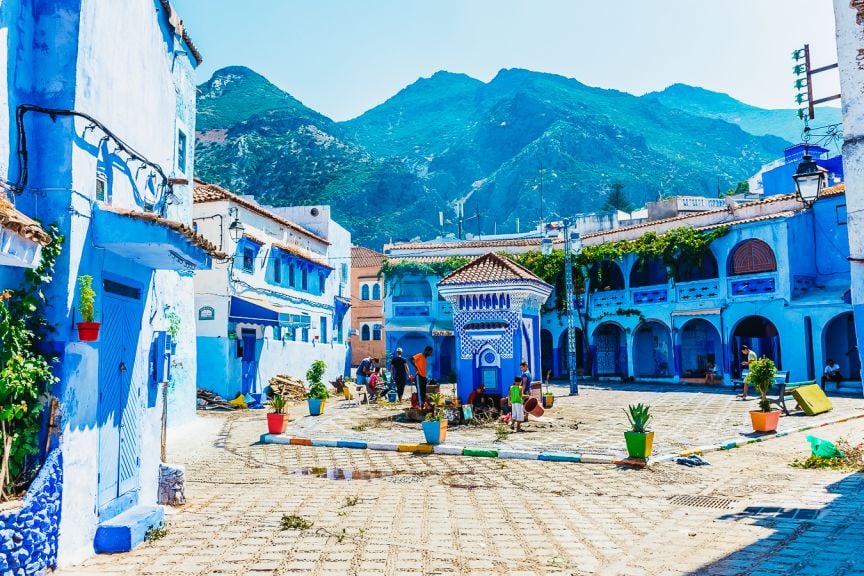
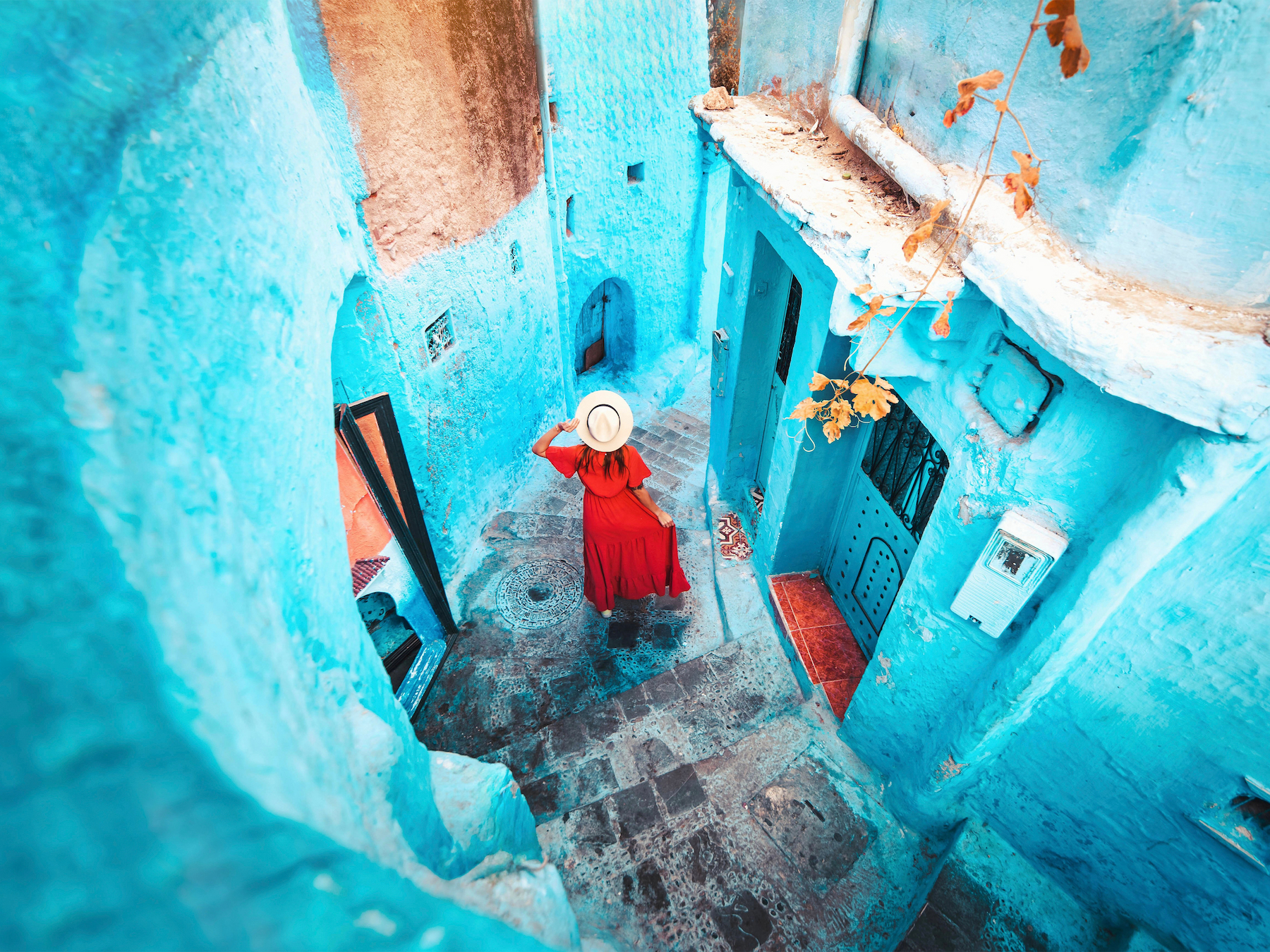
Chefchaouen is a picturesque mountain town known for its blue-washed buildings, narrow streets, and relaxed atmosphere. It's a great place to escape the hustle and bustle of the city and enjoy the natural beauty of the Rif Mountains.
Festivals
Fez Festival of World Sacred Music • June
Fez Festival of Sufi Culture • April
Ramadan • Date varies (Islamic calendar)
Pro tips
- Hire a local guide to navigate the medina and learn about its history and culture
- Visit the Chouara Tanneries early in the morning to avoid the heat and crowds
- Try a traditional hammam experience for relaxation and rejuvenation
- Learn a few basic phrases in Arabic or French to enhance your interactions with locals
- Bargain politely in markets and souks, but be prepared to walk away if the price is not agreeable
From $25
per person
Price varies by option
Secure booking
Free cancellation available
Instant confirmation