Private Tour Fátima, Batalha, Nazaré E Óbidos
Active
8h - 9h
For a full refund, cancel at least 24 hours before the scheduled departure time.
Instant confirmation
Mobile or paper ticket accepted
About this experience
History and religion are the main themes of this trip. But we must not forget the hard work of the fishermen and the waves of Nazaré!
Available options
Private Tour Fátima, Batalha, Nazaré E Óbidos
Pickup included
What's included
WiFi on board
Hotel pickup and drop-off
All taxes, fees and handling charges
Private tour
Bottled water
All insurance included
Detailed itinerary
1
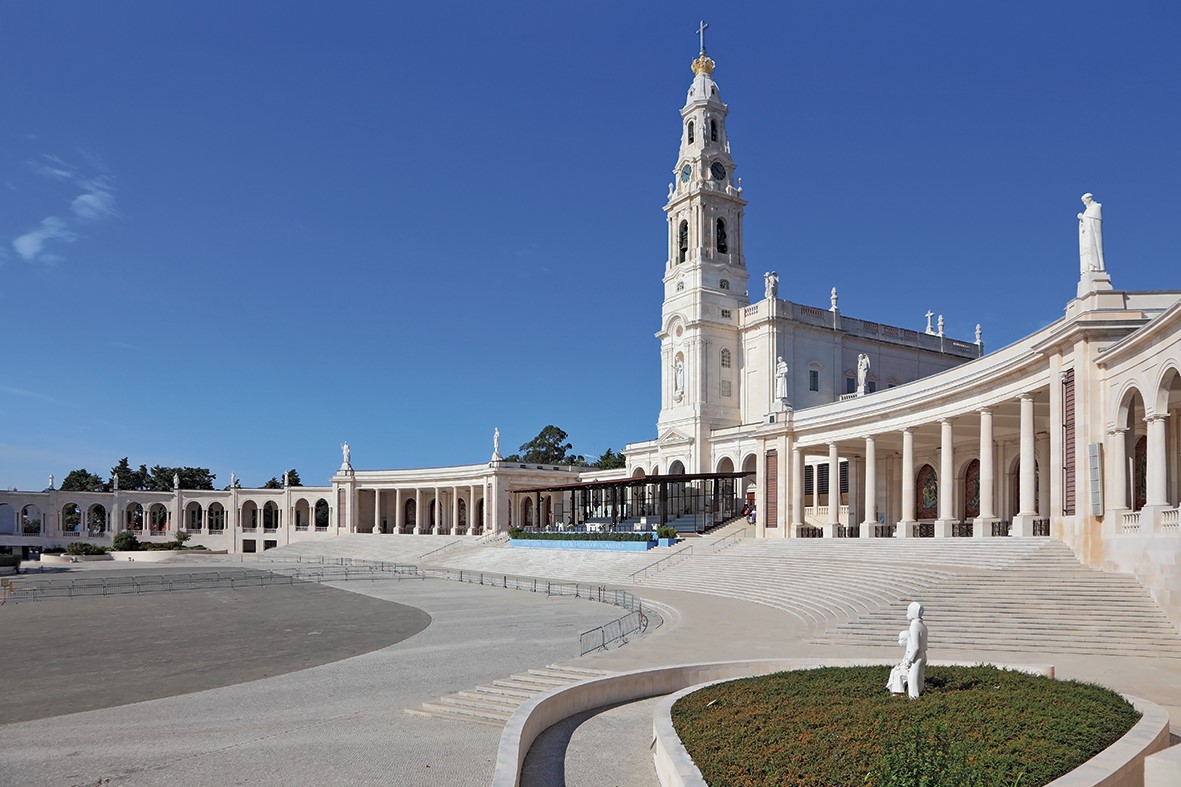
Basílica da Santíssima Trindade
Monuments
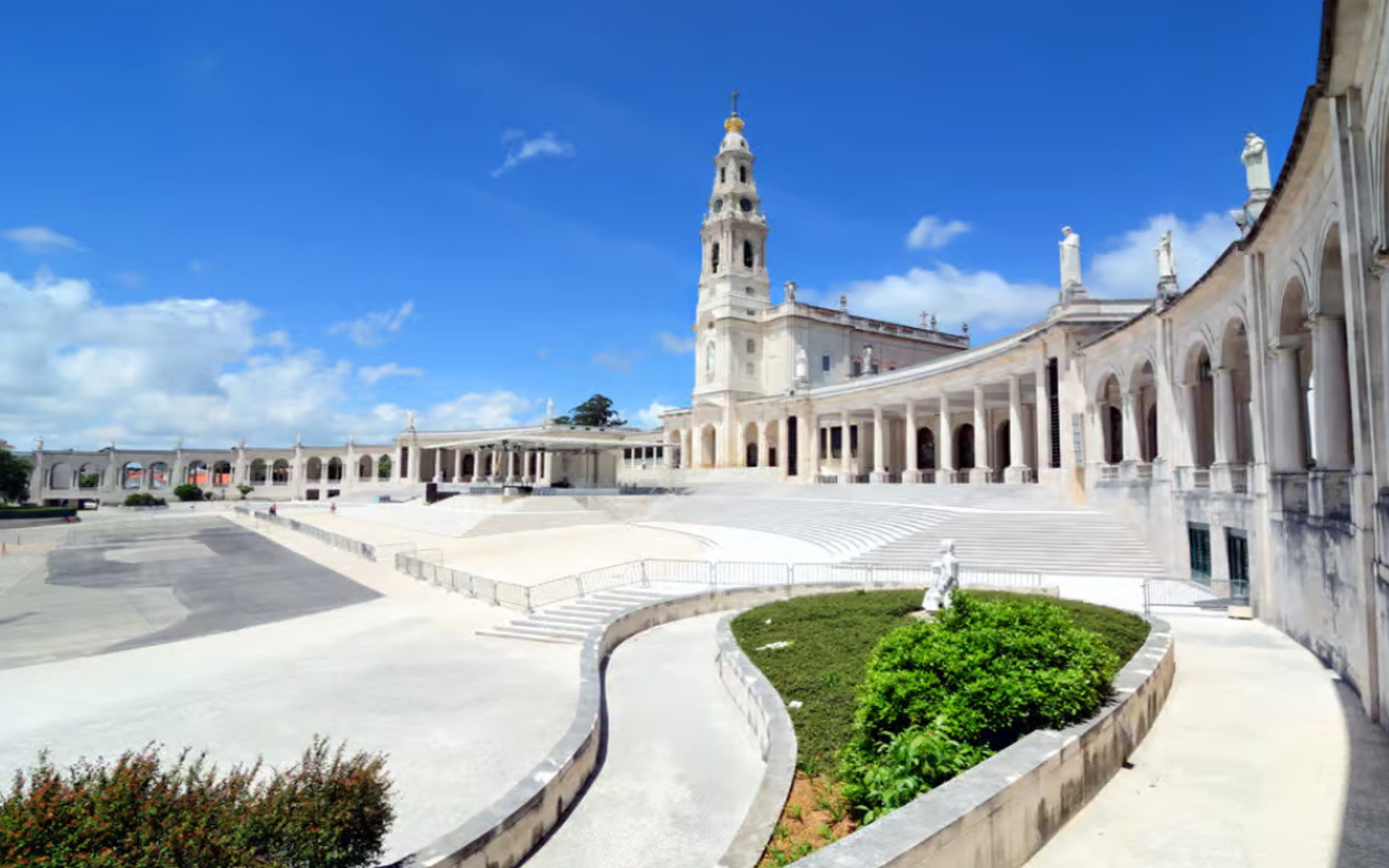
You can also visit the Holy Trinity Church in the Fatima Sanctuary grounds, opposite the Basilica.The church is a modern white building round the color of the stone that covers it, a local stone known as the “white sea”.With a total of 8,633 seats and an area of 40,000 m², the Holy Trinity Church is the fourth largest Catholic temple in the world in capacity.
Basílica de Nossa Senhora do Rosário
Visit the Basilica of Our Lady of the Rosary (commonly called the Basilica of the Rosary) is a basilica that integrates the Sanctuary of Fatima, located in the place of the Cova da Iria, in Fatima.
2
Capela das Aparições – Fátima
Monuments
The Chapel, in the heart of the current Fátima Sanctuary, was built by local people in 1919 in response to the request made by Our Lady during one of the apparitions.
The first mass to be held there was in 1921.
Although subject to certain changes, due to preservation and maintenance requirements over recent years, the modestly sized chapel retains its rough design similar to a simple hermitage.
The image of Our Lady marks the spot of the holm-oak tree, the site of the apparitions. The actual tree itself disappeared piecemeal as more fervent believers made off with it twig by twig. It was here that the shepherds came to say the rosary accompanied by other believers.
3
Stop 3
Basílica de Nossa Senhora do Rosário
Visit the Basilica of Our Lady of the Rosary (commonly called the Basilica of the Rosary) is a basilica that integrates the Sanctuary of Fatima, located in the place of the Cova da Iria, in Fatima.
4
Nowadays, the Valinhos are visited by thousands of Portuguese and foreign pilgrims who take the route of the Via-Sacra to the Hungarian Calvary, visit the Chapel of St. Stephen of Hungary and then visit the House of Lucy and the House of Francis and Jacinta Marto in the village of Aljustrel.
In Valinhos, the sculptures of the Angel of Portugal and the various stations of the Via-Sacra are all written by Maria Amélia Carvalheira da Silva.
5
Stop 5
Monuments
Monastery of Santa Maria da Vitória (or Monastery of Batalha)
One of the most fascinating places in the Iberian Peninsula.
A decisive event for the consolidation of the Portuguese nation took place on August 14, 1385, near the spot where the Monastery of Batalha stands: D. João, Master of Avis and the future king of Portugal, overcame the Castilian armies in the battle of Aljubarrota. This victory put an end to a dynastic crisis that had dragged on since 1383, since the death of King Ferdinand, whose only daughter was married to the King of Castile, an aspirant to the throne of Portugal.
D. João dedicated the monastery to the Virgin Mary, who he had invoked to intercede his triumph and donated it to the Dominican Order, to which his confessor belonged. This gave way to the birth of a work whose construction would last for almost two centuries and which resulted in one of the most fascinating Gothic monuments of the Iberian Peninsula. The construction of the monastery also embodied the consecration of King João I as king of Portugal, thus assuming itself as a symbol of the new dynasty and legitimised by divine will.
Its architectural value and historical significance spurred the classification of the monument as a UNESCO World Heritage Site in 1983.
The construction included seven reigns of the second dynasty (1385-1580) and involved a large team of master masons of a high level, both national and foreign, that were initially directed by Afonso Domingues, until his death, in 1402. During this period, part of the church and the royal cloister were erected. He was succeeded by Master Huguet, an Englishman, who by 1438 completed the church, built the chapel of the founder and began work on the pantheon of D. Duarte. Between 1448 and 1477, Fernão de Évora designed the cloister of D. Afonso V and, in the 16th century, Mateus Fernandes was responsible for the Unfinished Chapels.
The monastery houses the most important nucleus of Portuguese medieval stained glass windows, which can be admired in the Chapel and the Chapter Hall. The central nave of the church stands at 32.5 metres and rests on eight columns on either side. In addition to the chapels and the cloisters, the monastery's dormitory, dining room and kitchen can also be visited.
The square outside was once largely occupied by the Cloister of D. João III. Burned down during the Napoleonic Wars, it was demolished during renovation works undertaken in the mid-nineteenth century. In the middle of the square you will see a tombstone that replicates the acronyms of several masons and marks the site of the old Santa Maria-a-Velha Church, the original temple where the monastery's builders attended the liturgical services.
6
Lighthouse of Nazaré is a Portuguese lighthouse that is located in the Fort of Saint Michael Archangel, Nazareth, West region.
It is a round, bright red lantern, with a service balcony, mounted on the wall of the fort.
The light is on for two seconds and one second is off.
7
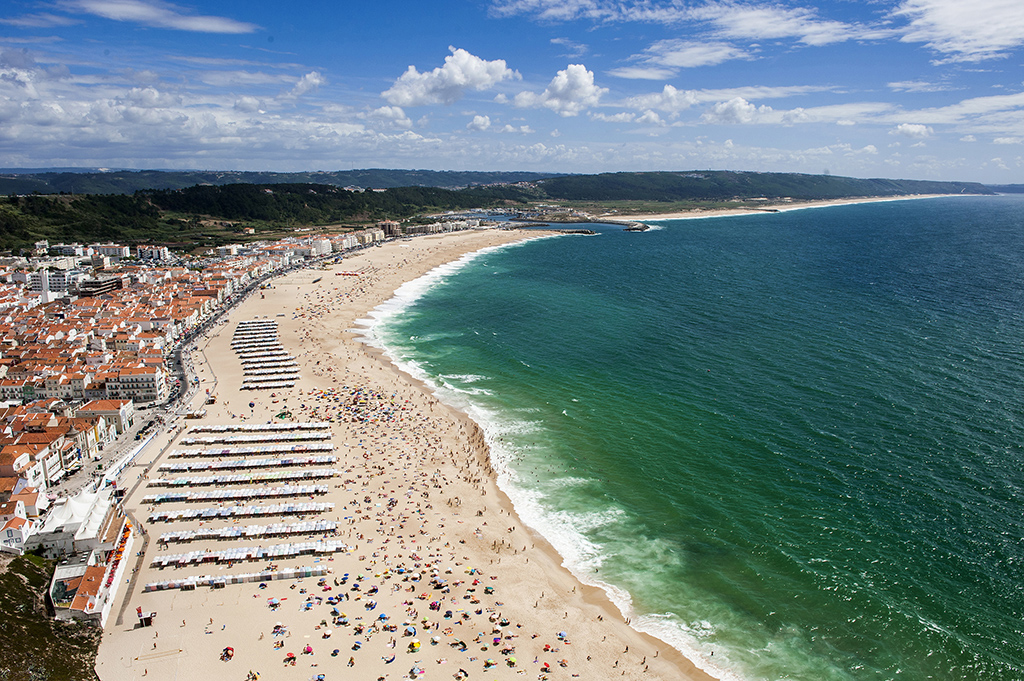
Nazaré
Towns and Villages
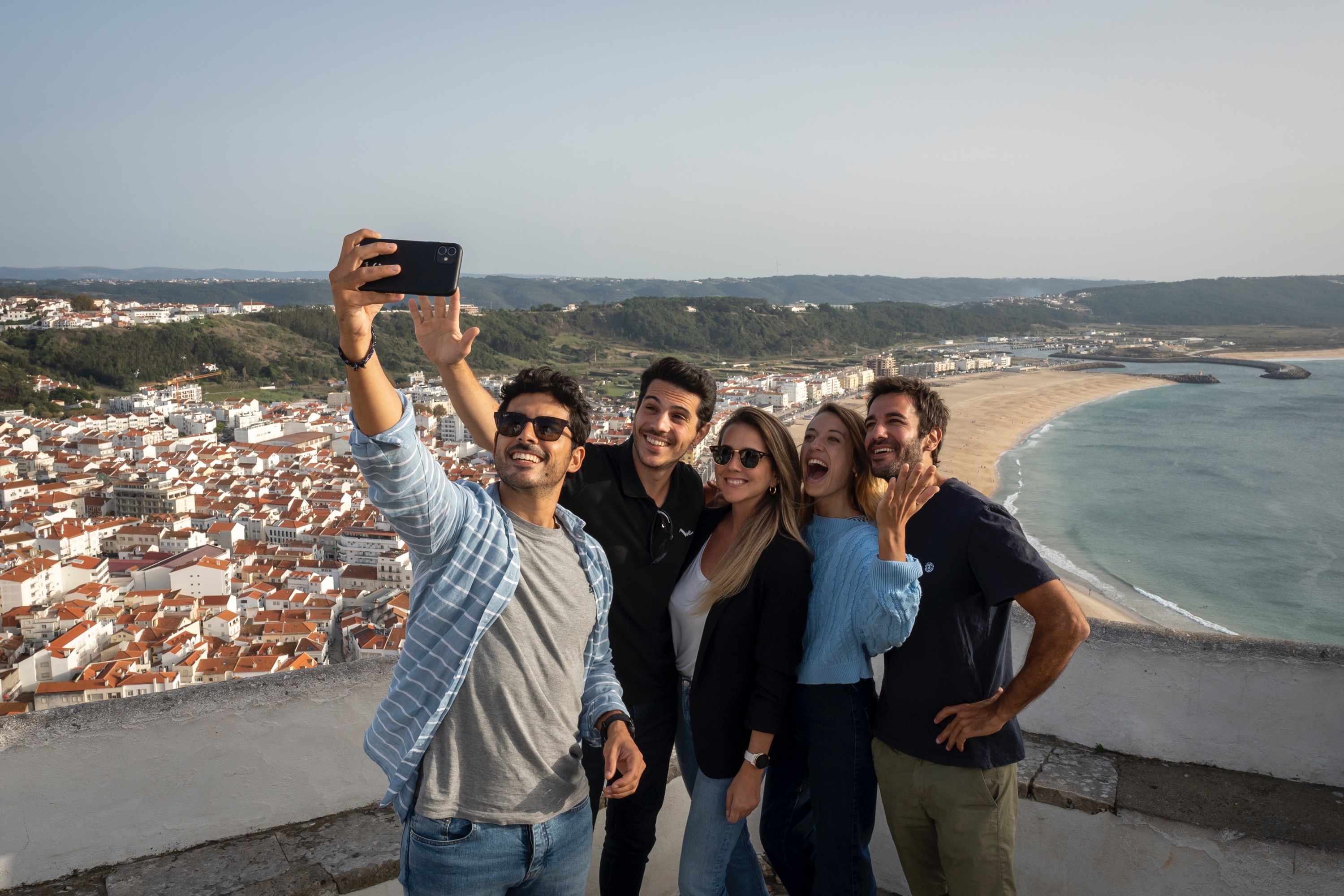
A typical fishing town, Nazaré is nowadays a busy summer resort, where side by side with the crowds of tourists, one still sees all over the streets of the town the fish-sellers, and the carapaus (horse mackerel) laid out to dry. The Sítio district, at the town's highest point (accessible by a funicular), is without doubt the best viewpoint in the area. But it is also associated with the cult of Our Lady of Nazaré who, according to the 12th century legend, was invoked by the alcaide (commander of a fortress or castle) Dom Fuas Roupinho who, while stalking a deer, was about to fall down into an abyss with no possible salvation. As a sign of gratitude for the mercy he received, Dom Fuas Roupinho ordered a small chapel to be built - the Ermida de Memória. A little way away, in the 18th century the Sanctuary of Our Lady of Nazaré was built, in whose honour grandiose festivals are held in September.
The Nazaré people's connection with the sea is reflected in the local handicrafts, in particular the nets, buoys, baskets and traditional puppets dressed in the typical costumes of seven skirts, as well as in the cuisine, with its emphasis on fish and shellfish dishes, such as caldeiradas (fish caseroles), soups, açorda (purée of bread, herbs and garlic) and the dried horse mackerel.
The most important feature of the surrounding area is the 7th century Chapel of São Gião, one of the rare holy places of the Visigoths existing in Portugal.
8
Stop 8
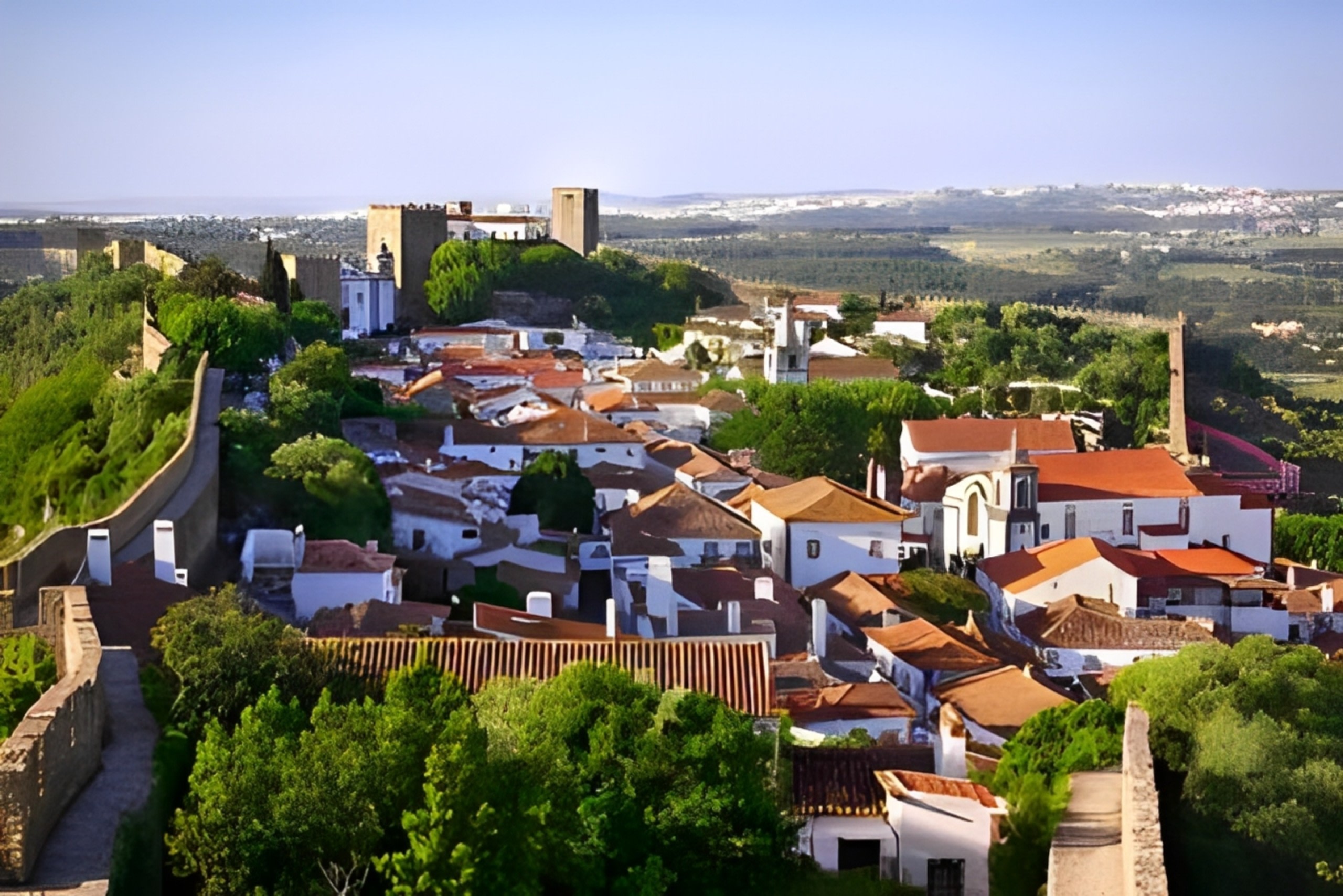
The mediaeval town of Óbidos is one of the most picturesque and well preserved in Portugal.
Close to the capital and located on high ground near the Atlantic coast, Óbidos has had a strategic importance in the territory. It had already been settled prior to the Romans’ arrival in the Iberian Peninsula, and the town prospered after being chosen by the royal family. King Dinis offered it to his wife, Queen Isabel, in the 13th century, and it became part of Casa das Rainhas (Queens’ Estate), who improved and enriched it throughout the various dynasties. This is one of the main reasons for the high concentration of churches in this small place.
You will find a well preserved castle within the walls, and a maze of streets and white houses that are a delight to stroll amongst. Along with the Manueline porticoes, the colourful window boxes and the small squares, many fine examples of religious and civil architecture from the town’s golden days provide a host of reasons for making a visit.
9
Fantastic Ride is a young Portuguese company that develops activity as a Tourist Animation Agent providing solutions in ‘Tours & Routes’ format collaborating in the promotion of Portuguese Heritage and Culture presenting the locations and history of our magnificent Portugal!
As support for tourism and local activities we offer ‘Transfers’ services to and from the airport from any location in Portugal, and can carry up to 8 passengers in a safe, comfortable, air-conditioned and free Wi-Fi hotspot. Our drivers are professionals who select the routes best suited to the needs of our customers.
We intend to establish strong relationships where customer satisfaction (and our partners) is the main objective, offering support through personalised service!
What's not included
Food and drinks
Tickets
Available languages
Guide guide
PT
EN
FR
ES
Reviews breakdown
Viator
3.0
1 reviews
5★
0
4★
0
3★
1
2★
0
1★
0
Tripadvisor
4.8
5 reviews
5★
4
4★
1
3★
0
2★
0
1★
0
Important information
Wheelchair accessible
Infants and small children can ride in a pram or stroller
Public transportation options are available nearby
Specialized infant seats are available
Transportation options are wheelchair accessible
Not recommended for travelers with poor cardiovascular health
Suitable for all physical fitness levels
Dress code is smart casual
May be operated by a multi-lingual guide
A current valid passport is required on the day of travel
• Comfortable walking shoes are recommended
Important notes
• Dress code is smart casual
• A current valid passport is required on the day of travel
• Comfortable walking shoes are recommended
About Coimbra
Coimbra, known as the City of Students, is a historic city in central Portugal with a rich academic tradition. It's home to one of the oldest universities in the world, the University of Coimbra, and is famous for its well-preserved medieval architecture, vibrant student life, and cultural heritage.
Top Attractions
University of Coimbra
One of the oldest universities in the world, the University of Coimbra is a UNESCO World Heritage site with stunning architecture and a rich history.
Historical
2-3 hours
€12 (general admission)
Coimbra Cathedral (Sé Velha)
This Romanesque cathedral is one of the most important religious buildings in Portugal, featuring beautiful architecture and historical artifacts.
Religious
1-2 hours
€3 (general admission)
Monastery of Santa Clara-a-Velha
A ruined monastery that was once the home of Queen Saint Isabel, offering a glimpse into the city's medieval past.
Historical
1-2 hours
€4 (general admission)
Botanical Garden of the University of Coimbra
A beautiful and serene garden with a diverse collection of plants, perfect for a relaxing stroll.
Nature
1 hour
Free (with University of Coimbra ticket)
Portugal dos Pequenitos
A miniature park featuring scaled-down replicas of famous Portuguese monuments and buildings, ideal for families and children.
Cultural
1-2 hours
€7 (general admission)
Must-Try Local Dishes
Cozido à Portuguesa
A hearty stew made with various meats, vegetables, and beans, cooked slowly in a clay pot.
Dinner
Contains meat and beans
Bacalhau à Brás
A popular dish made with shredded salted cod, onions, potatoes, and eggs.
Dinner
Contains fish and eggs
Leitão à Bairrada
Roast suckling pig, a specialty of the Bairrada region, served with a crispy skin and tender meat.
Dinner
Contains pork
Pastel de Tentúgal
A traditional pastry from the Tentúgal region, filled with sweet cream and topped with cinnamon.
Dessert
Contains dairy and sugar
Popular Activities
Hiking in Bussaco Forest
Kayaking on the Mondego River
Visiting thermal spas in Luso
Strolling along the Mondego River
Exploring the University of Coimbra
Visiting the Coimbra Cathedral (Sé Velha)
Swimming at nearby beaches
Visiting the Festa das Latas (Bottle Caps Festival)
Best Time to Visit
May to September
This is the best time to visit Coimbra for pleasant weather and outdoor activities. The city is lively with students and tourists.
15°C to 30°C
59°F to 86°F
Practical Information
Language
- Official: Portuguese
- Widely spoken: English, French, Spanish
- English: Moderately spoken
Currency
Euro (EUR)
Time Zone
GMT+1 (Western European Time)
Electricity
230VV, 50HzHz
Safety Information
Overall Safety Rating: Generally safe
Coimbra is generally a safe city for travelers, with low crime rates. However, as with any destination, it's important to be aware of your surroundings and take precautions to protect your belongings.
Important Precautions:
- • Keep valuables secure
- • Be cautious of your surroundings, especially at night
- • Use licensed taxis or ride-sharing apps
Getting there
By air
- Francisco de Sa Carneiro Airport • 110 km from Coimbra
By train
Coimbra-B Station, Coimbra A Station
By bus
Coimbra Bus Terminal
Getting around
Public transport
The bus system is efficient and covers most parts of the city.
Taxis
Available • Apps: Bolt, FreeNow
Rentals
Car, Bike, Scooter
Neighborhoods
Alta
Baixa
Sé Nova
Day trips
Conímbriga
15 km from Coimbra • Half day
Conímbriga is a well-preserved Roman settlement with impressive mosaics, ruins, and a museum.
Luso and Bussaco Forest
20 km from Coimbra • Full day
Luso is a charming spa town known for its thermal waters, while Bussaco Forest offers beautiful hiking trails and a historic palace.
Aveiro
60 km from Coimbra • Full day
Aveiro is a charming coastal city known as the 'Venice of Portugal' for its canals and colorful moliceiro boats.
Festivals
Queima das Fitas (Ribbon Burning Festival) • Late May
Festa das Latas (Bottle Caps Festival) • December
Pro tips
- Visit the University of Coimbra early in the morning or late in the afternoon to avoid crowds and enjoy a more peaceful experience
- Try local specialties, such as Cozido à Portuguesa, Bacalhau à Brás, and Pastel de Tentúgal, at iconic eateries like O Sucesso, Zé Manel dos Frangos, and Café Santa Cruz
- Explore the city's neighborhoods, such as Alta, Baixa, and Sé Nova, to discover hidden gems, local shops, and cultural sites
- Take a day trip to Conímbriga, Luso and Bussaco Forest, or Aveiro to experience the region's history, nature, and unique culture
- Attend a Fado performance at the University of Coimbra for a traditional Portuguese music experience
From $25
per person
Price varies by option
Secure booking
Free cancellation available
Instant confirmation