

Private Ringstrasse Project Walking Tour
Active
3h
For a full refund, cancel at least 24 hours before the scheduled departure time.
Instant confirmation
Mobile or paper ticket accepted
About this experience
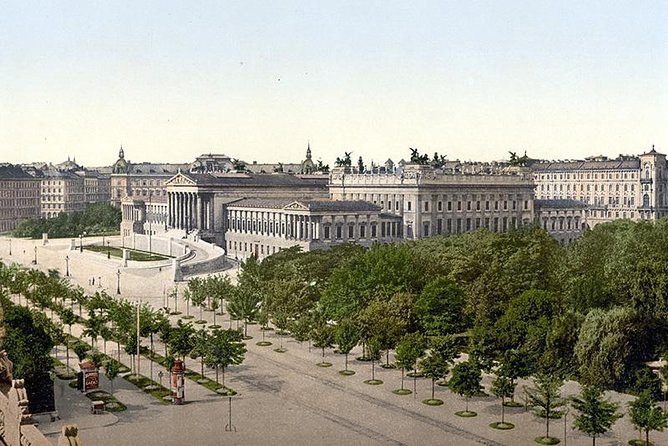
On a private, half-day history tour, embark Vienna’s most famous boulevard, the Ringstasse, which was meant to dramatically prove the city’s cosmopolitanism and modernity. In the company of a scholar guide, learn about the controversies of the boulevard’s construction, it’s brilliant architectural completion, and how the Ring became the social hub of Vienna city life.
Available options
Start Times
What's included
Professional guide
3-hour guided tour of Vienna’s Ringstrasse
What you'll see
This walk, in the company of a historian, takes you along this outstanding boulevard called “Ringstrasse” and gives you an in-depth introduction to the political and philosophical motivations behind the project. In addition, you learn about the social and geographical impact it had on the city in the years to come. We start off in front of the impressive City Hall (“Rathaus”), one of the landmarks along the Ring and a beloved meeting point.
When the project was introduced, it was proclaimed that a large number of public buildings were to be placed along “Ringstrasse”. During our discussion, we will consider the historical style in which these public institutions were built and why certain styles where chosen for certain buildings. You will also become familiar with the most influential architects along the “Ringstrasse”. For each of those architects, winning a commission in this prestigious project meant a completely new status for their future careers.
The construction of the “Ringstrasse” was to be funded through the building of privately financed apartment houses. However, it proved difficult to sell the properties. First of all, it was obvious that it would take years before the Ring project would be finished. Nobody could be found who was immediately attracted to living on a building site. Second, the established nobility of Vienna feared the mystery of future occupants in an entirely new district. Because The Ring was a terrae incognitae in society circles, any nouveau riche could become your neighbour! The story of the community who ended up living along the “Ringstrasse” will add another dimension to our discussion along the Ring
Of course, a boulevard functions as a kind of public catwalk and The Ring was most definitely the place of places in Vienna to see, be seen and meet with people from the moment of its completion. Therefore several cafes and restaurants were established along the boulevard. At the end of our tour we will visit “Cafe Schwarzenberg” est. 1861 to get an insight into the thriving Vienna café culture at the latter half of the 19th Century.
What's not included
Food and drinks
Hotel pickup and drop-off
Available languages
Guide guide
EN
Reviews breakdown
Viator
5.0
1 reviews
5★
1
4★
0
3★
0
2★
0
1★
0
Tripadvisor
5.0
1 reviews
5★
1
4★
0
3★
0
2★
0
1★
0
Important information
Public transportation options are available nearby
Suitable for all physical fitness levels
This tour can also be booked as a children’s family tour where your guide focuses on the symbols on various buildings and on everyday life in Vienna around 1900
Meeting point
Please meet your guide outside Café Landtmann, Universitätsring 4, A-1010 Vienna, Austria
About Vienna
Vienna, the capital of Austria, is renowned for its rich imperial history, vibrant arts scene, and stunning architecture. Known as the 'City of Music', it has been home to legendary composers like Mozart, Beethoven, and Strauss. The city's elegant cafes, grand palaces, and world-class museums make it a cultural treasure trove.
Top Attractions
Schönbrunn Palace
A former imperial summer residence, Schönbrunn Palace is a stunning example of Baroque architecture. The palace and its gardens are a UNESCO World Heritage site.
Historical/Architecture
2-3 hours
€18 for Imperial Tour, €24 for Grand Tour
St. Stephen's Cathedral
A masterpiece of Gothic architecture, St. Stephen's Cathedral is a symbol of Vienna. The cathedral's multi-colored tile roof is iconic.
Religious/Architecture
1-2 hours
Free entry, €6 for tower climb, €7 for treasury
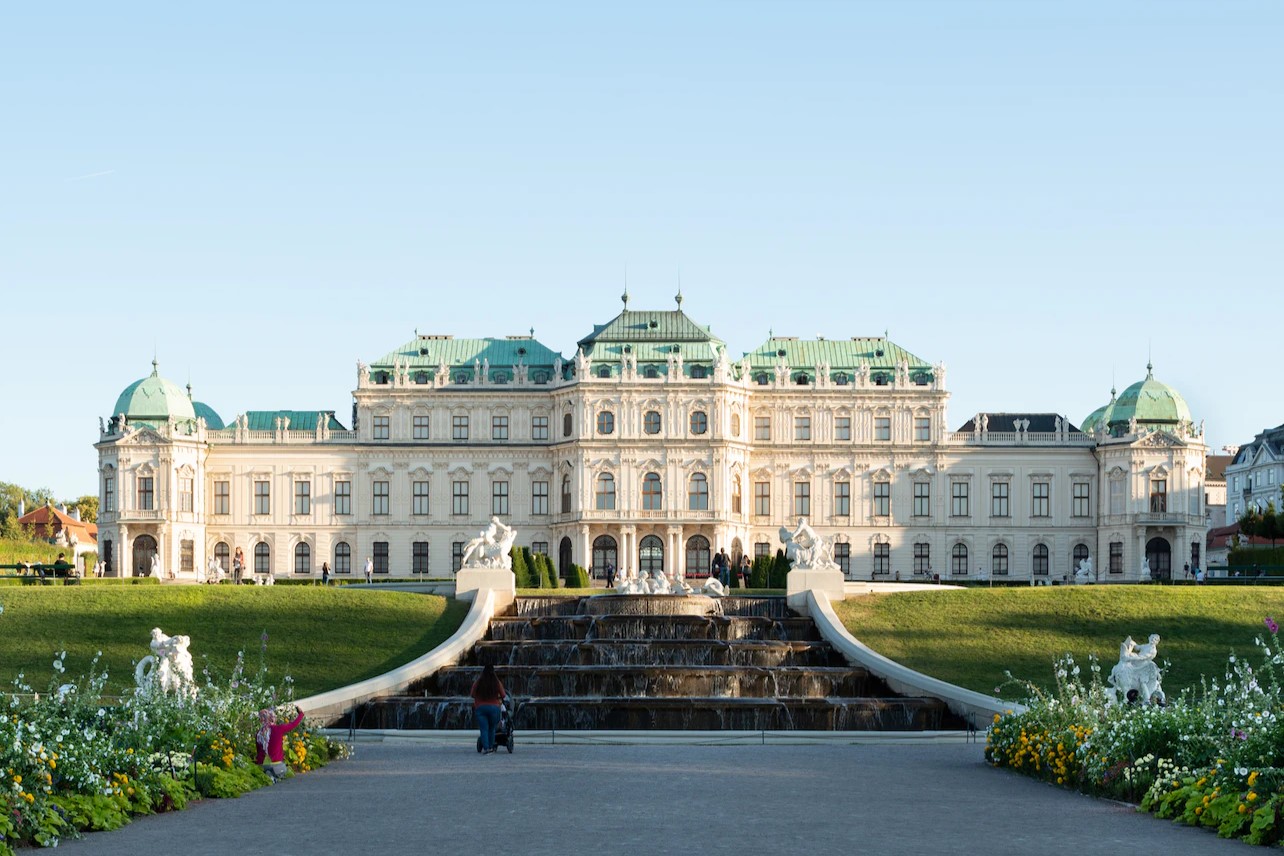
Belvedere Palace
A historic building complex with two Baroque palaces, the Belvedere houses the largest collection of Gustav Klimt paintings, including 'The Kiss'.
Historical/Art/Museum
2-3 hours
€16 for Upper Belvedere, €14 for Lower Belvedere
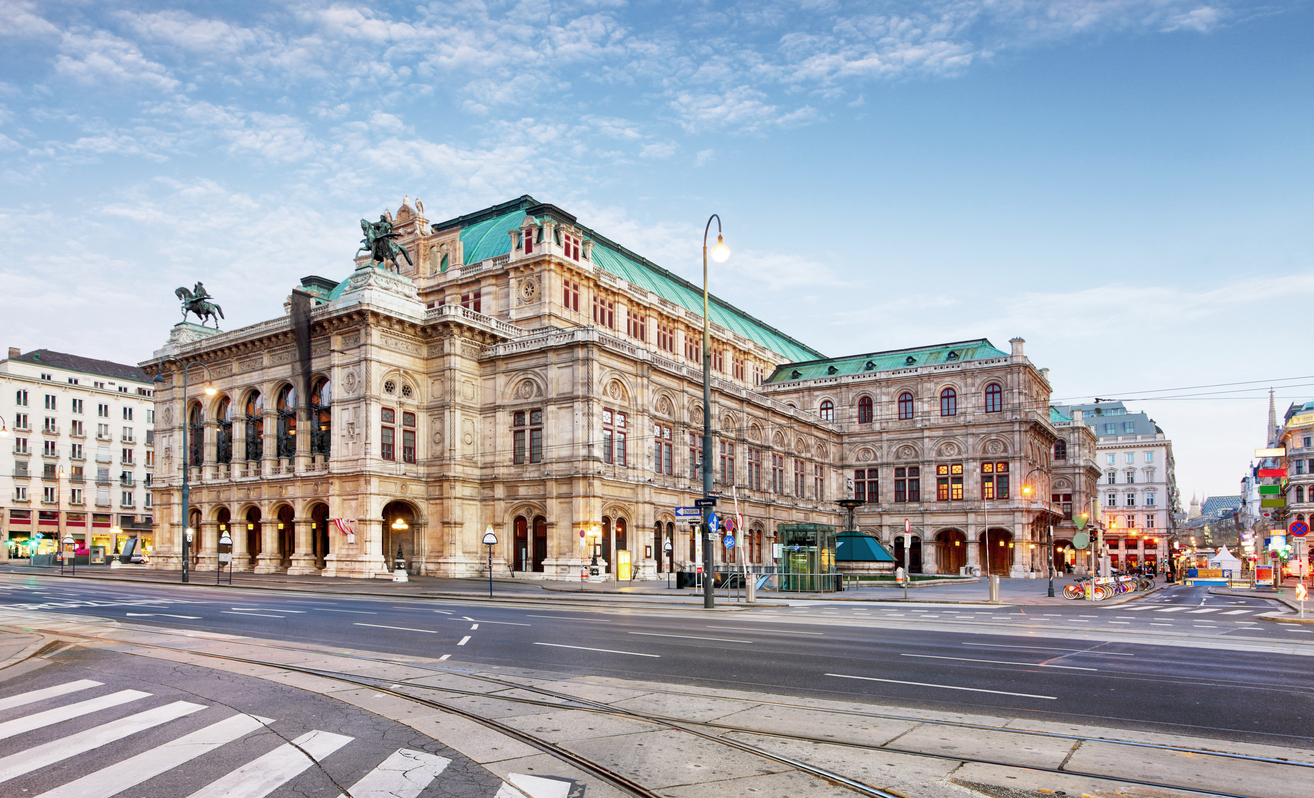
Vienna State Opera
One of the world's leading opera houses, the Vienna State Opera offers performances of opera, ballet, and concerts.
Cultural/Entertainment
2-4 hours (performance length)
€10-200 depending on performance and seat
Hofburg Palace
The former imperial palace, Hofburg Palace is now home to several museums, the Austrian National Library, and the Spanish Riding School.
Historical/Museum
2-3 hours
€14 for Sisi Museum and Imperial Apartments, €20 for Silver Collection
Must-Try Local Dishes
Wiener Schnitzel
A thin, breaded, and fried veal cutlet, traditionally served with lemon and potato salad or dumplings.
Dinner
Contains gluten and dairy
Tafelspitz
Boiled beef, usually served with root vegetables, apple sauce, and horseradish.
Dinner
Gluten-free, dairy-free
Sachertorte
A famous chocolate cake with a thin layer of apricot jam, covered in dark chocolate glaze.
Dessert
Contains gluten and dairy
Apfelstrudel
A thin pastry filled with spiced apples, raisins, and sugar, often served with vanilla sauce or ice cream.
Dessert
Contains gluten
Popular Activities
Hiking in the Vienna Woods
Cycling along the Danube
Kayaking on the Danube
Coffee house hopping
Spa day at a luxury hotel
Strolling through Schönbrunn Palace Gardens
Visiting museums and galleries
Attending opera or concert performances
Best Time to Visit
May to September
This is the best time to visit Vienna for pleasant weather and outdoor activities. The city hosts numerous festivals and cultural events during these months.
15°C to 30°C
59°F to 86°F
Practical Information
Language
- Official: German
- Widely spoken: English, Austro-Bavarian dialect
- English: Widely spoken in tourist areas, moderately spoken elsewhere
Currency
Euro (EUR)
Time Zone
GMT+1 (CET), GMT+2 (CEST during daylight saving time)
Electricity
230VV, 50HzHz
Safety Information
Overall Safety Rating: Generally safe
Vienna is a safe city with low crime rates. However, as with any major city, petty crime and pickpocketing can occur in tourist areas.
Important Precautions:
- • Keep valuables secure and out of sight
- • Use licensed taxis or ride-sharing apps
- • Be cautious of strangers offering help or services
Getting there
By air
- Vienna International Airport • 18 km from city center
By train
Vienna Hauptbahnhof (Main Station), Vienna Westbahnhof
By bus
Vienna International Bus Terminal, Erdberg Bus Station
Getting around
Public transport
Vienna's metro system is efficient and user-friendly, with four lines (U1, U2, U3, U4).
Taxis
Available • Apps: Bolt, FreeNow
Rentals
Car, Bike, Scooter
Neighborhoods
Innere Stadt
Leopoldstadt
Wieden
Hietzing
Day trips
Bratislava
80 km (50 miles) • Full day
The capital of Slovakia, Bratislava is a charming city with a rich history, beautiful architecture, and a vibrant cultural scene.
Salzburg
300 km (186 miles) • Full day or overnight
The birthplace of Mozart, Salzburg is a beautiful city with a rich musical heritage, stunning architecture, and scenic surroundings.
Hallstatt
200 km (124 miles) • Full day or overnight
A picturesque lakeside village in the Austrian Alps, Hallstatt is known for its stunning natural beauty and historic salt mines.
Festivals
Vienna Festival (Wiener Festwochen) • May to June
Vienna Opera Ball (Wiener Opernball) • Late February or early March
Vienna Christmas Markets (Wiener Christkindlmarkt) • Late November to December 26
Pro tips
- Visit major attractions early in the morning or late in the afternoon to avoid crowds
- Purchase a Vienna Pass for unlimited transport and attractions, saving time and money
- Explore the city's coffee house culture and try traditional pastries like Sachertorte and Apfelstrudel
- Take a day trip to nearby cities like Bratislava or Salzburg for a change of pace
- Use public transport or walk to explore the city, as driving can be challenging and expensive
From $25
per person
Price varies by option
Secure booking
Free cancellation available
Instant confirmation