8-Hour Tour of Palermo, Araba Normanna and Monreale
Active
8h
For a full refund, cancel at least 24 hours before the scheduled departure time.
Instant confirmation
Mobile or paper ticket accepted
About this experience
The tour will lead you to discover the period of the Altavilla dynasty, an era of great wealth and splendor for all of Sicily.
Frederick II, more than any other Swabian king, well understood the extraordinary wisdom of the oriental school and recognized the immense value of multiculturalism. In fact, his court was frequented by masters of different civilizations whose interaction developed a unique style that led to the creation of authentic masterpieces, now admired and recognized all over the world.
Available options
TOUR WITH PRIVATE DRIVER
Tour with private driver: 8-Hour Self-Guided Private Driver Tour in Palermo, Araba Normanna and Monreale.<br/>Pickup included
What's included
Private transportation
WiFi on board
Bottled water
Air-conditioned vehicle
Italian-English bilingual driver
Detailed itinerary
1
Stop 1
The first stop on the tour is the Norman palace.
Built around the tenth century, it became a royal residence of the Norman kings of exceptional sumptuousness and refinement.
They chose the technical mastery of Muslim workers for their architecture, thus giving birth to "Arab-Norman art". The set of buildings that make up today's Royal Palace is the result of the additions made between the 16th and 17th centuries, which gave the complex a unified appearance.
Inside it is possible to admire, in addition to the splendid Palatine Chapel, the Sala d'Ercole, built in 1560 and is so called due to the presence of paintings representing scenes of the mythological hero created by Giuseppe Velasquez.
The Pisan Tower has housed the Astronomical Observatory since 1791. Since 1946 the Palazzo dei Normanni has been the seat of the Assembly of the Sicilian Region and the Sicilian Parliament meets there.
2
Stop 2
The Cathedral of Monreale is one of the most precious examples of Arab-Norman art, a UNESCO heritage site.
There is a fee to enter the cathedral. You will be able to admire the vastness, the harmony of the architectural elements and the splendor of the mosaics of Christ Pantocrator.
The cloister, in front of the Church, is part of the same architectural complex and is rich in religious decorations from the Old and New Testaments.
Crossing Piazza Vittorio Emanuele II, where the famous cathedral and the town hall stand, you reach the Belvedere, a terraced park, which overlooks the Conca d'Oro and the city of Palermo with a wonderful view.
3
Stop 3
The cathedral of Palermo was an early Christian basilica, a mosque, then a church again. The alternation of the dominations and of the respective cultures, led over time to the insertion of new architectural and artistic elements, while remaining the predominant Arab-Norman style. All that remains is to understand its history and discover its treasures among chapels, frescoes, royal tombs and even a particular sundial.
Entrance to the cathedral is free, but a ticket must be paid to visit the crypt, treasury, roofs and mausoleums.
4
Stop 4
Located in the historic center of Palermo on Piazza Bellini, it was built in 1143 at the behest of George of Antioch, Grand Admiral of the Kingdom of the Two Sicilies, under Roger II. Subsequently it was merged with the nearby convent of the Benedictine nuns, founded by Goffredo and Eloisa Martorana, from which derives the alternative name of the Church: the "Martorana".
The Church is the most important Byzantine-style building in Palermo, although it has purely Islamic elements.
The Church has an inscribed plan, oriented with the apse to the east and the facade to the west to direct the prayers towards the east, according to the typical ritual of the Byzantine churches. The choir is supported by columns from previous Norman buildings, the upper part of the walls and the dome are entirely covered with Byzantine mosaics, the oldest in Sicily and among the most important in the world.
5
Inscribed on the UNESCO World Heritage List, the church of San Cataldo is a wonderful example of Arab-Norman architecture.
It is located in Piazza Bellini, in an elevated position and annexed to the church of Santa Maria dell'Ammiraglio (la Martorana). The building dates back to the Norman period of William I.
Externally, the church of San Cataldo has a simple and severe facade. Made of sandstone and characterized by a parallelepiped shape, some blind arches house three large windows on each side. In the upper part there is an arabesque crenellation, above which the three characteristic red domes stand out, which are located in correspondence with the central nave.
6
The Church of S. Giovanni degli Eremiti, one of the most famous medieval buildings in Palermo, was built in the Norman era, between 1130 and 1148, under the reign of Roger II, but radically restored in 1882 by Giuseppe Patricolo.
The internal constructive module of the church is given by a cubic structure surmounted by a dome. This module is repeated five times: two in the spans of the single nave, three in the transept. The juxtaposition of the square, which represents the earth, with the circle, which represents the sky, recurs both in the Fatimite Islamic culture and in the Byzantine one. The interior is bare and collected.
What's not included
Tour guide (bookable on request)
Important information
Service animals allowed
Suitable for all physical fitness levels
Note: Our driver is not a specialized guide, he only provides background information about the tour.
About Sicily
Sicily, the largest island in the Mediterranean Sea, is a vibrant blend of history, culture, and natural beauty. Known for its rich Greek and Roman heritage, stunning landscapes, and mouthwatering cuisine, Sicily offers a unique travel experience that captivates visitors with its diverse attractions and warm hospitality.
Top Attractions
Valley of the Temples
A UNESCO World Heritage Site featuring some of the most well-preserved ancient Greek temples outside of Greece. The site is a testament to Sicily's rich Greek heritage and offers a glimpse into the island's ancient past.
Historical
2-3 hours
€10
Mount Etna
Europe's highest and most active volcano, offering stunning landscapes, hiking trails, and the opportunity to witness volcanic activity up close. Mount Etna is a must-visit for nature lovers and adventure seekers.
Nature
Half day to full day
€30-€100 (depending on the tour and activities)
Palermo Cathedral
A stunning example of Norman-Arab-Byzantine architecture, Palermo Cathedral is a masterpiece of religious art and history. The cathedral's interior is adorned with beautiful mosaics, sculptures, and tombs of notable historical figures.
Architectural
1-2 hours
€7
Taormina
A charming hilltop town known for its stunning views of the Ionian Sea and the iconic Greek Theatre. Taormina is a popular tourist destination offering a mix of history, culture, and natural beauty.
Cultural
Half day to full day
Free to explore, €10 for the Greek Theatre
Cefalù
A picturesque coastal town known for its beautiful beaches, historic landmarks, and charming medieval streets. Cefalù is a popular destination for both relaxation and cultural exploration.
Beach
Half day to full day
Free to explore, €5 for La Rocca
Must-Try Local Dishes
Arancini
Fried rice balls filled with ragù, mozzarella, and peas, often shaped like small oranges.
Snack
Vegetarian options available
Cannoli
Crispy pastry tubes filled with sweet ricotta cheese, often garnished with pistachios or chocolate chips.
Dessert
Contains dairy and gluten
Pasta alla Norma
Pasta with a sauce made from tomatoes, fried eggplant, ricotta cheese, and basil.
Main Course
Vegetarian
Granita
A semi-frozen dessert made from sugar, water, and various flavors, typically served with a brioche for breakfast.
Dessert
Vegan and gluten-free options available
Popular Activities
Hiking in the Madonie Regional Park
Volcano trekking on Mount Etna
Beach lounging in Cefalù
Spa treatments in Taormina
Visiting the Valley of the Temples
Exploring the historic center of Palermo
Snorkeling and diving in the Aeolian Islands
Boat tours along the coast
Best Time to Visit
May to June, September to October
The peak seasons offer pleasant weather, fewer crowds, and ideal conditions for exploring Sicily's attractions. The sea is warm enough for swimming, and the countryside is lush and green.
20-28°C
68-82°F
Practical Information
Language
- Official: Italian
- Widely spoken: Sicilian, English
- English: Moderately spoken in tourist areas, limited in rural areas
Currency
Euro (EUR)
Time Zone
GMT+1 (Central European Time, CET), GMT+2 (Central European Summer Time, CEST) during daylight saving time
Electricity
220VV, 50HzHz
Safety Information
Overall Safety Rating: Generally safe, with some areas requiring caution
Sicily is generally a safe destination for travelers, with low crime rates and a welcoming atmosphere. However, petty crime and scams can occur in tourist areas, and some regions may have higher crime rates.
Important Precautions:
- • Keep valuables secure and out of sight, especially in crowded areas and on public transportation.
- • Use licensed taxis or ride-sharing apps, and insist on using the meter or agreeing on a price before starting your journey.
- • Be cautious of strangers approaching you with petitions, distractions, or overly friendly advances.
Getting there
By air
- Palermo Airport • 32 km (20 miles) from Palermo city center
- Catania-Fontanarossa Airport • 7 km (4.3 miles) from Catania city center
By train
Palermo Centrale, Catania Centrale
By bus
Palermo Bus Terminal, Catania Bus Terminal
Getting around
Public transport
Buses are the primary mode of public transport in Sicily, with regular services connecting major cities and towns. The network can be complex, but it is affordable and convenient.
Taxis
Available • Apps: Uber, FreeNow
Rentals
Car, Bike, Scooter
Neighborhoods
Palermo Centro Storico
Taormina
Catania Centro
Agrigento
Day trips
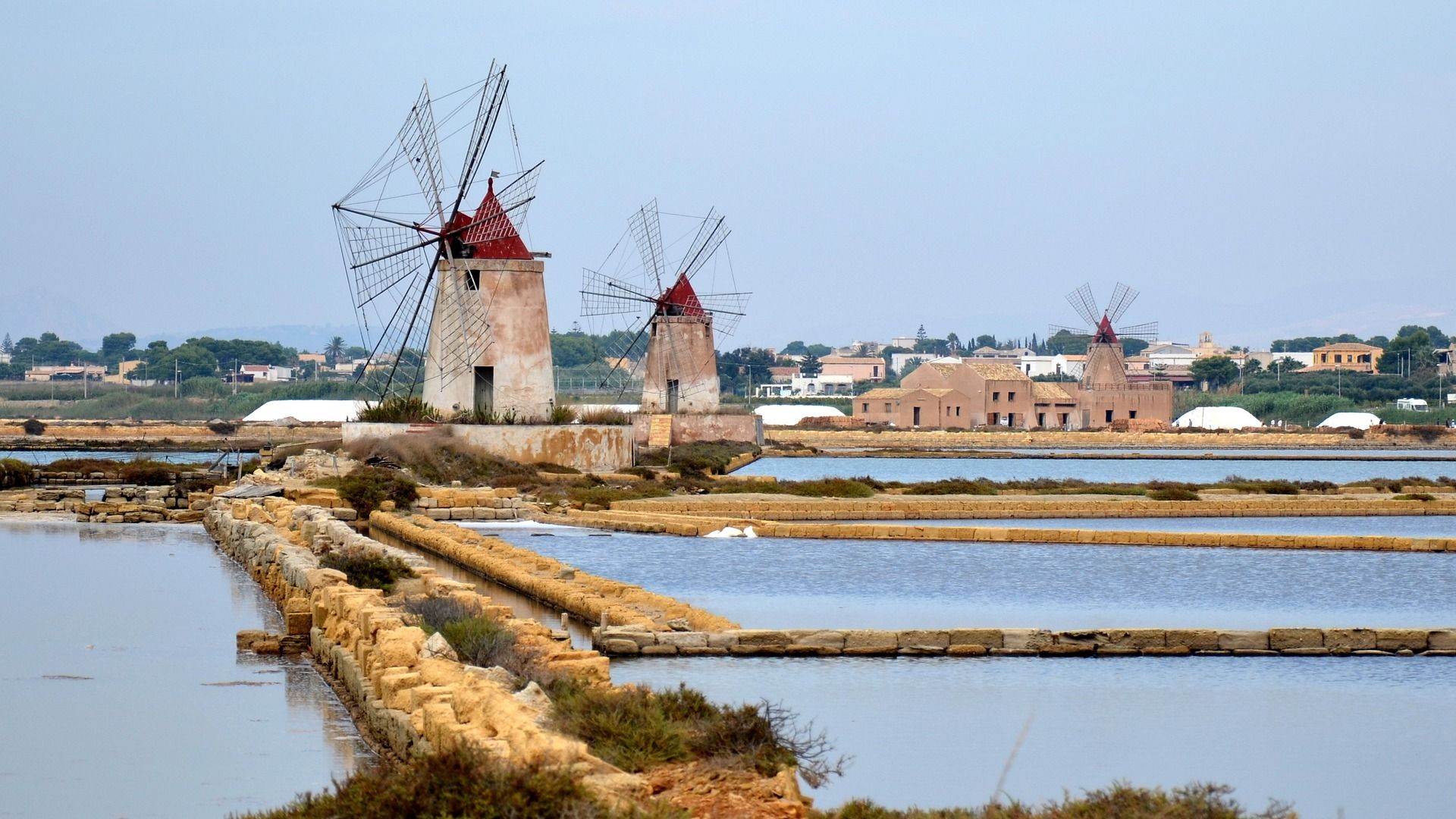
Aeolian Islands
25-50 km (16-31 miles) from Milazzo • Full day to overnight
A group of seven volcanic islands known for their stunning landscapes, hot springs, and unique geological features. The islands offer a variety of activities, including hiking, swimming, and relaxing in natural hot springs.
Erice
100 km (62 miles) from Palermo • Half day to full day
A medieval hilltop town known for its stunning views, historic landmarks, and charming streets. Erice is a popular destination for those interested in history, culture, and panoramic views.
Noto
90 km (56 miles) from Syracuse • Half day to full day
A picturesque Baroque town known for its stunning architecture, charming streets, and rich history. Noto is a popular destination for those interested in art, history, and culture.
Festivals
Infiorata di Noto • May
Taormina Film Fest • June
Sagra del Miele • September
Pro tips
- Learn a few basic Italian or Sicilian phrases to enhance your experience and connect with locals.
- Visit local markets and try street food for an authentic and affordable culinary experience.
- Explore the island's hidden gems and lesser-known attractions, such as the Aeolian Islands, the Madonie Regional Park, and the Zingaro Nature Reserve.
- Rent a car for flexibility and access to remote areas, but be prepared for narrow roads, aggressive drivers, and limited parking.
- Visit during the shoulder or off-peak seasons (April-June, September-October) for better prices, fewer crowds, and pleasant weather.
From $25
per person
Price varies by option
Secure booking
Free cancellation available
Instant confirmation