Mahabalipuram Private tour from Chennai by car with guide and lunch by Wonder
Active
7h
For a full refund, cancel at least 24 hours before the scheduled departure time.
Instant confirmation
Mobile or paper ticket accepted
About this experience
Mamallapuram (also called Mahaballipuram) is about an hour's drive from Chennai on the East Coast Road. It was the second capital and seaport of the Pallava Kings who ruled in the 5th century. Local legend has it that there was once a beautiful city here with seven temples, which the Gods submerged under the sea in anger.until in 2002, an Indo-British team of divers discovered a series of man-made structures under water, covering an area of several square miles.Today at Mamallapuram, you can see the famous Shore Temple, the only surviving temple out of the original seven (the rest have sunk under the sea). The Shore Temple is among the oldest temples of South India and represents the final flowering of Pallava art. Arjuna's Penance, one of the world's biggest bas-reliefs depicts the story of the descent of the River Ganges from Heaven to Earth. Cave temples and massive monolithic sculptures (carved from a single large block of granite) make Mamallapuram a place to remember.
Available options
Mahabalipuram day trip from Chennai by Wonder tours
Pickup included
What's included
Entry/Admission - Trimurti Cave
Pick and drop to Chennai hotel
Lunch
Entrance charges
Professional tour guide
Detailed itinerary
1
Make the first stop of the day at the Pancharathas, or five chariots, a series of monolithic temples built by the Pallavas.These are rock cut monolith temples structures built in the 7th century. Each of the 5 rathas or chariots are dedicated to the lead cast of the Mahabharat epic- Draupadi, Arjuna, Nakul-Sahadeva, Bhima and Yudhister. There is also a sculpture of an elephant next to the ratha of Nakul-Sahadeva. Once you stand towards the rear of the elephant you will notice that there is an uncanny resemblance between the rear of the chariot and the elephant.
2
Stop 2
We next visit Arjuna’s Penace, a bas-relief monument that’s considered one of India’s most magnificent pieces of ancient art, depicting vivid scenes from the Mahabharata. The relief is 100 feet long and 45 feet tall! The main story being told is how Arjuna, one of the Pandava brothers, performed severe austerities in order to obtain Lord Shiva's weapon.
3
Stop 3
The next stop is Krishna’s Butterball, a granite boulder that’s poised on a stony slope. This curious boulder seems to defy Newton's laws of gravity and has not moved an inch despite being in this precarious position on the slope for more than a thousand years.
4
Stop 4
Our last port of call is the Shore Temple. The magnificent temple overlooks the Bay of Bengal and was an important centre during the reign of the Pallavas when Mahabalipuram was the main port of their Kingdom. Built by King Raja Simha during the early 8th century, the Shore Temple is a landmark in the architectural landscape of India. Marco Polo referred to this as the seven pagodas. The existing temple is the last surviving of the 7 which once stood as a beacon for sea farers.
5
The Varaha cave is carved out of huge piece of granite and dates back to the 7th century. This temple took several decades to be completed. There are squatting lions adorning the pillars which support the hall. Another highlight are the sculptures of two guardian angels who protect the sanctum.
6
Pandava cave is the largest cave-temple at Mahabalipuram The cave is supported on six pillars and two pilasters. The highlight of the architecture are the spectacular sculptures of mythical creatures called Yali on the pillars.
7
Two of the most impressive works of art of Mahabalipuram reside in this cave. It has 2 imposing bas-reliefs on the walls. The first one is Lord Vishnu sleeping on top of the coils of a serpent. The other is with Goddess Durga fighting with the demon Mahishasura on a lion.
8
This is a imposing chariot carved out of a single stone. Originally dedicated to Lord Shiva, it now has the deity of his son Lord Ganesh. It was built in the 7th century by King Mahendravarman I. The other highlight of this temple are the 18 inscriptions in ancient grantha and nagari scripts of Sanskrit.
9
Built in the year 640, it is India’s oldest light house and one of the oldest in the world. Mahabalipuram was a very busy port since the 7th century and hence this lighthouse played a significant role in keeping mariners safe.
What's not included
Personal expenses
Gratuities
Beverages
Available languages
Guide guide
EN
FR
Written guide
EN
Reviews breakdown
Viator
4.3
22 reviews
5★
14
4★
4
3★
2
2★
0
1★
2
Tripadvisor
4.9
114 reviews
5★
104
4★
6
3★
2
2★
2
1★
0
Important information
Public transportation options are available nearby
Not recommended for travelers with spinal injuries
Not recommended for pregnant travelers
Not recommended for travelers with poor cardiovascular health
Suitable for all physical fitness levels
About Chennai
Chennai, the capital of Tamil Nadu, is a vibrant coastal city known for its rich history, cultural heritage, and bustling streets. It's a melting pot of tradition and modernity, offering everything from ancient temples to modern IT hubs.
Top Attractions
Marina Beach
Marina Beach is one of the longest urban beaches in the world, stretching over 13 km along the Bay of Bengal.
Beach
1-2 hours
Free
Fort St. George
This historic fort was the first English fortress in India and is now a museum showcasing the city's colonial past.
Historical
1-2 hours
INR 50
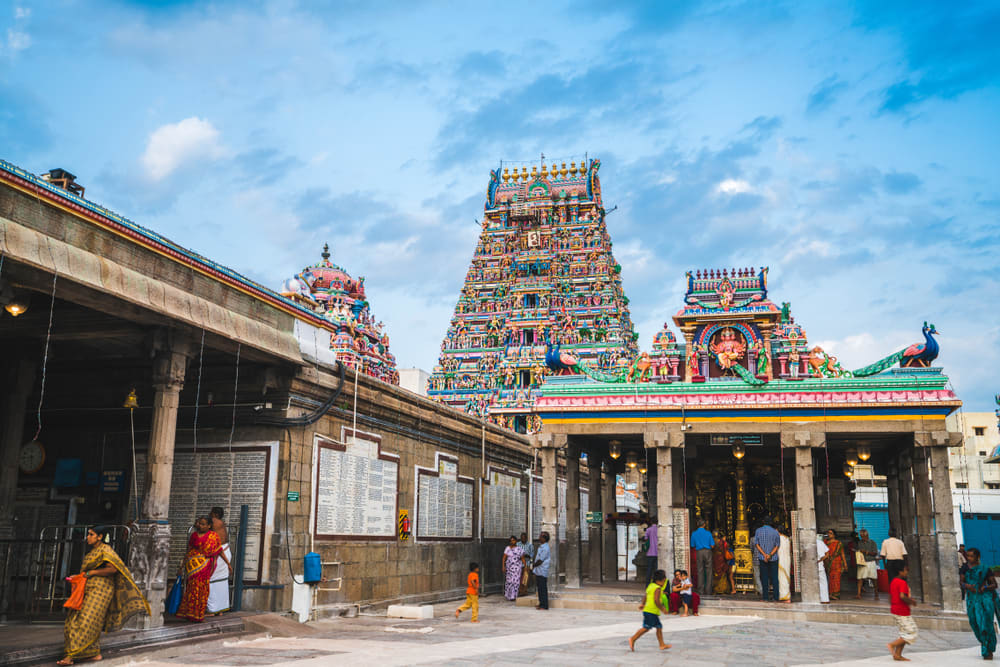
Kapaleeshwarar Temple
This ancient temple dedicated to Lord Shiva is a stunning example of Dravidian architecture and a major pilgrimage site.
Religious
1-2 hours
Free
Government Museum
One of the oldest museums in India, it houses a vast collection of artifacts, including bronze sculptures, paintings, and historical artifacts.
Museum
2-3 hours
INR 25
Breezy Beach
A quieter alternative to Marina Beach, Breezy Beach is a popular spot for locals and tourists alike.
Beach
2-3 hours
Free
Must-Try Local Dishes
Dosa
A thin, crispy crepe made from fermented rice and lentil batter, often served with sambar and chutney.
Breakfast/Lunch
Vegetarian
Idli
Soft, steamed rice cakes made from fermented batter, typically served with sambar and chutney.
Breakfast
Vegetarian
Filter Coffee
A strong, aromatic coffee made using a traditional filter, often served with milk and sugar.
Drink
Non-vegetarian
Chettinad Chicken
A spicy, flavorful chicken dish from the Chettinad region, known for its unique blend of spices.
Lunch/Dinner
Non-vegetarian
Popular Activities
Scuba diving
Snorkeling
Surfing
Beach visits
Spa treatments
Yoga
Temple visits
Music and dance performances
Best Time to Visit
November to February
This is the best time to visit Chennai as the weather is pleasant and ideal for sightseeing.
25°C to 35°C
77°F to 95°F
Practical Information
Language
- Official: Tamil
- Widely spoken: English, Hindi
- English: Widely spoken
Currency
Indian Rupee (INR)
Time Zone
GMT+5:30
Electricity
230VV, 50HzHz
Safety Information
Overall Safety Rating: Exercise caution
Chennai is generally safe for tourists, but petty crime and scams can occur, especially in crowded areas. Exercise caution and be aware of your surroundings.
Important Precautions:
- • Use licensed taxis or app-based services like Ola and Uber.
- • Be cautious when using ATMs, especially at night.
- • Avoid carrying large amounts of cash.
Getting there
By air
- Chennai International Airport • 20 km from city center
By train
Chennai Central, Chennai Egmore
By bus
Koyambedu, CMBT
Getting around
Public transport
The Chennai Metro is a modern, efficient, and air-conditioned system that covers major parts of the city.
Taxis
Available • Apps: Ola, Uber
Rentals
Car, Bike, Scooter
Neighborhoods
Mylapore
T. Nagar
Besant Nagar
Day trips
Mahabalipuram
60 km from Chennai • Half day to full day
A UNESCO World Heritage Site known for its ancient temples, rock-cut caves, and sculptures.
Kanchipuram
75 km from Chennai • Full day
A historic city known for its ancient temples, silk sarees, and religious significance.
Pondicherry
160 km from Chennai • Overnight
A former French colony with a unique blend of French and Indian cultures, known for its beaches, architecture, and spiritual centers.
Festivals
Pongal • January
Chennai Music Season • December-January
Chennai Film Festival • December
Pro tips
- Visit the city's temples and historical sites early in the morning to avoid the heat and crowds.
- Try the local street food, but be cautious and choose vendors with high turnover to ensure freshness.
- Use app-based services like Ola and Uber for convenient and reliable transportation.
- Explore the city's vibrant street art and mural scene, with numerous murals and art installations throughout the city.
- Visit the city's beaches, such as Marina Beach and Breezy Beach, for a relaxing break from the bustling city life.
From $25
per person
Price varies by option
Secure booking
Free cancellation available
Instant confirmation