Vienna: The Great Plague Exploration Game
Active
1h
For a full refund, cancel at least 24 hours before the scheduled departure time.
Instant confirmation
Mobile or paper ticket accepted
About this experience
Look behind the mask of Imperial Vienna.
Beyond palaces and Mozart, travel back to the Middle Ages on this interactive tour. Explore narrow alleys and hidden courtyards to uncover legends of Basilisks, the Plague, and Teutonic Knights.
Why travelers love this Questo experience:
Gothic Grandeur: Solve riddles by St. Stephen's Cathedral (Stephansdom) and find secret signs in its walls.
The City’s Oldest Streets: Navigate Schönlaterngasse (Beautiful Lantern Alley) and see the legendary Basilisk House.
Myths & Music: Visit the Mozarthaus exterior and learn how the medieval city influenced great composers.
Hidden Courtyards: Find peaceful Pawlatschen (courtyards) that most tourists miss.
100% Flexible: Start anytime. Pause for a Melange (coffee) and Sacher Torte, then resume instantly.
The Mission: Can you separate history from myth and unlock the secrets of Medieval Vienna?
Available options
Vienna: The Great Plague Exploration Game
What's included
Audio stories
Full flexibility: play at any hour, take a break, have a coffee and continue whenever you want
This experience can be played anytime after booking without rescheduling
If your group is larger than 15 people, no worries. Just make multiple bookings.
Free for kids
Detailed itinerary
1
Stop 1
St Rupert’s Church is 13 centuries-old and is made from stone taken from an ancient Roman settlement. Home to the oldest stained-glass window and the oldest bells in Vienna, the church is dedicated to St. Rupert of Salzburg, the patron saint of the Danube's salt merchants. Though the church went through several renovations, one window, which depicts Christ on the cross with the Madonna and Child standing below, has been standing since the 13th century in the vaulted apse. The church houses a series of atmospheric concerts of ancient music in the summertime, with evening performances in July.
Here you will have to look around to find the answer to a question to advance to the new location and learn the story of this cafe. It's fun. You will love it:)
2
The tavern Griechenbeisl is one iconic musical landmark, because Mozart, Beethoven, and Schubert dined here at one point. You could check out the framed signatures of the famous persons who have been served in this place by visiting the Mark Twain room (celebrities also include Luciano Pavarotti and Johnny Cash).
Situated near the Holy Trinity Greek Orthodox Church, the restaurant is one of the oldest in Vienna and got its name (‘Greek Inn’) from the Greek tradesmen and the Levant travelers who settled in that area.
Here you will have to look around to find the answer to a question/challenge/puzzle to advance to the new location and learn the story of this place.
3
One peculiar and incredibly old mural to check out can be found on Bäckerstrasse, a street with charming interior courtyards. In the 15th century, many houses presented religious and historic portraiture, but some were decorated with humorous imagery. Found on the façade of the Hasenaus (“Hare House”), the mural shows a wolf and a cow that wears spectacles playing a game of backgammon. Some say the scene is actually part of a previous painting depicting medieval life, while others think that the mural is an allegory for the conflict between Protestants and Catholics.
4
Stop 4
Pass by
The Bäckerstrasse has beautiful 17th and 18th century façades, such as No. 2, surmounted by a 17th-century tower, No. 8, Palace of Count Seilern (1722) and No. 16, At number 7 the "Schwanenfeld Haus", with a beautiful Renaissance courtyard, with its arcades and galleries.
5
Stop 5
You will get to this place by following a clue and solving a puzzle. Once there, you will get indications on how to continue the game, while also learning about the place you've discovered.
6
Probably extremely intriguing at first sight, the legendary Nails Tree Vienna (Stock im Eisen), located on the corner of Karntner Strasse, has once been thought to be the work of Satan. In reality, the hundreds of nails that have been stuck into the tree’s trunk over the course of generations pertain to a tradition: hammering nails into the tree was believed to bring good luck. The mid-section of this Medieval tree trunk stands on a 1.5-meter high pedestal and is surrounded by an iron ring with a lock dummy.
You will get to this place by following a clue and solving a puzzle. Once here, you can spend as much time as you wish until starting to follow the next clue.
7
Stop 7
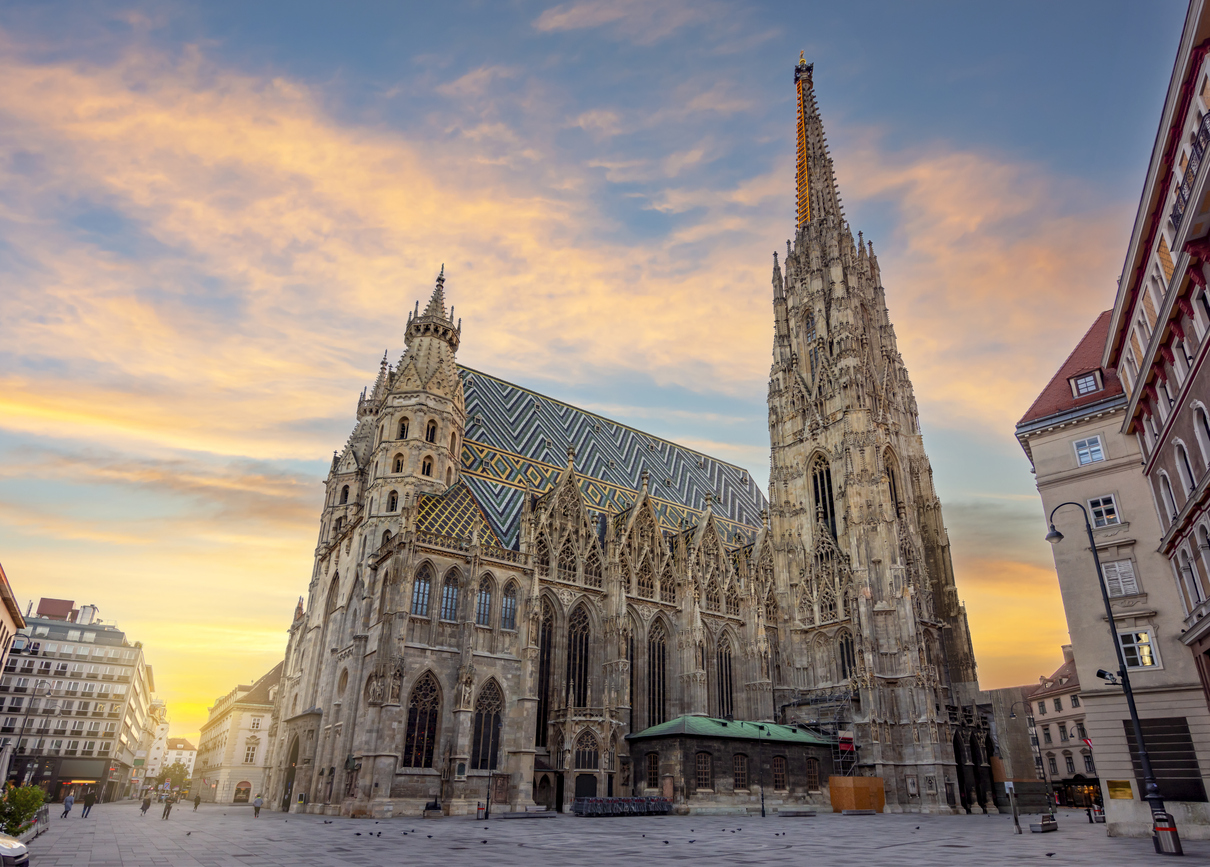
An iconic landmark of Vienna, St. Stephen’s Cathedral (Stephansdom) has been standing since the 12th century and it’s one of the most important Gothic buildings in Austria. The tower room, which offers a breathtaking view of Vienna, includes 13 bells. You’ll be amazed by the colourful roof, which is 38m high and is made of 230,000 glazed tiles that form various patterns. The mosaics showcase the image of a double-headed eagle, which was the symbol of the Austrian empire during Habsburgs’ rule. The other two eagles, on the north side of the roof, each carry coats of arms that represent the City of Vienna and the Republic of Austria.
Here you will have to look around to find the answer to a question/challenge/puzzle to advance to the new location and learn the story of this place.
8
Stop 8
Pass by
A stop at Café Frauenhuber on Rauhensteingasse will give you a taste of the Viennese coffeehouse culture. Besides being the oldest coffeehouse in Vienna (dating back to 1746), this welcoming and unpretentious place is also known for having had W.A. Mozart and L. van Beethoven play table music for the dining guests several times between 1782–1791. With a past reputation of one of the most peaceful coffeehouses in Vienna, Frauenhuber still preserves the atmosphere of a traditional Viennese coffee shop.
9
Stop 9
With over 50,000 drawings and over 1 million master prints on a rotational display, the Albertina Museum has been part of the history and culture of Vienna since 1805. Situated in the largest Habsburg residential palace, Hofburg Palace, the Albertina displays four collections, dedicated to modern art, graphic art, architecture, and photography. Notable works of art include paintings and sculptures from different artistic currents: Impressionism, Fauvism, German Expressionism and Russian avant-garde. Visiting one of Austria’s most popular museums allows you to see Monet’s The Water Lily Pond, and to experience the luxury of the imperial Habsburgs as well.
Here you will have to look around to find the answer to a question/challenge/puzzle to advance to the new location and learn the story of this place.
10
Stop 10
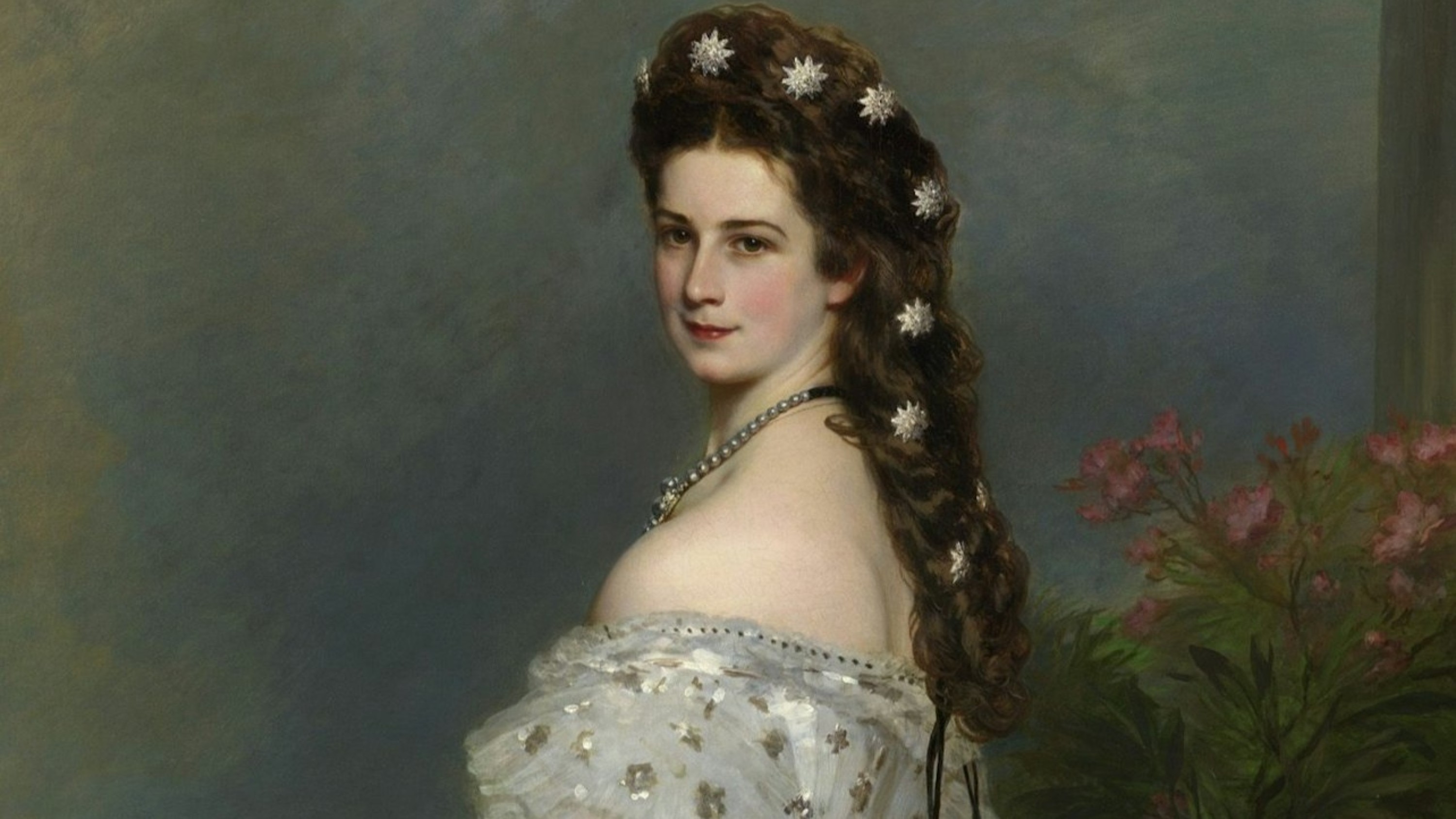
The current home and workplace of the President of Austria, the Hofburg Palace has been the heart of power in Vienna since the 13th century. As a former residence and seat of government of the Habsburg emperors until 1918, the palace still reflects the Imperial past through its richly decorated Imperial apartments (a total of 24 rooms), the Sisi Museum (dedicated to Empress Elizabeth), and the lavish silver collections. The National Library can also be found in the Hofburg Palace. Built in the 19th century, the Hall of Ceremonies continues to be used nowadays for Viennese balls.
Here you will have to look around to find the answer to a question/challenge/puzzle to advance to the new location and learn the story of this place. This is where the city game ends and you can continue exploring the city at your own pace.
What's not included
A physical tour guide
Available languages
Written guide
DE
EN
IT
FR
ES
Reviews breakdown
Viator
4.2
11 reviews
5★
6
4★
2
3★
2
2★
1
1★
0
Tripadvisor
4.6
49 reviews
5★
38
4★
6
3★
2
2★
2
1★
1
Important information
Infants and small children can ride in a pram or stroller
Service animals allowed
Public transportation options are available nearby
Suitable for all physical fitness levels
Meeting point
Close to Schwedenplatz Metro Station
Important notes
To unlock the experience in the Questo app, go to https://www.questoapp.com/unlock, and add your booking number and e-mail address. Then, download the Questo app and create a new account with the e-mail address you used for unlocking.
About Vienna
Vienna, the capital of Austria, is renowned for its rich imperial history, vibrant arts scene, and stunning architecture. Known as the 'City of Music', it has been home to legendary composers like Mozart, Beethoven, and Strauss. The city's elegant cafes, grand palaces, and world-class museums make it a cultural treasure trove.
Top Attractions
Schönbrunn Palace
A former imperial summer residence, Schönbrunn Palace is a stunning example of Baroque architecture. The palace and its gardens are a UNESCO World Heritage site.
Historical/Architecture
2-3 hours
€18 for Imperial Tour, €24 for Grand Tour
St. Stephen's Cathedral
A masterpiece of Gothic architecture, St. Stephen's Cathedral is a symbol of Vienna. The cathedral's multi-colored tile roof is iconic.
Religious/Architecture
1-2 hours
Free entry, €6 for tower climb, €7 for treasury
Belvedere Palace
A historic building complex with two Baroque palaces, the Belvedere houses the largest collection of Gustav Klimt paintings, including 'The Kiss'.
Historical/Art/Museum
2-3 hours
€16 for Upper Belvedere, €14 for Lower Belvedere
Vienna State Opera
One of the world's leading opera houses, the Vienna State Opera offers performances of opera, ballet, and concerts.
Cultural/Entertainment
2-4 hours (performance length)
€10-200 depending on performance and seat
Hofburg Palace
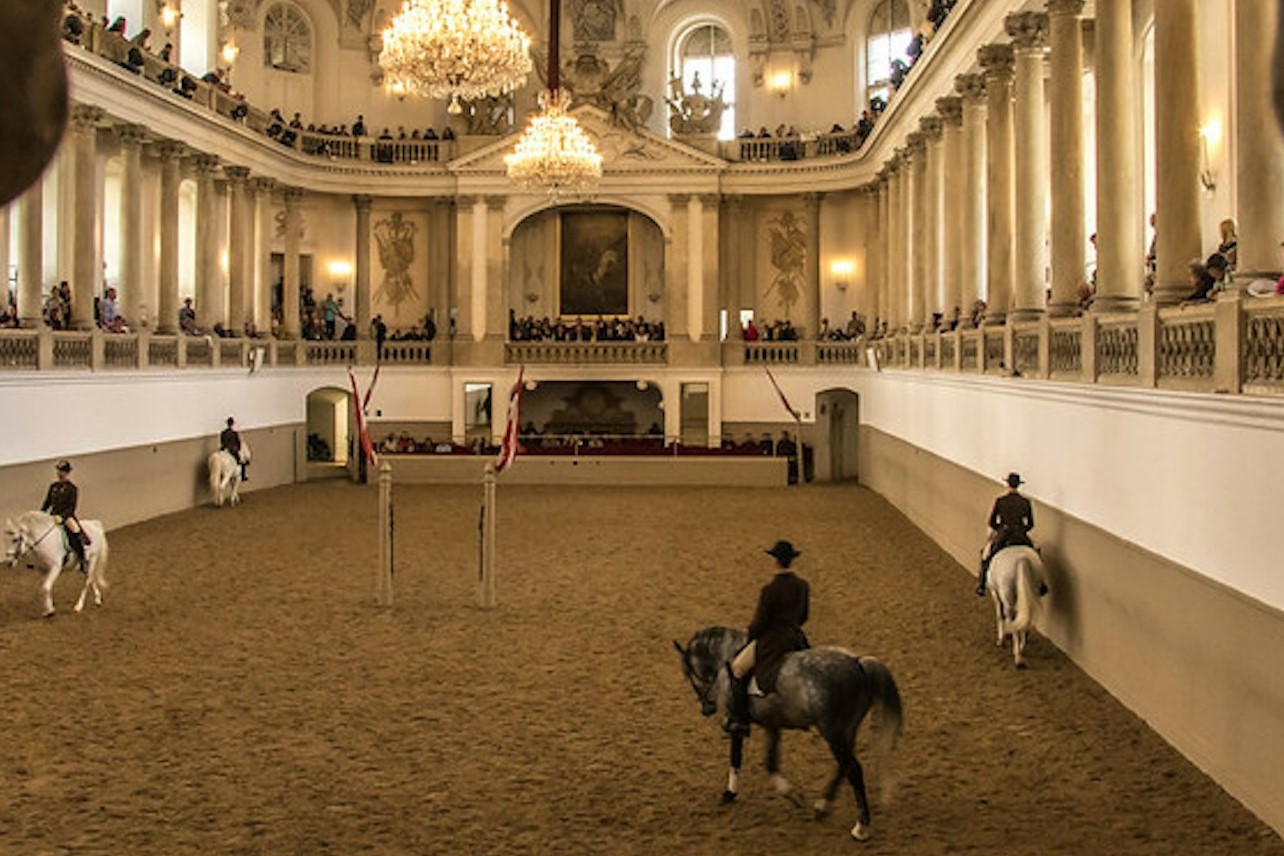
The former imperial palace, Hofburg Palace is now home to several museums, the Austrian National Library, and the Spanish Riding School.
Historical/Museum
2-3 hours
€14 for Sisi Museum and Imperial Apartments, €20 for Silver Collection
Must-Try Local Dishes
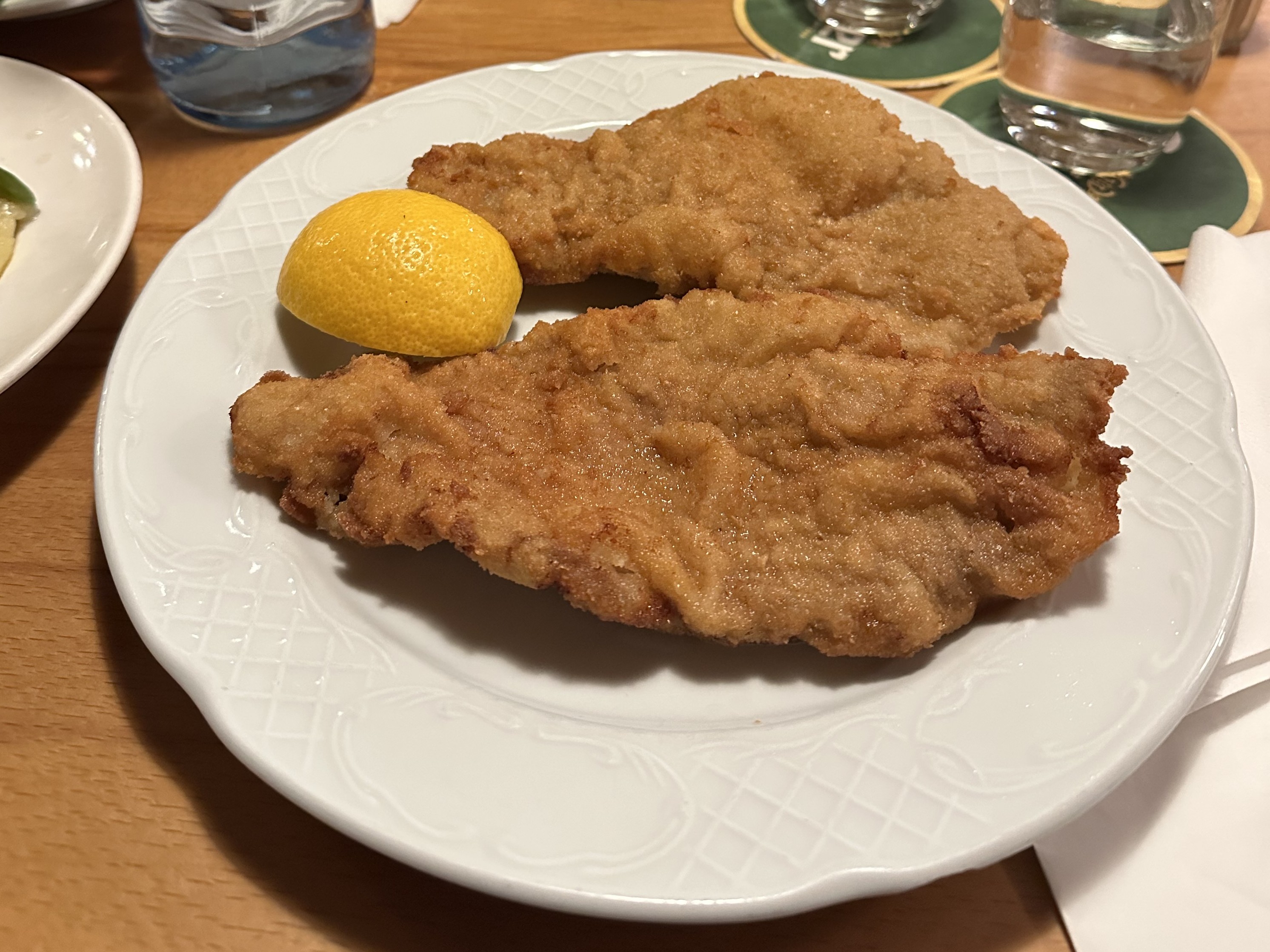
Wiener Schnitzel
A thin, breaded, and fried veal cutlet, traditionally served with lemon and potato salad or dumplings.
Dinner
Contains gluten and dairy
Tafelspitz
Boiled beef, usually served with root vegetables, apple sauce, and horseradish.
Dinner
Gluten-free, dairy-free
Sachertorte
A famous chocolate cake with a thin layer of apricot jam, covered in dark chocolate glaze.
Dessert
Contains gluten and dairy
Apfelstrudel
A thin pastry filled with spiced apples, raisins, and sugar, often served with vanilla sauce or ice cream.
Dessert
Contains gluten
Popular Activities
Hiking in the Vienna Woods
Cycling along the Danube
Kayaking on the Danube
Coffee house hopping
Spa day at a luxury hotel
Strolling through Schönbrunn Palace Gardens
Visiting museums and galleries
Attending opera or concert performances
Best Time to Visit
May to September
This is the best time to visit Vienna for pleasant weather and outdoor activities. The city hosts numerous festivals and cultural events during these months.
15°C to 30°C
59°F to 86°F
Practical Information
Language
- Official: German
- Widely spoken: English, Austro-Bavarian dialect
- English: Widely spoken in tourist areas, moderately spoken elsewhere
Currency
Euro (EUR)
Time Zone
GMT+1 (CET), GMT+2 (CEST during daylight saving time)
Electricity
230VV, 50HzHz
Safety Information
Overall Safety Rating: Generally safe
Vienna is a safe city with low crime rates. However, as with any major city, petty crime and pickpocketing can occur in tourist areas.
Important Precautions:
- • Keep valuables secure and out of sight
- • Use licensed taxis or ride-sharing apps
- • Be cautious of strangers offering help or services
Getting there
By air
- Vienna International Airport • 18 km from city center
By train
Vienna Hauptbahnhof (Main Station), Vienna Westbahnhof
By bus
Vienna International Bus Terminal, Erdberg Bus Station
Getting around
Public transport
Vienna's metro system is efficient and user-friendly, with four lines (U1, U2, U3, U4).
Taxis
Available • Apps: Bolt, FreeNow
Rentals
Car, Bike, Scooter
Neighborhoods
Innere Stadt
Leopoldstadt
Wieden
Hietzing
Day trips
Bratislava
80 km (50 miles) • Full day
The capital of Slovakia, Bratislava is a charming city with a rich history, beautiful architecture, and a vibrant cultural scene.
Salzburg
300 km (186 miles) • Full day or overnight
The birthplace of Mozart, Salzburg is a beautiful city with a rich musical heritage, stunning architecture, and scenic surroundings.
Hallstatt
200 km (124 miles) • Full day or overnight
A picturesque lakeside village in the Austrian Alps, Hallstatt is known for its stunning natural beauty and historic salt mines.
Festivals
Vienna Festival (Wiener Festwochen) • May to June
Vienna Opera Ball (Wiener Opernball) • Late February or early March
Vienna Christmas Markets (Wiener Christkindlmarkt) • Late November to December 26
Pro tips
- Visit major attractions early in the morning or late in the afternoon to avoid crowds
- Purchase a Vienna Pass for unlimited transport and attractions, saving time and money
- Explore the city's coffee house culture and try traditional pastries like Sachertorte and Apfelstrudel
- Take a day trip to nearby cities like Bratislava or Salzburg for a change of pace
- Use public transport or walk to explore the city, as driving can be challenging and expensive
From $25
per person
Price varies by option
Secure booking
Free cancellation available
Instant confirmation