Pergamon Tour
Active
8h
For a full refund, cancel at least 24 hours before the scheduled departure time.
Instant confirmation
Mobile or paper ticket accepted
About this experience
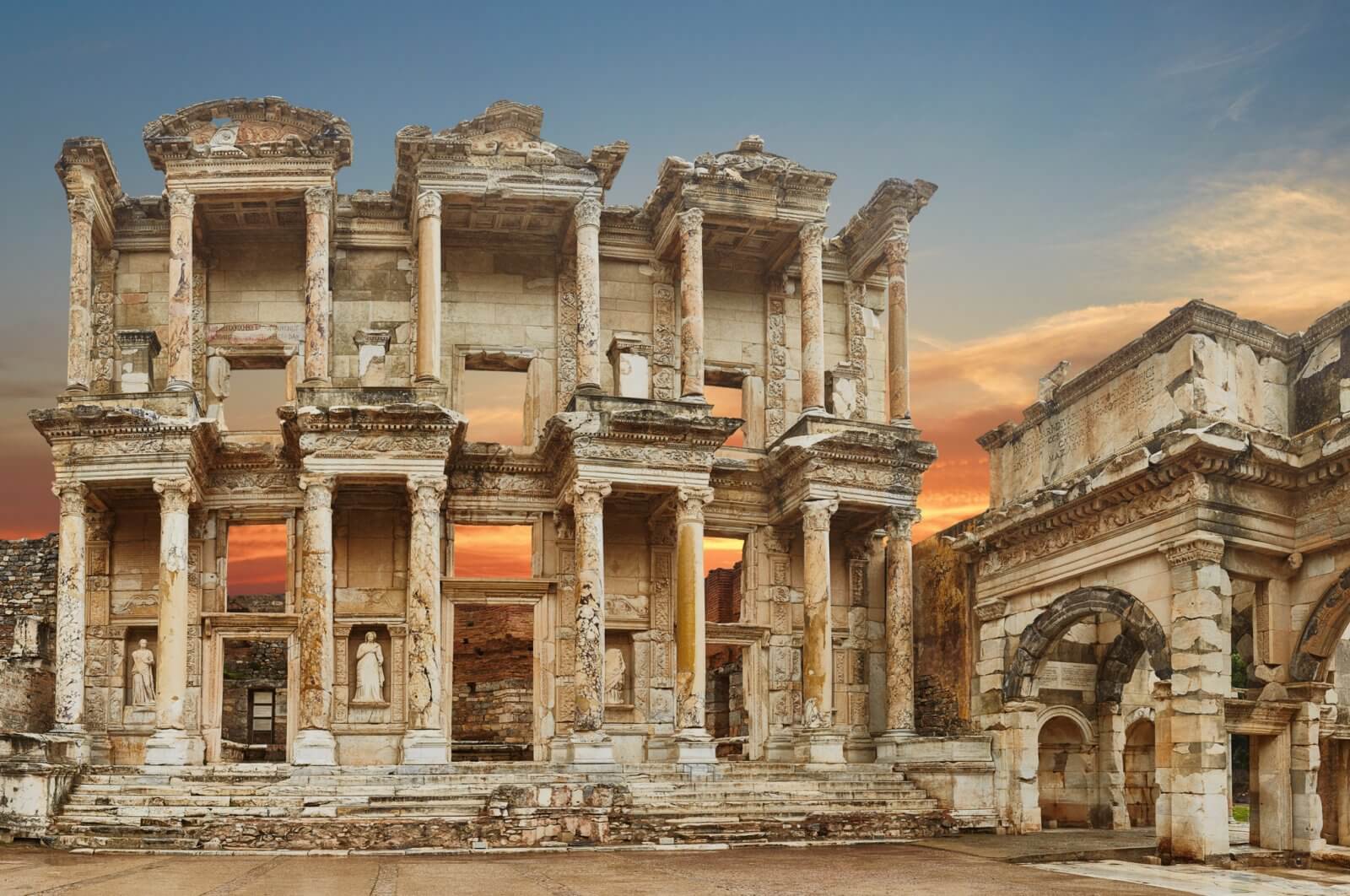
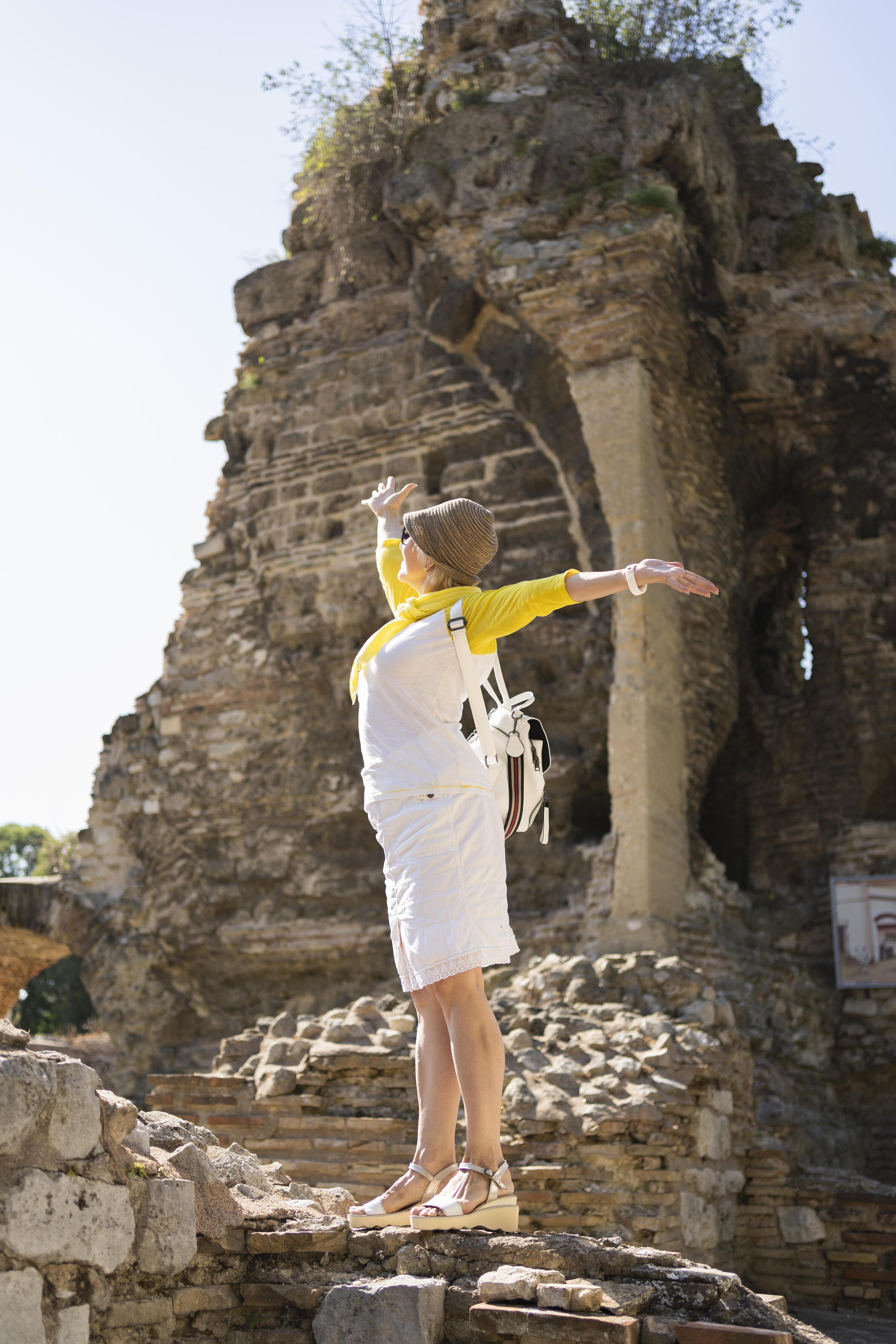
This tour takes you to Pergamon, one of the finest archaeological sites in Turkey. The city was a great cultural centre of culture and the capital of the East during the reign of the Roman Empire. After a short cable car ride, you will have a birds-eye view of the local surroundings. You will see numerous ruins including the celebrated Library, the steepest theatre in Anatolia, the Temples of Trajan and Dionysos, the location of the Altar of Zeus which is famous for its relief with God and devils, the Sanctuary of Demeter, the Gymnasium situated on terraces, and the lower Agora. After a delicious lunch with Turkish specialities, you will visit the Archaeological Museum in Bergama, before proceeding to the Medical Center of the ancient world -- the Asclepion -- where the first psychological treatments were performed and which was dedicated to the God of Health, Asclepios. You will return to Izmir in the evening.
Available options
Pergamon Tour
Pickup included
What's included
Private transportation
Soda/Pop
WiFi on board
Bottled water
Lunch
Air-conditioned vehicle
Fuel surcharge
Parking Fees
Detailed itinerary
1
The goddess of love and beauty, a city dedicated to Aphrodite, had over 200,000 visitors last year, and signs show that it is about to increase. It is one of the few settlements that have survived invasions and devastation throughout the ages but reoccupy itself on the merits of its strategic location and was included in 2014 on UNESCO's UNESCO World Heritage List. Pergamon prehistory goes back to the second millennium BC, as confirmation of the findings from the excavations held. The town survived Alexander the Great's Persian domination and conquest. The brilliant phase of its history lasted nearly one hundred fifty years when, in the third and second centuries BC, it was the capital for the Kingdom of Pergamon. One of the world's largest libraries was constructed here, and the city was converted into a centre of healing. The arts were also flourishing and the city became especially famous for its splendid sculptures. Pergamon kept its importance during the Roman era.
2
Stop 2
The historic gateway of Pergamon with old temples, theatres, the library, cultural heritage, and riches is located close to Izmir. In the Aegean region, Pergamon is high over the plain of Bakircay. Bergama (Pergamon), once a great centre of culture, survives as one of Turkey's finest archaeological sites. On the Acropolis, a hill above the modern town, are the remains of the celebrated library, a steep and impressive theatre, the Temples of Trojan and Dionysus, the monumental altar of Zeus, the sanctuary of Demeter, a gymnasium laid out on three terraces and the Agora. The Asclepion, located to the southwest of the lower city, was a sanctuary dedicated to the god of health, Asclepios.
3
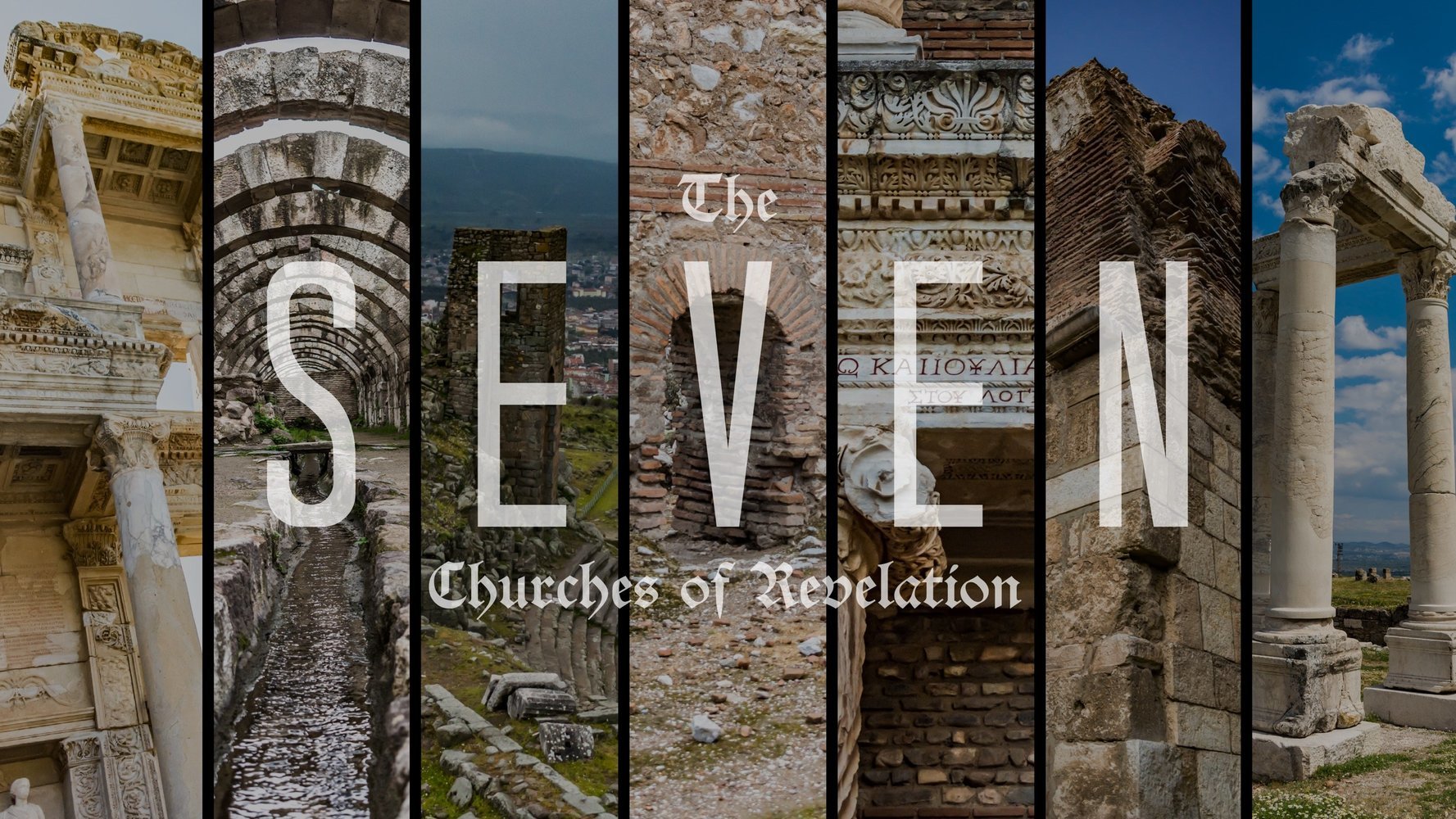
Almost a million visitors annually visit Bergama and the ruins of the ancient city of Pergamon, the first historical town of Bergama. The first parchment to be used was one of the most significant of these. Script creation has been a major breakthrough for human history and parchment innovation was quite important as it created a medium for quick and stable script recording. Parchments were developed in such a way that the city became a major centre of arts and science during the 2nd century BC and created a bookstore of manuscripts rivalling the world-famous Alexandrian library. One of the first seven early Christian Churches was held in Pergamon, and the Bible cites its name. The first wooden stage theatre; the first trade union; the first market law; the first regulation of public buildings; first strike and collective agreement were among the first in Pergamon 's history.
4
The principal ruins of ancient Pergamon, which comprise all religious, social and commercial structures, are found in the Acropolis. Of these most notable, the ruins of Pergamon Library, one of the largest ruins of the world at that time, housed a collection of 200,000 manuscripts. Wow!
5
While we are in Bergama we will also visit the Archaeological and Ethnographical Museum; nearby, the site of a temple dedicated to Serapis, later one of the Seven Churches of the Apocalypse, and subsequently converted by the Byzantines into a basilica.
6
In the Acropolis could also be seen the base of the Grand Altar of Pergamon or the altar of Zeus. However, in the late Ottoman era, the whole superstructure of the Altar was demolished, and now it is displayed here in Berlin – the Altar and its friezes show some of the best examples of Pergamon's works of art and architecture in the Hellenistic era.
7
The Serapis Temple was one of the main Romanesque buildings, and because of the colour of the bricks, it was known as the Red Basilica. This remarkably large structure was transformed into a church during the Byzantine era, which is one of the first seven Churches quoted in the Bible.
8
Stop 8
The Asclepius Sanctuary, one of the most important ancient health centres, where the patients were treated with sounds of water, mud and healing spring waters. The town also stood in Pergamon, in the history of medicine and pharmaceuticals by Physician Galen, the father of pharmacology.
What's not included
Gratuities
Available languages
Guide guide
AR
DE
RU
ZH-TW
EL
JA
EN
IT
FR
TR
ES
Reviews breakdown
Viator
4.0
1 reviews
5★
0
4★
1
3★
0
2★
0
1★
0
Tripadvisor
5.0
1 reviews
5★
1
4★
0
3★
0
2★
0
1★
0
Important information
Infants are required to sit on an adult’s lap
Specialized infant seats are available
Service animals allowed
Infants and small children can ride in a pram or stroller
Transportation options are wheelchair accessible
Travelers should have at least a moderate level of physical fitness
Wheelchair accessible
About Izmir
Izmir is a vibrant coastal city on Turkey's Aegean coast, known for its rich history, beautiful beaches, and lively cultural scene. As one of Turkey's most cosmopolitan cities, it offers a blend of ancient ruins, modern amenities, and a relaxed Mediterranean lifestyle.
Top Attractions
Agora of Smyrna
An ancient Roman agora located in the heart of Izmir. It's one of the most important historical sites in the city.
Historical
1-2 hours
Free
Kadifekale
A historic castle offering panoramic views of the city and the Aegean Sea.
Historical
1-2 hours
Free
Izmir Archeological Museum
A museum showcasing a vast collection of artifacts from the region's ancient history.
Museum
1-2 hours
Moderate (around 50 TRY)
Kordon
A beautiful waterfront promenade stretching along the Aegean coast.
Beach
Flexible, can be enjoyed at any time
Free
Çeşme
A popular beach resort town near Izmir, known for its beautiful beaches and thermal springs.
Beach
Full day
Varies by activity and accommodation
Must-Try Local Dishes
Köfte
Grilled or fried meatballs made from ground beef or lamb, often served with rice or bread.
Main Course
Contains meat
Boyoz
A type of pastry filled with a spiced beef mixture, typically eaten for breakfast.
Breakfast
Contains meat and gluten
Kumru
A sandwich made with a special type of bread, filled with various ingredients like cheese, tomatoes, and peppers.
Sandwich
Vegetarian options available
Midye Dolma
Stuffed mussels filled with spiced rice and pine nuts.
Snack
Contains seafood and gluten
Popular Activities
Hiking in nearby mountains
Water sports in Çeşme
Sunbathing on the beach
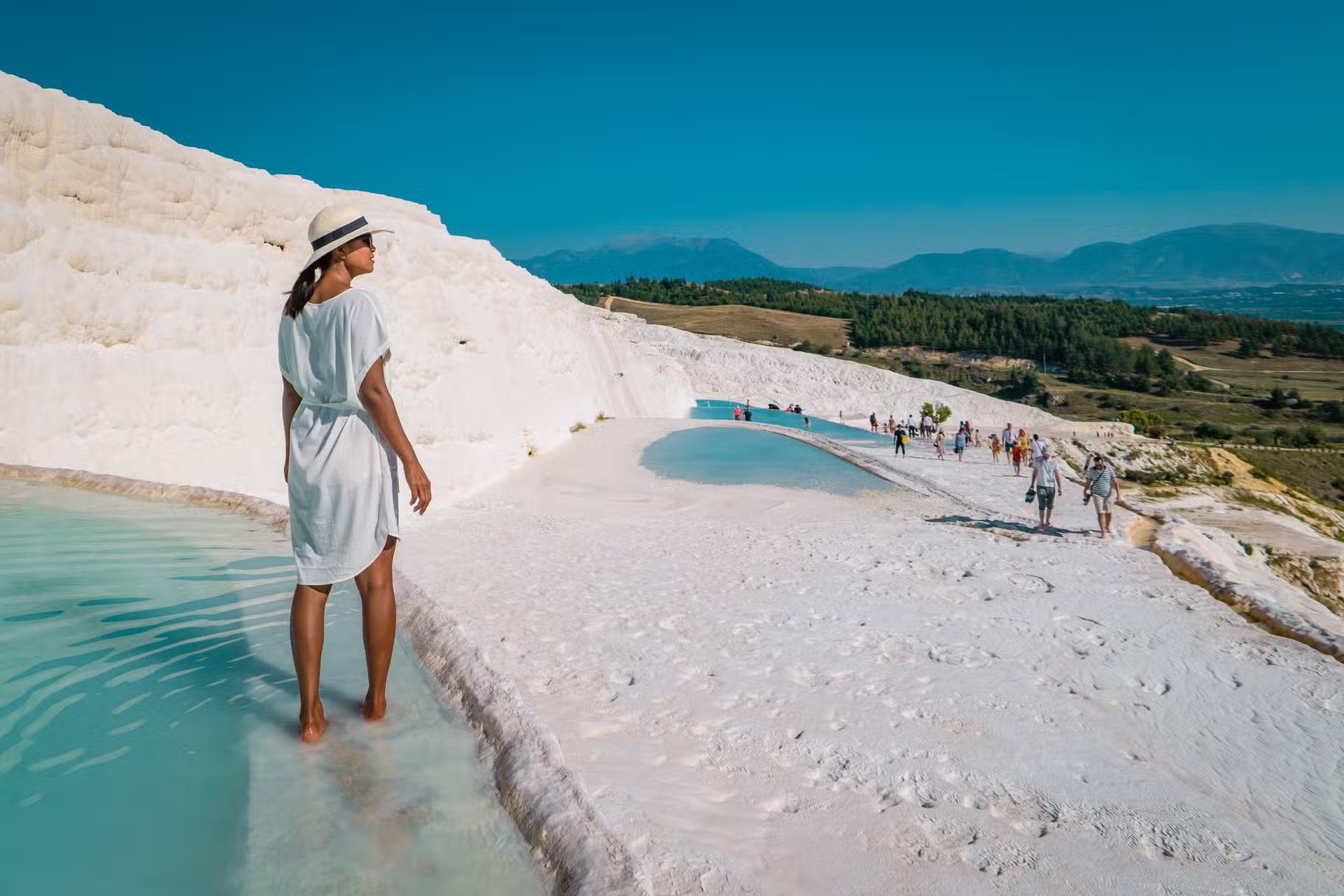
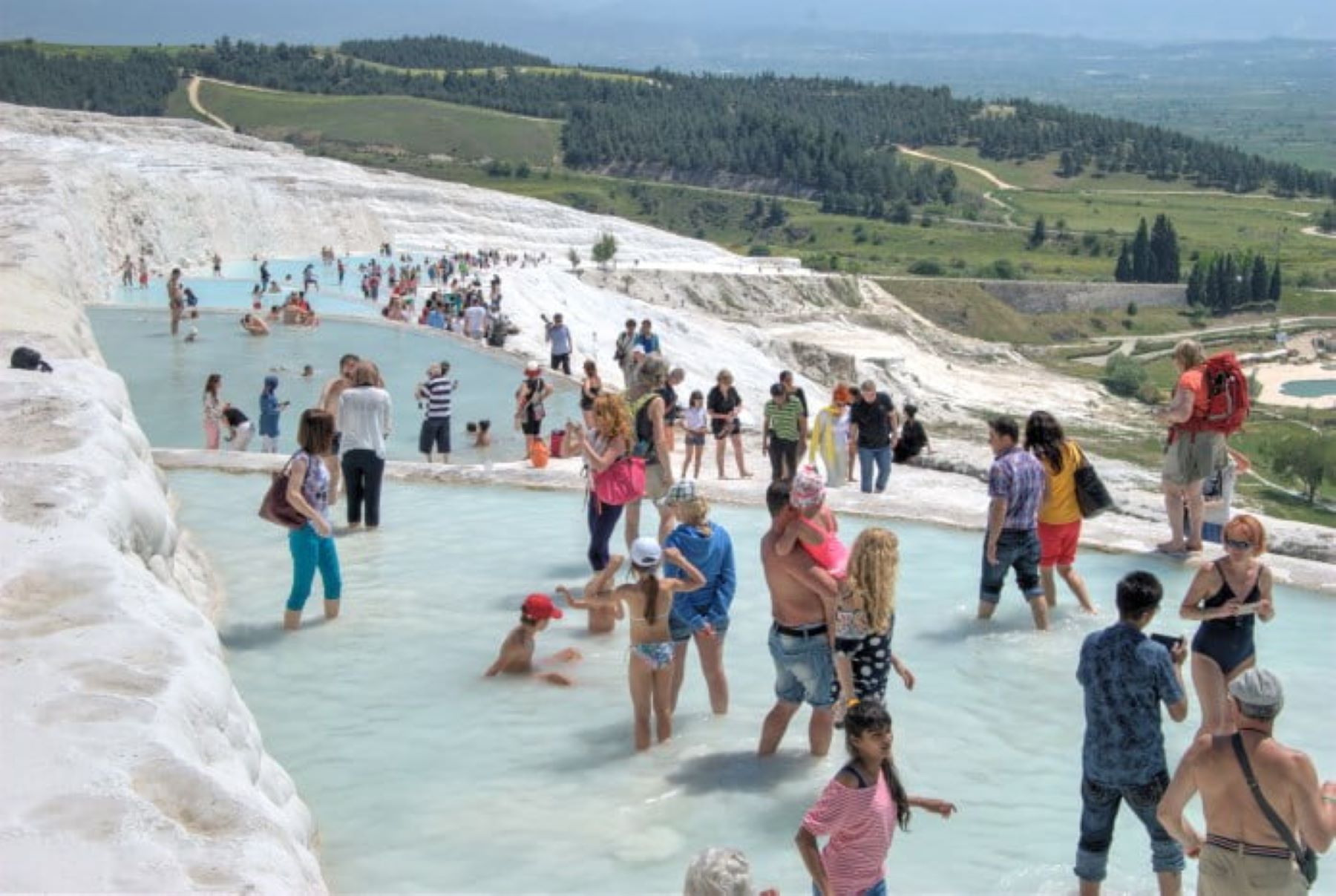
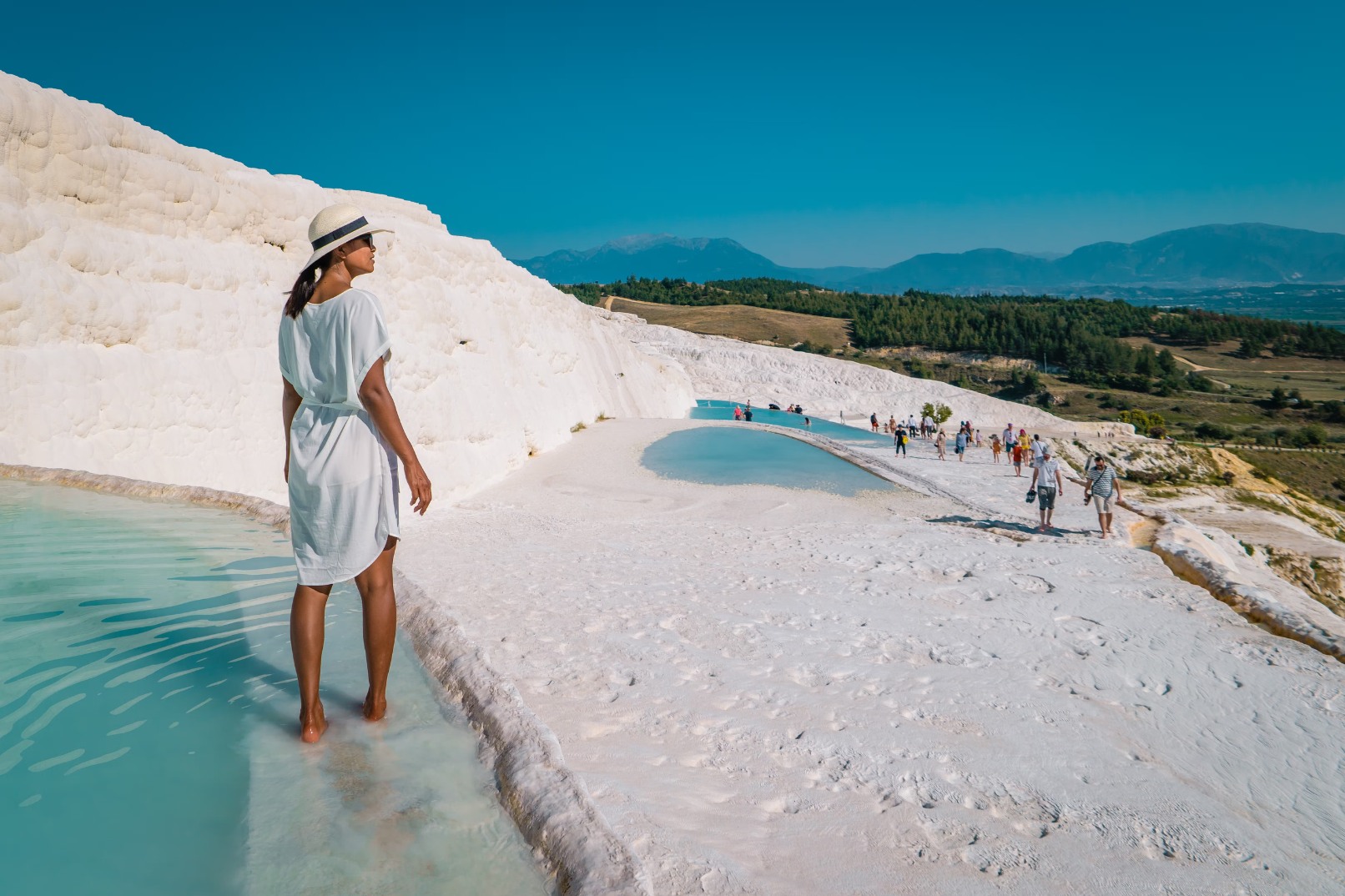
Visiting thermal baths in Pamukkale
Exploring ancient ruins in Ephesus
Visiting museums in Izmir
Swimming in the Aegean Sea
Boat trips to nearby islands
Best Time to Visit
June to August
This is the peak tourist season with warm weather, clear skies, and vibrant nightlife. It's ideal for beach activities and outdoor events.
25°C to 35°C
77°F to 95°F
Practical Information
Language
- Official: Turkish
- Widely spoken: English, German
- English: Moderately spoken in tourist areas
Currency
Turkish Lira (TRY)
Time Zone
GMT+3
Electricity
220VV, 50HzHz
Safety Information
Overall Safety Rating: Generally safe
Izmir is generally safe for tourists, but it's important to be aware of your surroundings and take precautions to avoid petty crime.
Important Precautions:
- • Be cautious of your belongings in crowded areas
- • Use licensed taxis and insist on the meter being turned on
- • Be wary of strangers offering unsolicited help or services
Getting there
By air
- Adnan Menderes Airport • 20 km south of the city center
By train
Basmane Railway Station
By bus
Izmir Otogar (Main Bus Terminal)
Getting around
Public transport
Affordable and efficient, with frequent services. Buses are the most common form of public transport in Izmir.
Taxis
Available • Apps: BiTaksi, Uber
Rentals
Car, Bike, Scooter
Neighborhoods
Alsancak
Karsiyaka
Gözlüce
Bornova
Day trips
Çeşme
90 km • Full day
A popular beach resort town with beautiful beaches and thermal springs.
Selçuk
80 km • Full day
A town near Izmir with significant historical and archaeological sites.
Sirince
70 km • Full day
A charming village known for its wine production and traditional architecture.
Festivals
Izmir International Festival • July to August
Izmir Short Film Festival • April
Izmir Jazz Festival • October
Pro tips
- Visit the Agora of Smyrna early in the morning to avoid the heat and crowds
- Try local street food like kumru and midye dolma for an authentic culinary experience
- Explore the city's neighborhoods on foot or by bike to discover hidden gems and local culture
- Attend a local festival or event to immerse yourself in Izmir's vibrant cultural scene
- Take a day trip to Çeşme or Selçuk for a relaxing beach getaway or a historical adventure
From $25
per person
Price varies by option
Secure booking
Free cancellation available
Instant confirmation