Ann Van Dyk Cheetah Centre Half-Day Tour from Johannesburg
Active
6h
For a full refund, cancel at least 24 hours before the scheduled departure time.
Instant confirmation
Mobile or paper ticket accepted
About this experience
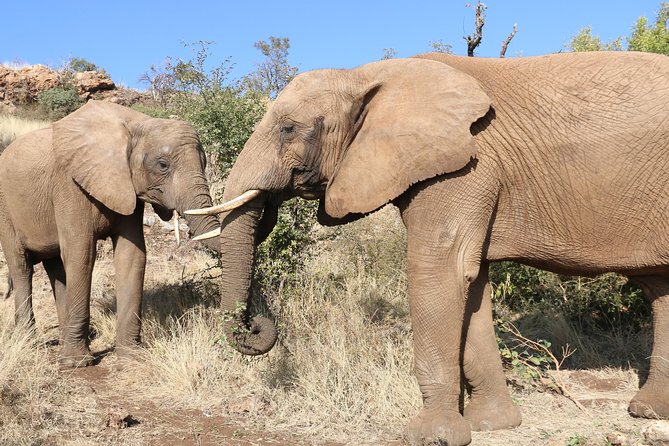
Ann van Dyk De Wildt Cheetah and Wildlife Centre has gained international recognition for bringing the cheetah back from the brink of extinction through its captive breeding programmes. This success has been unparalleled anywhere else in the world by Ann van Dyk De Wildt Cheetah Centre.Nestled in the foothills of the Magaliesberg in South Africa’s North West Province, the Ann van Dyk De Wildt Cheetah Research Centre is situated an hour from Johannesburg. Ann van Dyk De Wildt cheetah centre offers you the opportunity to learn more about fascinating creatures such as the wild dog, cheetah and various species of owls and vultures. During your visit to Ann van Dyk De Wildt Cheetah centre an experienced guide will take you on a guided tour.
Available options
De Wildt Cheetah Tour + Run
The De Wildt Cheetah Sanctuary is an hour drive from Johannesburg,the centre specialises in breeding some of these rare mammals and in promoting awareness of the importance of conservation.<br/>Pickup included
What's included
Professional guide
National Park fees
Driver/guide
Transport by air-conditioned minivan
Hotel pickup and drop-off (selected hotels only)
What you'll see
The De Wildt Cheetah Sanctuary is an hour drive from Johannesburg. It's offers you the opportunity to learn more about fascinating creatures such as the wild dog, cheetah and various species of owls and vultures. The De Wildt Cheetah sanctuary is an excellent place to get up close to Cheetah and Wild Dogs, but also has a number of other really interesting animals to see including Honey Badgers, Wild Cats and Caracals. The centre specialises in breeding some of these rare mammals and in promoting awareness of the importance of conservation.
The De Wildt Cheetah Centre was established in 1971 with the aim of breeding endangered species. Over the past two decades the Centre’s efforts have resulted in the major achievement of breeding what was once a threatened species, the cheetah. Over the years, nearly 600 cheetah cubs have been born at De Wildt – a dramatic contrast to the days when the cheetah population of South Africa was estimated at a mere 700.
While the cheetah project was the base from which the Ann van Dyk Cheetah Centre launched its conservation ethic, it soon widened to include other rare and endangered animal species such as wild dog, brown hyaena, serval cat, suni antelope, blue and red duiker, bontebok, riverine rabbit and vultures – including the very rare Egyptian vulture.
Many of these have been successfully bred for later reintroduction into the wild, thus helping to re-populate areas where such species have disappeared or are no longer abundant.
What's not included
Food and drinks
Gratuities
DVD (available to purchase)
Souvenir photos (available to purchase)
Available languages
Guide guide
EN
FR
Reviews breakdown
Tripadvisor
4.5
2 reviews
5★
1
4★
1
3★
0
2★
0
1★
0
Important information
Wheelchair accessible
Infants and small children can ride in a pram or stroller
Suitable for all physical fitness levels
Dress code is smart casual
May be operated by a multi-lingual guide
Important notes
• Dress code is smart casual
• Minimum numbers apply. There is a possibility of cancellation after confirmation if there is not enough passengers to meet requirements. In the event of this occurring, you will be offered an alternative or full refund
• Comfortable walking shoes are recommended
• If you will not be arriving at your destination within the specified reconfirmation period, please reconfirm with the local service provider prior to travel, or upon arrival at your destination. Please note that departure times and locations may vary slightly.
Hotel pickups commence approximately 30 - 60 minutes prior to this time, exact pickup time will be advised on reconfirmation.
Hotel pickups commence prior to this time, you must contact the local service provider to verify your exact pickup time.
About Pretoria
Pretoria, known as the Jacaranda City for its beautiful purple-blossomed trees, is the administrative capital of South Africa. It offers a blend of historical significance, cultural richness, and natural beauty, making it a unique destination for travelers.
Top Attractions
Union Buildings
The Union Buildings are the official seat of the South African government and a significant historical landmark. The buildings are an excellent example of Edwardian Baroque architecture.
Historical
1-2 hours
Free
Pretoria National Botanical Garden
This botanical garden is home to a diverse range of indigenous plants and offers beautiful walking trails, picnic spots, and a variety of wildlife.
Nature
2-3 hours
R50 for adults, R25 for children
Voortrekker Monument
This monumental structure commemorates the Voortrekkers who left the Cape Colony in the 19th century. The monument offers a museum and a tower with panoramic views of Pretoria.
Historical
1-2 hours
R30 for adults, R15 for children
Melrose House
Melrose House is a historic home that served as the headquarters of the British military during the Second Anglo-Boer War. Today, it houses a museum and a tea garden.
Historical
1 hour
R50 for adults, R25 for children
Pretoria Zoo
The Pretoria Zoo is home to a wide variety of animals, including rare and endangered species. The zoo offers educational programs and conservation initiatives.
Nature
2-3 hours
R120 for adults, R60 for children
Must-Try Local Dishes
Braai
Braai is a traditional South African barbecue, featuring grilled meats such as boerewors (sausage), lamb chops, and steak.
Dinner
Contains meat, can be adapted for various dietary preferences
Bobotie
Bobotie is a sweet and spicy minced meat dish topped with an egg-based custard. It is often served with yellow rice and chutney.
Dinner
Contains meat and eggs, can be made with alternative ingredients for vegetarians
Bunny Chow
Bunny Chow is a hollowed-out loaf of bread filled with curry, typically made with chicken, beef, or beans.
Lunch
Contains meat, can be made with vegetarian or vegan fillings
Melktert
Melktert is a traditional South African milk tart, featuring a sweet pastry crust filled with a creamy, custard-like filling.
Dessert
Contains dairy and eggs, can be made with alternative ingredients for dietary restrictions
Popular Activities
Hiking
Water sports
Game drives
Picnicking
Tea at Melrose House
Visiting botanical gardens
Museum visits
Historical site tours
Best Time to Visit
Spring (September to November) and Autumn (March to May)
Spring and autumn offer mild weather, perfect for outdoor activities and sightseeing. The city is also less crowded during these seasons.
15°C to 30°C
59°F to 86°F
Practical Information
Language
- Official: Afrikaans, English, Northern Sotho
- Widely spoken: English, Afrikaans
- English: Widely spoken
Currency
South African Rand (ZAR)
Time Zone
GMT+2
Electricity
220VV, 50HzHz
Safety Information
Overall Safety Rating: Generally safe, but exercise caution
Pretoria is generally safe for travelers, but it is important to exercise caution, especially in certain areas and at night. Be aware of your surroundings, avoid walking alone at night, and keep valuables secure.
Important Precautions:
- • Be aware of your surroundings
- • Avoid walking alone at night
- • Keep valuables secure
Getting there
By air
- OR Tambo International Airport • 45 km from city center
- Lanzeria Airport • 30 km from city center
By train
Pretoria Station
By bus
Park Station, Pretoria Station
Getting around
Public transport
The PBS offers an affordable and reliable way to get around the city. Buses are frequent and cover most major areas.
Taxis
Available • Apps: Uber, Bolt
Rentals
Car, Bike
Neighborhoods
Pretoria Central
Hatfield
Menlo Park
Sunnyside
Day trips
Cullinan Diamond Mine
40 km from Pretoria • Half day to full day
The Cullinan Diamond Mine is famous for being the source of the world's largest diamond, the Cullinan Diamond. Visitors can take a guided tour of the mine and learn about its history and the diamond mining process.
Hartebeestpoort Dam
60 km from Pretoria • Full day
Hartebeestpoort Dam is a popular destination for water sports, fishing, and hiking. The dam is surrounded by beautiful landscapes and offers a variety of outdoor activities.
Pilanesberg National Park
150 km from Pretoria • Full day to overnight
Pilanesberg National Park is a malaria-free game reserve offering excellent opportunities for wildlife viewing. The park is home to the Big Five (lion, leopard, rhinoceros, elephant, and buffalo) and a variety of other animals.
Festivals
Pretoria Jazz Festival • September
Aardklop National Arts Festival • October
Pretoria Open-Air Arts Festival • November
Pro tips
- Visit the Pretoria National Botanical Garden in the spring for the best blooms
- Explore the city's cultural and historical sites, such as the Union Buildings and the Voortrekker Monument
- Experience a traditional South African braai (barbecue) at a local restaurant or with a host family
- Take a day trip to the Cullinan Diamond Mine or Pilanesberg National Park for a unique and memorable experience
- Attend a local festival or event, such as the Pretoria Jazz Festival or the Aardklop National Arts Festival
From $25
per person
Price varies by option
Secure booking
Free cancellation available
Instant confirmation