IRA Troubles Conflict Private Tour Museum Graves Murals and Political Analysis
Active
3h
For a full refund, cancel at least 24 hours before the scheduled departure time.
Instant confirmation
Mobile or paper ticket accepted
About this experience
This tour has been highly recommended by universities around the world hugely popular for people interested in political conflict studies.This tour is unique as it specialises in Irish Republicanism by a Professional Guide with a unique insight into the conflict as well as Irish History.Our guides are former POWs and members of Sinn Féin and are Irish Republican Political Activists and are fully equipped to give you an in-depth analysis of the conflict from an Irish Republican perspective and view from the start in 1969 to the present day,as well as the last 852 years of British Occupation.From 1968 until 2005,the Provisional Irish Republican Army conducted an armed military campaign primarily in the Northern part of Ireland (the occupied 6 counties and England and Europe,aimed at ending British rule in Northern Ireland in order to create a united Ireland. We will visit areas that ordinary tourists do not have access to you will gain Access to Private Museum,Graveyard and Murals.
Available options
IRA Troubles Conflict Private Tour Museum Graves Murals and Political Analysis
Pickup included
What's included
Private transportation
See the Peace Walls and Peace Gates Up Close
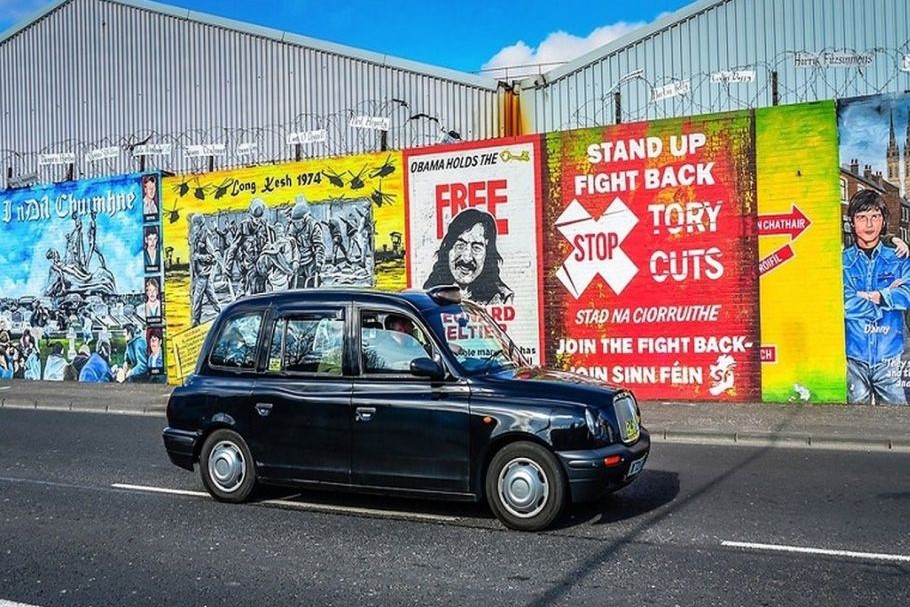
See the Bobby Sands, Falls Road, and Shankill political murals up close
Visit Bobby Sands Resting Place in the Cemetery
Benefit from the personalized service and itinerary of a private tour
Learn more about the city’s former conflict from your guide
Let your driver handle navigation, leaving you free to admire the city
Air-conditioned vehicle
Optimize your time with hassle-free round-trip transfer from your hotel
Write your name on the Peace Wall
Gain intimate insight into Belfast’s history and culture from your guide
See and Handle Plastic and Rubber Bullets Used by British Crown Forces
Detailed itinerary
1
You will visit places not offered by other tour operators with access to Private Museums and Collections.You will travel to the Falls Road where your guide will tell you all about the longest conflict in Modern European History began. Your local qualified guide will deliver a tour from the Irish Republican perspective and how the conflict evolved for Republicans up to the present day and the current peace process as well as a current political analysis. Since the onset of the Conflict/Troubles in 1969, Nationalist and Loyalist communities throughout Northern Ireland have been divided by Peace Walls, the largest cut through the divided city of Belfast. Here you will learn how the conflict began as well as visiting the world famous politically charged murals painted by ex-prisoners (POWS).
2
Stop 2
The peace lines or peace walls are a series of separation barriers in Northern Ireland that separate predominantly Republican and Nationalist Catholic neighbourhoods from predominantly Loyalist and Unionist Protestant neighbourhoods.
You will visit both sides of the Peace Wall where you will learn why the wall was built as well as signing your name and writing a message of peace! You will see first hand how the two communities are still divided to this very day.
3
Stop 3
We will visit the Loyalist Shankill Road which is the heartland of Ulster Loyalism and which is still controlled by the various Loyalist paramilitaries the UDA/UFF and UVF. Here you can take pictures of the murals of these organisations of masked men wielding weapons and learn how Loyalism developed and evolved and the part that they played during the conflict.
4
Address: Bombay Street, Clonard.
Commemorating: Fallen Volunteers of "C" Company, 2nd Battalion, Belfast Brigade, Oglaigh na hEireann. Civilian casualties from the Greater Clonard area. Deceased Republican prisoners from the Greater Clonard area 1916-1970.
Commissioned by: Greater Clonard Ex-Prisoners' Association.
Date unveiled: 20 August 2000
Notes: Plaques in memory of all Republican prisoners from the area who have died since 1916 were unveiled on 11 March 2001. Annual commemorative march held around 11th March.The first of the peace walls were built in 1969 after a series of sectarian riots rocked Belfast, whole streets in Nationalist areas where burnt out by Loyalists, Bombay street in particular suffered the most. You will visit the Clonard Martyrs Memorial Garden Black iron gates with black and red rising iron phoenix, "Out the Ashes Arose The Provisionals". This is around the time of the inception of the Provisional Irish Republican Army. Signs at the main entrance, one on each side of the gate, reading: “Clonard Martyrs Memorial Garden” and “Gairdin Cuimneacain Mairtiris Cluain Ard”. Garden divided into three separate yards. Central yard – black and white Celtic cross in the middle, with the inscription “Clonard Martyrs i gcuimhme na mairbh dilis”. On the wall behind it – granite plaque featuring a male and a female Volunteer with bowed heads on each side; on top runs the inscription: “i measc laocra na ngaedeal go rab siad go ndeana dia trocaire ar a n-anamaca”; two panels are enframed within a Celtic design with the shields of the four provinces of Ireland, one at each corner; left panel – “Clonard Martyrs C Coy 2nd Battalion Belfast Brigade Oglaigh na hEireann Roll of Honour (list stating name and date of death follows). We also remember all the civilians from the Clonard area who were killed by Crown forces and loyalist murder gangs”. Right panel – “Civilians murdered by loyalists and British forces during the course of the conflict (list stating name, date and age of death follows)”. Right yard – on the boundary walls there are a series of plaques running from left to right as follows: 1)”1921-1922 (list of names follows)”. 2)”In loving memory of the deceased Republican prisoners from the Greater Clonard area 1916 (list of names follows) 1920′s (list of names follows)”. 3)” 1930′s/40′s (list of names follows)”. 4)”1956-62 (list of names follows) 1970 (list of names follows)”. Along the walls there are a series of benches, each one accompanied by a small golden plaque “Dedicated to the memory of” – clockwise – Seamus (Shay) Sullivan, Frank Moyna, Lily, Sam and Tony Lewis; next to the gate small golden plaque reads: “This gate was donated by the Roddy McCorley Club”. Stone pavement depicting a Celtic cross. Left yard – plaque on the wall reads: “This plaque is dedicated to the people of the Greater Clonard who have resisted and still resist the occupation of our country by Britain. We acknowledge with pride the sacrifices they made throughout every decade. Their names would be too numerous to mention, and their deeds of bravery and resistance are un-equalled in the history of our struggle. We, the Republican ex-prisoners of the Greater Clonard, salute you, and your reward will only be a united Ireland.”; shields of the four provinces of Ireland, one at each corner. Along the walls there are a series of benches, each one accompanied by a small golden plaque “Dedicated to the memory of” – counter-clockwise – Renee & Marie Rosbotham, Alex Comerford, Helena Kelly. Next to the gate – small golden plaque “This gate was donated by the Michael Dwyers G.A.C. (1798)” and small golden plaque “Dedicated to the memory of Maura Meehan”. Stone pavement depicting a Celtic cross.
The walls, established as a temporary measure, were a very simple solution to the problem of keeping Republicans and Loyalists apart. However, due to their effectiveness, they never came down. Indeed, as time went on, the walls got longer and more numerous. While most of the walls were constructed during the early years of the Troubles, around one-third have popped up since 1994 when the IRA declared an effective ceasefire.
One of the most famous peace walls sits between the Loyalist Shankill Road and the Irish Republican Falls Road. Tensions between the two streets have existed since the 1800s, and the Troubles saw a rise in violence in this already violent area. As a solution, the peace wall separating the two popped up. This wall stretches for 800 metres (2,624.6 feet), an imposing multi-level concrete structure.
5
We will visit the Republican Plot in Milltown Cemetery where all of the Republican Patriot dead are buried. The most notable is Robert (Bobby) Gerard Sands was a member of the Provisional Irish Republican Army who died on hunger strike while imprisoned at HM Prison Maze after being sentenced for firearms possession. He was the leader of the 1981 hunger strike in which Irish republican prisoners protested against the removal of Special Category Status. He was an elected MP at the time of his death on hunger strike after 66 days.
Graves
The vast majority of work done by the National Graves Association, Belfast, is carried out in Milltown Cemetery. These graves, under the direct care of the association, include the three main republican plots and the graves of IRA volunteers who were killed during the 1920s and the Northern Campaign in the 1940s. The graves are marked with the Red Hand. The New Republican Plot contains the remains of 77 IRA Volunteers including Óglach Mairéad Farrell.
6
Stop 6
Visit the Republican Heart-land and Learn how the Irish Republican Army fought a 30 year Guerilla War against the British. A visit to the 2nd Battalion IRA Garden of Remembrance otherwise known as D Company aka "The Dogs".
You will learn of the "Battle of the Falls" which took place in 1970 and the Falls Road Massacre 1920.
Other Sights include 12 of the 22 Hunger Strikers Including their Photographs.
7
Stop 7
Learn about the struggle Against British Occupation and Resistance of the last 800 years in Ireland. Your Guide is an Irish History Specialist. Meet Ex-Prisoners of War who will share their experiences of the Conflict.
Museum Only Opens 10-2 Tuesday -Saturday.
If Closed we will show you around Ballymurphy.
8
Visit and photograph the iconic mural of IRA Volunteer and Republican Hunger Striker Bobby Sands. Learn about the Blanket and Dirty Protests which ultimately led to the Hunger Strikes of 1981.
9
Clonard Monastery and The Troubles
Clonard has been on the front-line of the troubles which erupted in Belfast in 1969. The monastery is located at an Interface area between the mainly Catholic Falls Road district and the mainly Protestant Shankill Road district. At the rear of the monastery was located Bombay Street and Cupar Street which led on to the Shankill Road. On 14 August 1969, loyalist mobs from the Shankill Road launched a series of attacks on the houses owned by Catholics in those streets. The residents were forced to flee and many of the houses were burnt to the ground including the whole of Bombay Street.
The priests from Clonard were actively involved from the outset in attempting to safeguard the local residents.
Two of Northern Ireland's most significant clergy who worked for peace Frs. Alec Reid and Gerry Reynolds lived here.
Clonard Monastery is a Catholic church and monastery, located off the Falls Road in Belfast, Northern Ireland, home to a community of the Redemptorists religious order.
10
D Company 2nd Battalion Belfast Brigade I.R.A. Garden of Remembrance
The Belfast Brigade of the Provisional IRA was the largest of the organisation's command areas, based in the city of Belfast. Founded in 1969, along with the formation of the Provisional IRA, it was historically organised into three battalions: the First Battalion based in the Andersonstown/Lenadoon/Twinbrook area of Southwest Belfast; the Second Battalion based in the Falls Road/Clonard/Ballymurphy district of West Belfast; and the Third Battalion organised in nationalist enclaves in the north (Ardoyne, New Lodge, Ligoniel), south (the Markets, Lower Ormeau) and east (Short Strand) of the city.
11
The Famous Divis Tower overlooking The Falls Republican Stronghold where the British Army had a Snipers Nest and Spy Post up until 2005.
See the Names and Murals of the First Two Victims of the Troubles.
12
See the Murals to An Gorta Mor, drive through the Streets of Republican Ballymurphy including the Amazing Murals to the Local Volunteers including Jim Bryson and his "Big Louie" Machine Gun that he used to Terrify the British Army.
13
See the Welcome Wall and the Heartland of the Irish Republican Army.
14
Stop 14
Drive by and See the Biggest Peace Wall in Belfast
What's not included
Tip for your Guide
Upgrade to OUR VIP PACKAGE Top of The Range Luxury Mercedes Benz V-Class for £10(Where Available)
Available languages
Guide guide
EN
Reviews breakdown
Viator
4.9
36 reviews
5★
32
4★
3
3★
1
2★
0
1★
0
Tripadvisor
4.9
31 reviews
5★
29
4★
1
3★
0
2★
1
1★
0
Important information
Wheelchair accessible
Infants and small children can ride in a pram or stroller
Public transportation options are available nearby
Infants are required to sit on an adult’s lap
Transportation options are wheelchair accessible
All areas and surfaces are wheelchair accessible
Suitable for all physical fitness levels
About Belfast
Belfast, the capital of Northern Ireland, is a vibrant city with a rich maritime, industrial, and political history. Known for its Titanic heritage, friendly locals, and dynamic cultural scene, it offers a unique blend of historical sites, modern attractions, and stunning natural beauty.
Top Attractions
Titanic Belfast
A world-class museum dedicated to the Titanic, offering interactive exhibits and a fascinating insight into Belfast's shipbuilding heritage.
Historical
2-3 hours
£22-£26
Belfast Castle
A beautiful 19th-century castle set in the Cave Hill Country Park, offering stunning views of the city and surrounding countryside.
Historical
1-2 hours
Free
St. George's Market
A historic market offering a variety of food, crafts, and entertainment. It's one of the few remaining Victorian markets in the UK.
Cultural
1-2 hours
Free entry, food and crafts for purchase
Crumlin Road Gaol
A former Victorian prison that has been restored to its original condition, offering guided tours and insights into Belfast's criminal history.
Historical
1-2 hours
£12-£15
Botanic Gardens
A beautiful public park featuring a variety of plants, trees, and flowers, as well as the Palm House and Tropical Ravine House.
Nature
1-2 hours
Free
Must-Try Local Dishes
Ulster Fry
A hearty breakfast consisting of soda bread, potato bread, bacon, sausage, black and white pudding, eggs, and tomato.
Breakfast
Contains meat and gluten
Irish Stew
A traditional stew made with lamb, potatoes, carrots, and onions.
Lunch/Dinner
Contains meat and gluten
Chippey
A traditional fish and chip shop serving battered fish, chips, and various sides.
Dinner
Contains fish and gluten
Belfast Bap
A soft, white bread roll filled with a sausage, bacon, or egg.
Breakfast/Lunch
Contains meat and gluten
Popular Activities
Hiking in Cave Hill Country Park
Crossing the Carrick-a-Rede Rope Bridge
Kayaking on Lough Neagh
Strolling through Botanic Gardens
Enjoying a spa day
Sipping coffee in a trendy cafe
Exploring the Ulster Museum
Attending a performance at the Grand Opera House
Best Time to Visit
June to August
This is the warmest and sunniest time of the year, perfect for outdoor activities and festivals. However, it's also the busiest tourist season.
15°C to 20°C
59°F to 68°F
Practical Information
Language
- Official: English
- Widely spoken: Irish (Gaelic)
- English: Widely spoken
Currency
Pound Sterling (GBP)
Time Zone
GMT (UTC+0) in winter, BST (UTC+1) in summer
Electricity
230VV, 50HzHz
Safety Information
Overall Safety Rating: Generally safe
Belfast is generally safe, but like any city, it's important to be aware of your surroundings and take precautions to ensure a safe and enjoyable trip.
Important Precautions:
- • Be aware of your surroundings, especially at night.
- • Keep valuables secure and out of sight.
- • Use licensed taxis and check the fare before starting your journey.
Getting there
By air
- Belfast International Airport • 20 km (12 miles) northwest of the city center
- George Best Belfast City Airport • 3 km (2 miles) east of the city center
By train
Belfast Central Station, Belfast Lanyon Place Station
By bus
Belfast Europa Buscentre
Getting around
Public transport
Buses are the most common form of public transport in Belfast, with a comprehensive network covering the city and surrounding areas.
Taxis
Available • Apps: Free Now, Uber
Rentals
Car, Bike, Scooter
Neighborhoods
Cathedral Quarter
Titanic Quarter
Belfast City Centre
Stranmillis
The Ormeau Road
Day trips
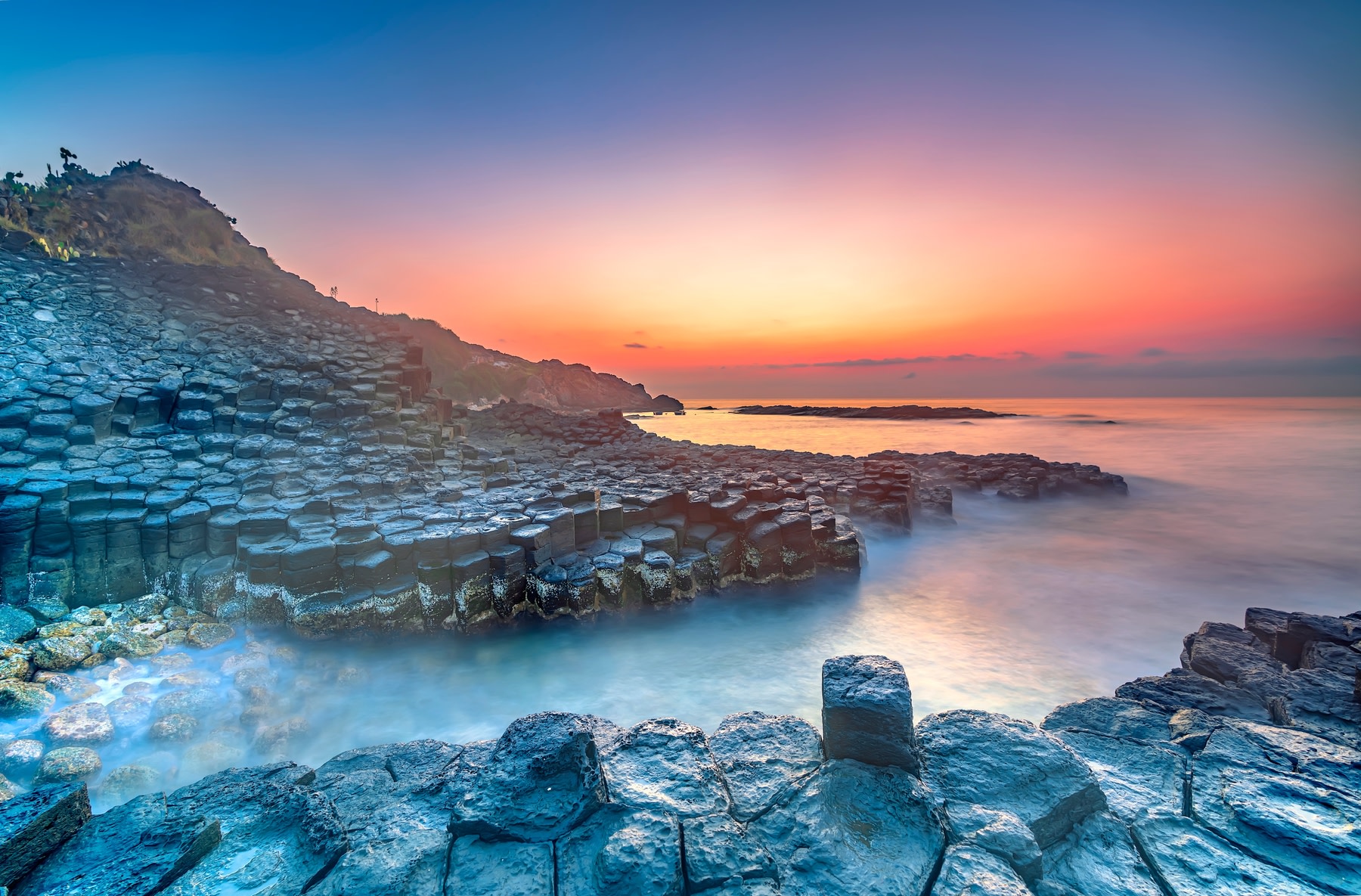
Giant's Causeway
90 km (56 miles) • Full day
A UNESCO World Heritage Site featuring a unique natural formation of interlocking basalt columns.
Carrick-a-Rede Rope Bridge
70 km (43 miles) • Half day
A thrilling rope bridge spanning a 23-meter (75-foot) chasm, offering stunning views of the coastline.
Dunluce Castle
80 km (50 miles) • Half day
A dramatic medieval castle perched on a cliff, offering a glimpse into Northern Ireland's past.
Festivals
Belfast International Arts Festival • October
Cathedral Quarter Arts Festival • May
Belfast Mela • August
Pro tips
- Take a black cab tour to learn about Belfast's history and political landscape from a local perspective.
- Visit the Cathedral Quarter for a vibrant mix of bars, restaurants, and cultural venues.
- Explore the Titanic Quarter, home to the Titanic Belfast museum and a variety of attractions.
- Stroll through Botanic Gardens and visit the nearby Ulster Museum and Palm House.
- Try local delicacies like the Ulster Fry and Belfast Bap at St. George's Market.
From $25
per person
Price varies by option
Secure booking
Free cancellation available
Instant confirmation